Public Safety DAS in 2027: The Trends and Technologies Shaping the Future of ERCES
As the architectural landscape of modern commercial, institutional, and government facilities evolves, the demands placed upon critical in-building communications infrastructure have reached an unprecedented level of scrutiny. Entering 2027, the deployment and management of Public Safety Distributed Antenna Systems (DAS) and Emergency Responder Communication Enhancement Systems (ERCES) are undergoing a transformative paradigm shift. Driven by rigorous code updates, advanced digital architectures, and the integration of artificial intelligence, building owners and facility managers can no longer treat emergency radio compliance as a static, check-the-box exercise.
At Global Network LLC, our mission is absolute operational readiness: 0% Defects and 0% Missed Deadlines. Securing your building's Certificate of Occupancy and safeguarding human life when emergencies strike requires a comprehensive understanding of where the industry is heading. In this exhaustive analysis, we examine the critical trends, regulatory milestones, and technological innovations shaping the future of ERCES in 2027.
1. The Regulatory Evolution: NFPA 1225, IFC 510, and Strict AHJ Enforcement
The foundation of any compliant in-building wireless solution rests upon strict adherence to national safety codes and local municipal ordinances. Over the past several years, the regulatory framework governing emergency responder communications has solidified around standardized benchmarks designed to eliminate radio dead zones in high-risk structures.
The Dominance of NFPA 1225 and IFC 510
The consolidation of legacy standards into NFPA 1225 (Standard for Emergency Services Communications) has established a unified benchmark for ERCES performance, installation, grid-based testing, and lifecycle maintenance. Concurrently, International Fire Code (IFC) Section 510 mandates that buildings failing to meet minimum signal strength thresholds for public safety frequencies must install approved signal booster systems, radiating cable systems, or dedicated DAS architecture.
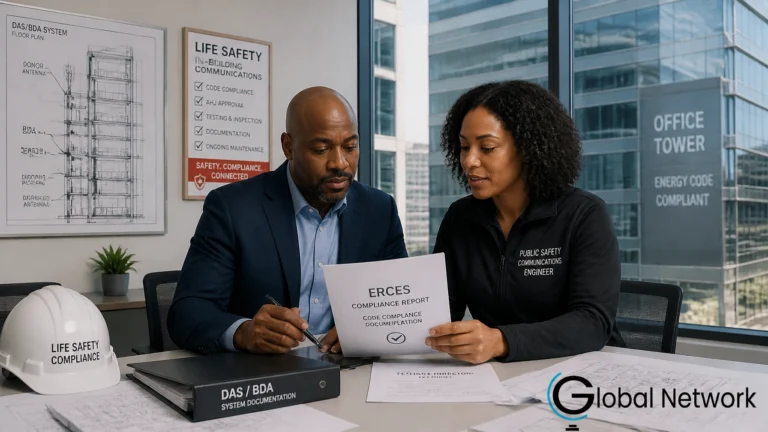
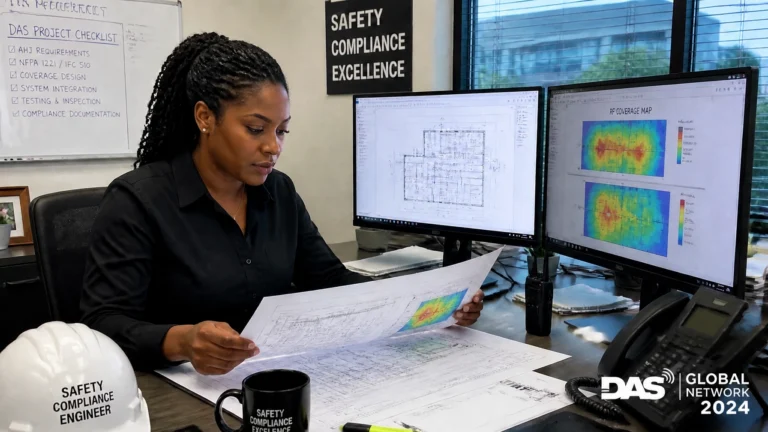
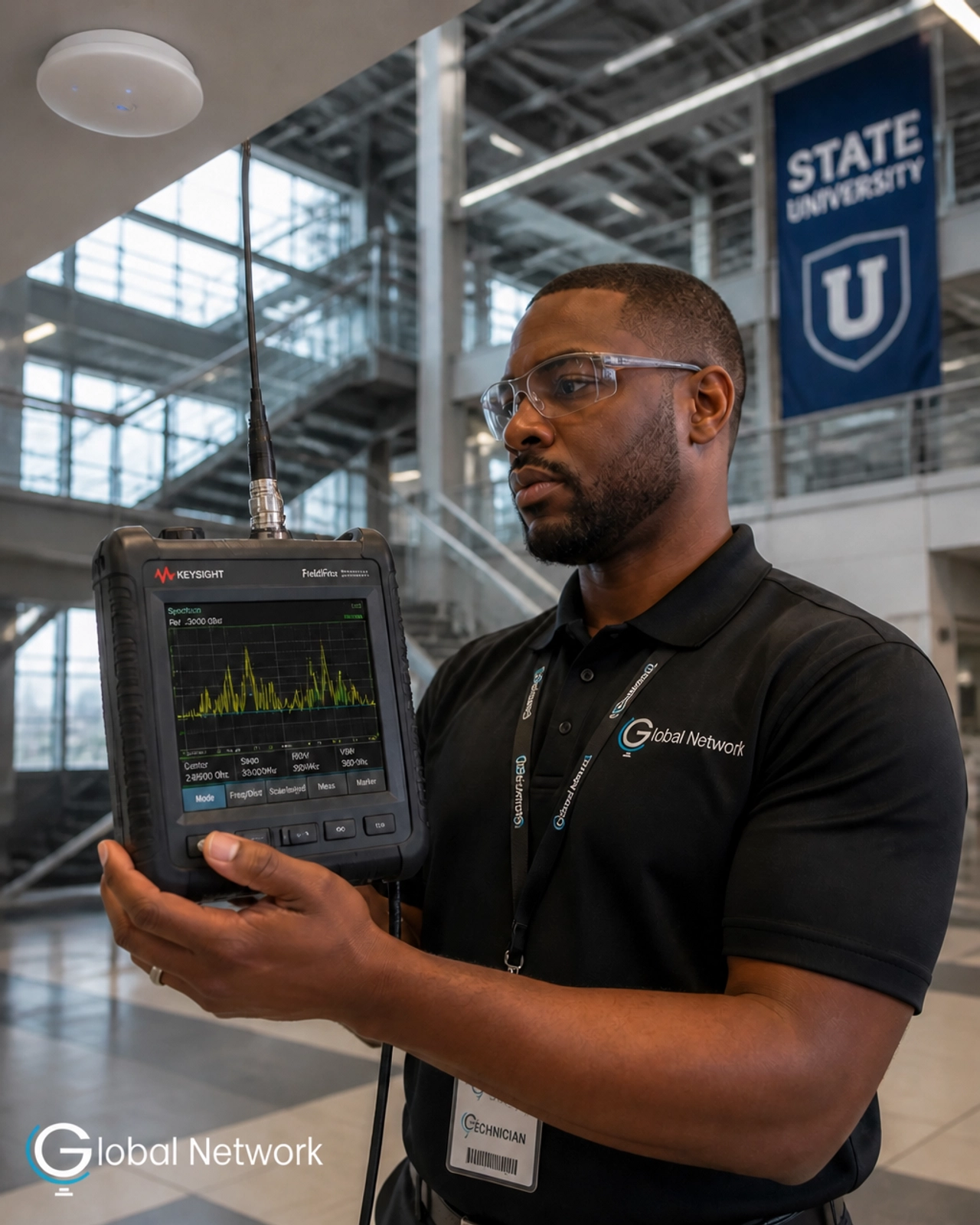
Authority Having Jurisdiction (AHJ) enforcement has grown progressively uncompromising. Fire Marshals across metropolitan regions now routinely withhold Certificates of Occupancy until documented, calibrated testing confirms compliance with strict performance metrics:
- Minimum Signal Strength: A minimum downlink and uplink signal strength of -95 dBm in general tenant areas, and -90 dBm in critical zones such as fire command centers, stairwells, elevator lobbies, and subterranean parking structures.
- Coverage Reliability: Achieving 95% coverage in general building areas and 99% coverage in critical operational areas.
- Pathway Survivability & UL Certification: Mandatory deployment of UL 2524 (2nd Edition)-certified hardware, including Class A digital repeaters and fire-rated cabling systems capable of maintaining uninterrupted operation during severe structural fires.
When property safety and legal accountability intersect, compromise is never an option. Our specialized teams at Global Network LLC ensure complete code alignment from day one, shielding your development from costly remediation delays and liability exposure. Explore our dedicated ERCES and DAS Services to learn how we protect your asset.

2. Technological Advancements: AI Monitoring, Remote Diagnostics, and Class A Digital Architectures
The operational complexity of modern high-rises, campuses, and healthcare facilities demands more than analog amplification. In 2027, the integration of advanced digital technologies into public safety DAS infrastructure has redefined system reliability and maintenance protocols.
AI-Driven Predictive Monitoring and Real-Time Diagnostics
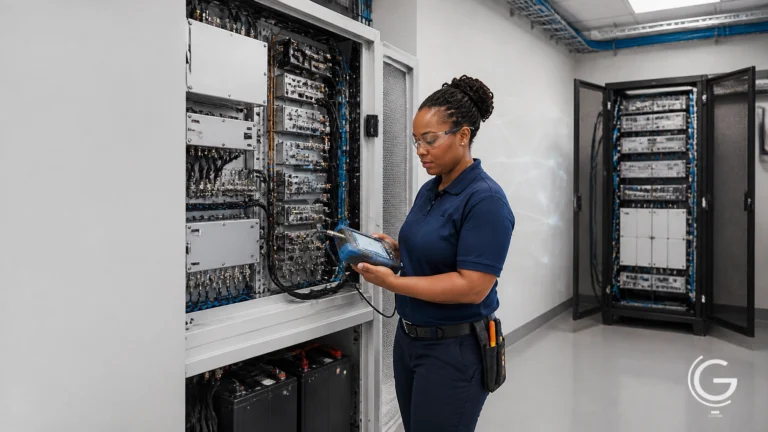
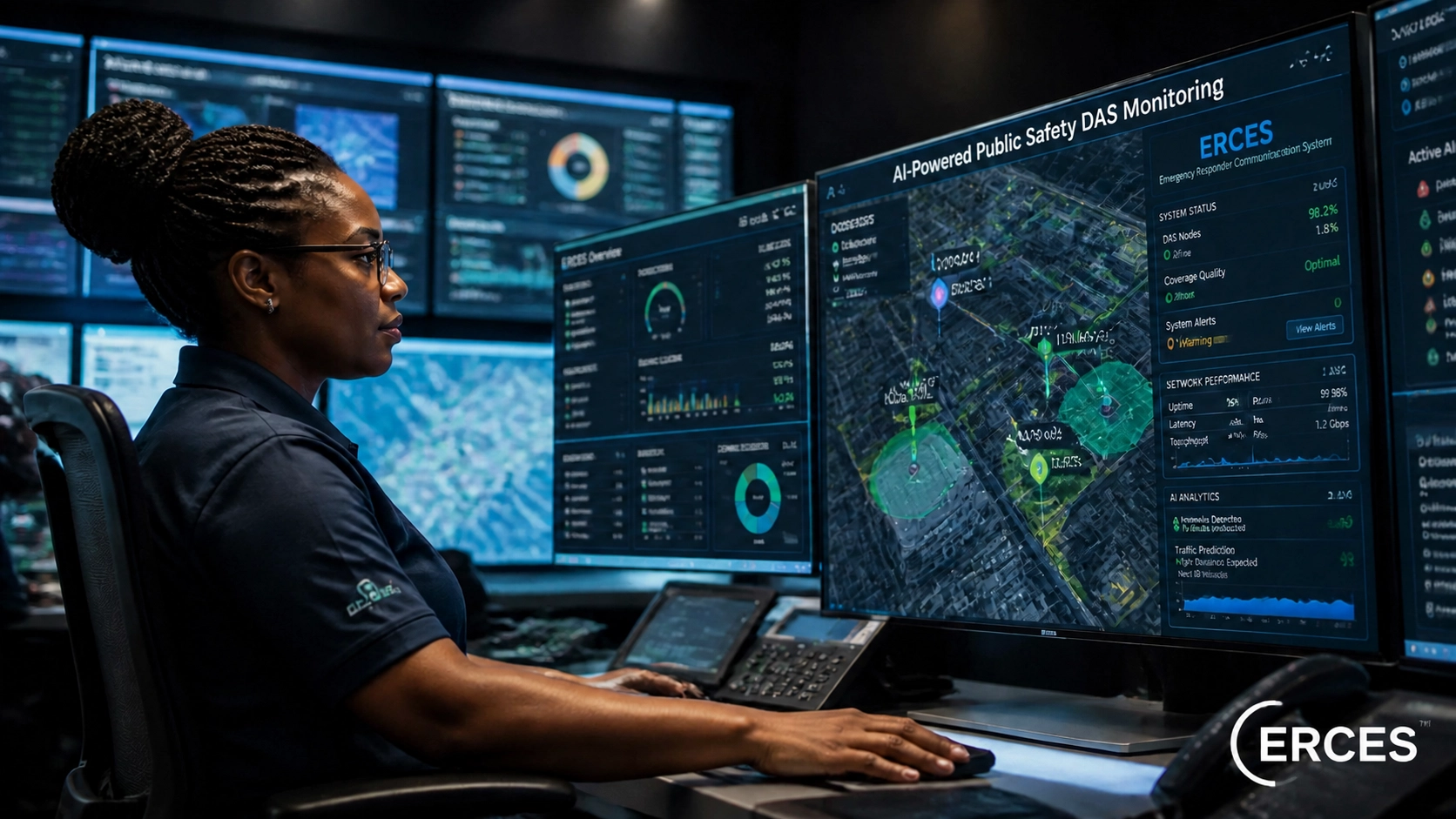
Historically, identifying a degraded booster component or an antenna fault relied on manual annual inspections. Today, next-generation ERCES platforms leverage AI-powered remote monitoring and automated diagnostics to provide continuous operational oversight.
- Proactive Anomaly Detection: Machine learning algorithms continuously analyze RF signal propagation, power amplifier temperatures, and battery backup integrity, flagging micro-degradations before they escalate into compliance failures.
- Automated Health Reports: Facility managers receive real-time telemetry and automated compliance logs, ensuring round-the-clock transparency without constant physical intervention.
- Zero Downtime Assurance: Predictive maintenance algorithms forecast component wear, enabling our technicians to service hardware proactively and maintain continuous emergency responder readiness.
Digital Class A Repeaters and Multi-Band Capabilities
Urban density and adjacent RF interference present severe challenges to traditional analog boosters. Modern Class A digital repeaters utilize channelized gain control to isolate specific public safety frequencies (VHF, UHF, 700/800 MHz), eliminating near-far interference and maximizing channel selectivity. Furthermore, forward-looking facilities are implementing hybrid architectures that harmonize legacy Land Mobile Radio (LMR) voice bands with emerging broadband public safety spectrums, including FirstNet 5G and 4.9 GHz data channels, ensuring first responders maintain both crystal-clear voice communication and high-speed tactical data connectivity.
For detailed technical insights into choosing the correct in-building wireless infrastructure, review our guide on Small Cell vs DAS Solutions.

3. Strategic Imperatives for Building Owners and Facility Managers
Navigating the regulatory and technological landscape requires a proactive, strategic posture. Building owners, developers, and facility directors must integrate wireless communication planning into the earliest phases of architectural design and capital improvement budgeting.
Key Action Items for 2027 and Beyond
- Engage Certified Experts Early: Involve specialized DAS and ERCES integrators during the schematic design phase to evaluate exterior signal propagation and determine whether a Bi-Directional Amplifier (BDA) or distributed antenna system is required.
- Demand NICET-Certified Competency: Ensure that the engineering and installation teams hold advanced credentials, such as NICET (National Institute for Certification in Engineering Technologies) certifications, satisfying strict AHJ reviewer qualifications.
- Establish Rigorous Lifecycle Testing Schedules: Comply with mandatory annual re-commissioning and acceptance testing protocols to maintain permanent certification status and avoid retroactive code violations.
- Prioritize System Transparency: Implement remote supervision panels tied directly to your building's Fire Alarm Control Panel (FACP) in accordance with NFPA standards, ensuring immediate notification of any supervisory or trouble alarms.
As legal and regulatory standards become increasingly stringent, strict adherence to ethical compliance and corporate responsibility safeguards not only your physical assets but, most importantly, the lives of building occupants and emergency personnel when it matters most. Learn more about our corporate values and engineering philosophy on our About Us page.

Secure Your Building's Compliance with Global Network LLC
Failure to meet public safety radio mandates can result in withheld Certificates of Occupancy, severe municipal fines, and catastrophic liability in the event of an emergency. Do not leave your building's life-safety communications to chance.
As Atlanta’s premier DAS and ERCES specialists, Global Network LLC delivers turnkey engineering, expert installation, rigorous compliance testing, and advanced remote monitoring solutions tailored to your facility's exact specifications.
Take decisive action today. Ensure absolute code compliance and absolute peace of mind by partnering with the industry leaders.
- Office: 770.520.7633
- Toll-Free: 877.231.1084
- Website: globalnetworkco.com
Contact our engineering team through our Contact Form to schedule your initial site survey and consultation.