
Does NFPA 1225 Really Matter in 2026? What Atlanta Building Owners Need to Know
For Atlanta building owners, NFPA 1225 matters because emergency responder communication is a life-safety function: not merely a telecommunications upgrade.
Modern construction can create serious radio-frequency (RF) obstacles. Reinforced concrete, structural steel, below-grade parking, elevator shafts, Low-E glass, and dense mechanical systems can weaken public safety radio signals. During a fire, medical emergency, or security incident, those barriers may prevent firefighters, police officers, and emergency medical personnel from communicating with one another or with dispatch.
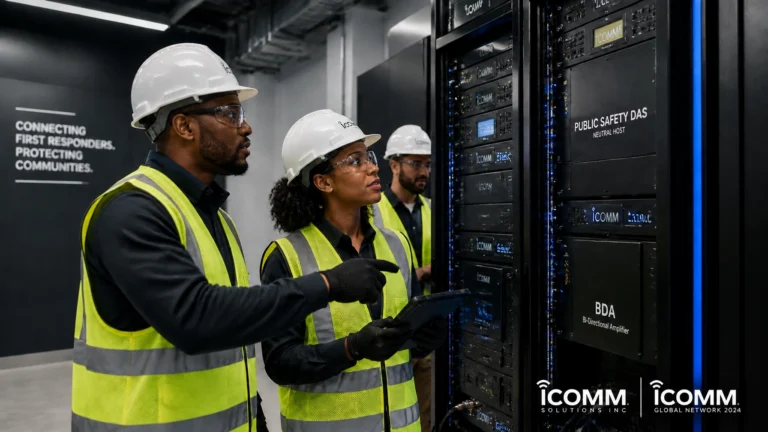
NFPA 1225 provides a technical framework for addressing that risk through an Emergency Responder Communication Enhancement System (ERCES), commonly called an Emergency Responder Radio Coverage System (ERRCS) or Public Safety Distributed Antenna System (DAS).
The critical point for 2026 is this: NFPA 1225 is not automatically the law in every jurisdiction simply because it is an NFPA standard. The legally enforceable requirements depend on the codes adopted by the applicable authority having jurisdiction (AHJ), including local amendments and administrative requirements.
What Is NFPA 1225?
The National Fire Protection Association identifies NFPA 1225: Standard for Emergency Services Communications as an active standard, with the 2022 edition currently listed as the current edition. NFPA 1225 consolidated the former NFPA 1221 and NFPA 1061 documents into one standard.
For building owners, the most relevant portion is Chapter 18, In-Building Emergency Responder Communications Enhancement Systems.
NFPA 1225 addresses the complete ERCES lifecycle:
- RF system design and engineering
- AHJ and frequency-license-holder approval
- Equipment listing and certification
- Donor antenna and signal-source requirements
- Cable survivability and pathway protection
- Primary and secondary power
- Fire alarm system monitoring
- Initial acceptance testing
- Recurring inspection and testing
- As-built documentation and maintenance records
The standard’s purpose is straightforward: an ERCES must deliver usable, reliable two-way radio communication throughout the areas where emergency responders operate.
How NFPA 1225 Relates to IFC 510 and NFPA 72
NFPA 1225 does not operate in isolation. A compliant Atlanta project typically requires coordination among multiple codes, standards, and approvals.
IFC Section 510: The Coverage Trigger
International Fire Code (IFC) Section 510 generally establishes when a building must provide emergency responder radio coverage or install an ERCES.
If a required level of public safety radio coverage cannot be achieved naturally, IFC 510 may require an engineered enhancement system. The specific trigger, exceptions, test procedure, and enforcement language depend on the edition adopted by the local jurisdiction.
In practical terms:
- IFC 510 identifies the need for coverage.
- NFPA 1225 provides technical requirements for the ERCES.
- The AHJ determines how those requirements are applied and verified.
Typical performance benchmarks associated with modern ERCES requirements include:
- 95% coverage in general floor areas
- 99% coverage in designated critical areas
- Minimum Delivered Audio Quality (DAQ) of 3.0
- Coverage for both uplink and downlink communications
Critical areas commonly include fire command centers, exit stairs, elevator lobbies, fire pump rooms, standpipe cabinets, sprinkler valve locations, and other spaces designated by the AHJ.
NFPA 72: Monitoring and Fire Alarm Integration
NFPA 72, National Fire Alarm and Signaling Code, governs the monitoring and supervisory interface between the ERCES and the building fire alarm system.
NFPA 1225 requires automatic supervisory signals for ERCES malfunctions. Depending on the approved design and AHJ requirements, the system may monitor conditions such as:
- Loss of normal AC power
- Battery charger failure
- Low battery capacity
- Signal-source malfunction
- Active RF-emitting device failure
- Other active component failures
- Loss of communication between the ERCES and fire alarm control unit
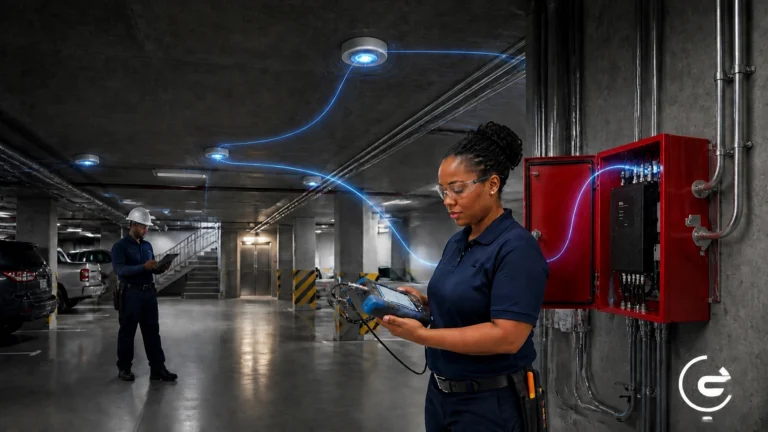
A dedicated annunciator in or near the fire command center may also be required to identify the status of system components.
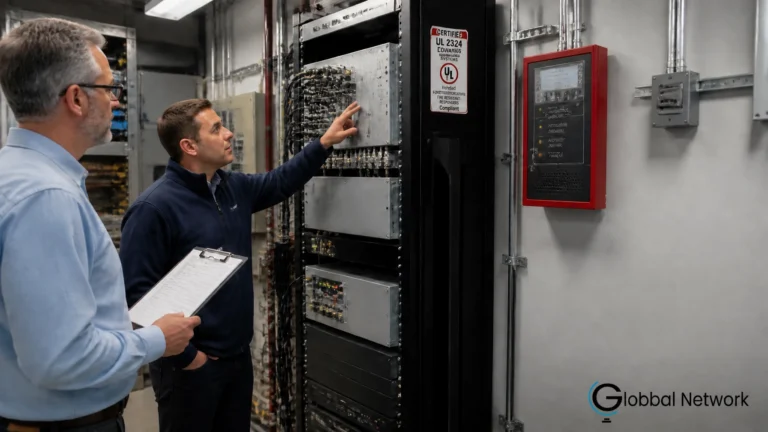
This is why an ERCES should not be treated as a standalone BDA installation. The BDA, antenna network, power system, monitoring interface, fire alarm panel, and documentation must function as one life-safety system.
NFPA 70 and UL 2524
Other requirements may apply to cabling, grounding, surge protection, electrical pathways, and equipment installation.
NFPA 1225 references NFPA 70, National Electrical Code, for cable installation and mechanical protection. It also requires relevant ERCES equipment and active components to be listed and labeled in accordance with UL 2524, the standard for in-building two-way emergency radio communication enhancement systems.
Equipment selection is therefore a compliance decision: not simply a purchasing decision.

What Atlanta Building Owners Should Verify With the AHJ
Building owners should not assume that a neighboring property, previous project, or online checklist reflects the requirements for their facility.
Before design begins, confirm the following with the responsible AHJ and applicable public safety frequency license holder.
1. Which Code Edition Is Adopted?
Ask which edition of IFC Section 510 is enforceable for the project. Confirm whether Atlanta or the applicable jurisdiction has adopted local amendments that change:
- Coverage percentages
- Critical-area definitions
- Test-grid dimensions
- Backup-power duration
- Permit and renewal requirements
- Acceptance-test procedures
- Annual or recurring certification requirements
Also ask whether NFPA 1225:2022 is directly adopted, referenced by the adopted fire code, or being used as an approved technical basis.
2. Which NFPA 72 Requirements Apply?
Verify the edition of NFPA 72 used for:
- Fire alarm control unit interface
- Supervisory signal annunciation
- Monitoring-circuit integrity
- Dedicated annunciators
- Power-supply supervision
- Documentation and testing
The fire alarm contractor and ERCES integrator should coordinate early. Late-stage interface conflicts can create inspection delays and expensive rework.
3. Which Frequencies and Radio Technologies Must Be Supported?
The AHJ or frequency license holder should provide the applicable technical information, including:
- Public safety frequency pairs
- Modulation technology
- P25 or other radio-system requirements
- Required talk paths or channels
- Maximum propagation delay
- Donor-site information
- Signal-source levels
- Testing equipment and methodology
- Interference and noise-floor limits
An ERCES that provides excellent cellular coverage is not automatically a compliant public safety radio system. Commercial cellular DAS and public safety DAS serve different operational purposes, although shared infrastructure may be possible when carefully engineered and approved.
4. Is Written Frequency-License-Holder Approval Required?
NFPA 1225 addresses coordination with the frequency license holder before installation and activation. This requirement is important because an improperly configured signal booster can create interference or degrade the public safety radio network.
Do not activate a public safety BDA or ERCES until all required approvals are documented.
Design and Documentation: What a Proper Submittal Should Contain
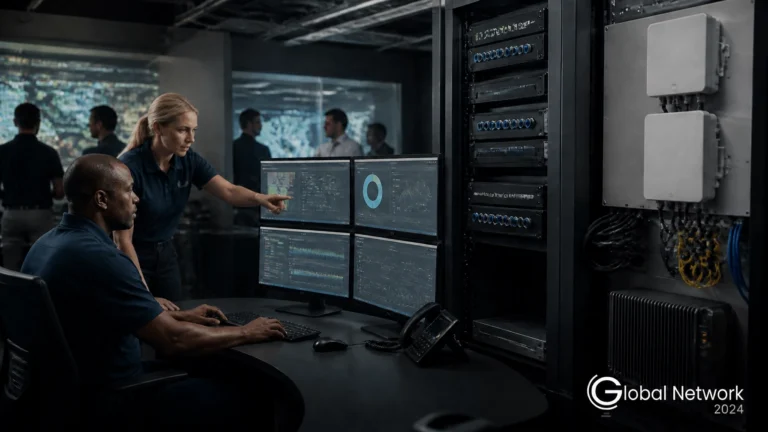
A professional design should begin with an RF survey and building assessment: not with a preselected amplifier.
The design package may include:
- Site plans, floor plans, and building elevations
- Existing signal measurements
- Predictive RF coverage maps
- DAQ, SINR, or BER data, as required
- Donor antenna location and link budget
- Donor antenna isolation calculations
- BDA and active-component locations
- Antenna distribution and coaxial cable diagrams
- Cable survivability and pathway details
- Grounding and surge-protection details
- Primary and secondary power calculations
- Fire alarm monitoring diagrams
- Equipment cut sheets and UL 2524 documentation
- Test-grid layouts
- Designer and installer qualifications
- Code-compliance narrative
- AHJ and frequency-license-holder approvals
The design must account for the building’s structure, occupancy, construction schedule, fire-rated assemblies, risers, shafts, mechanical spaces, and future renovation plans.
0% Guesswork. 0% Missed Deadlines.
An early design review can identify cable-pathway conflicts before walls close and ceilings are installed.
Testing, Acceptance, and Ongoing Compliance
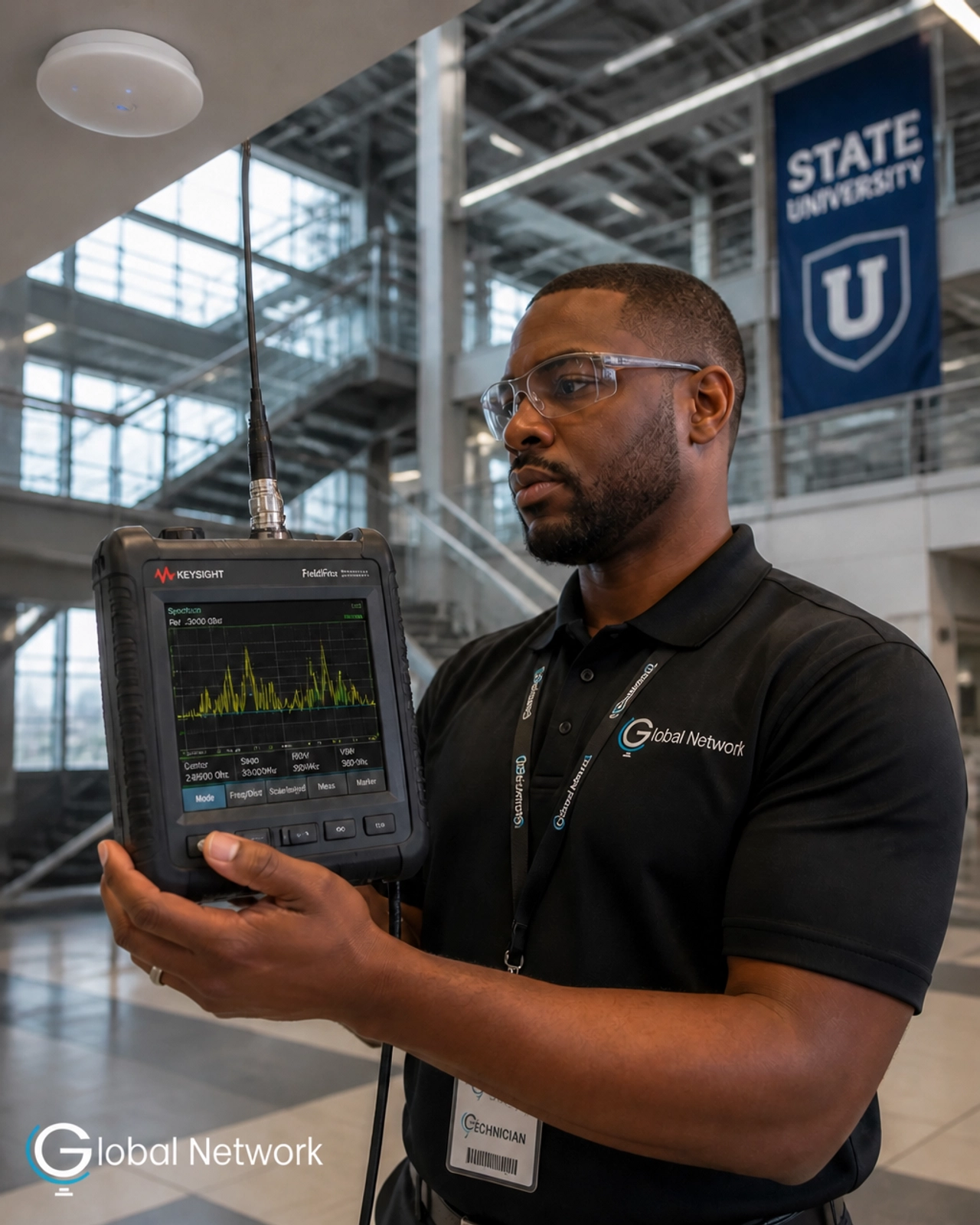
NFPA 1225 requires systems used for compliance to be tested, documented, and signed by personnel approved by the AHJ. Initial acceptance testing verifies that the installed system meets the required performance criteria.
Testing commonly includes:
- General-area coverage testing
- Critical-area coverage testing
- Uplink and downlink verification
- DAQ evaluation
- Signal-strength measurements
- Isolation testing
- Noise-floor evaluation
- Backup-power testing
- Fire alarm supervisory-signal testing
- Equipment and configuration verification
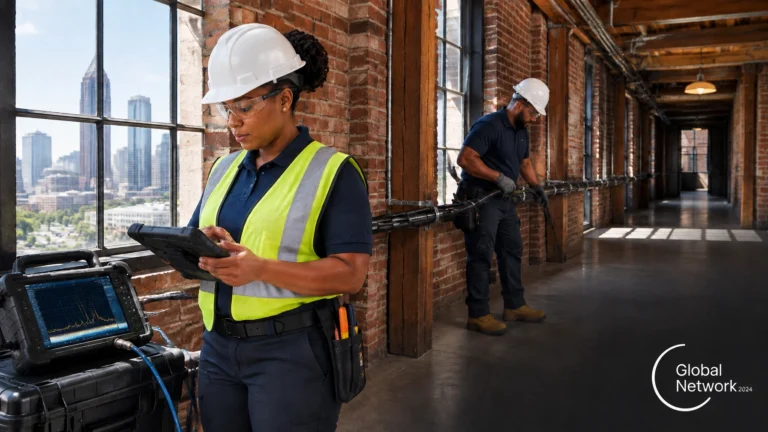
Testing is typically performed using a floor-plan grid. The exact grid and test protocol must follow the AHJ’s requirements. A building owner should receive complete records, not just a statement that the system “passed.”
The closeout package should include:
- Final test reports
- As-built drawings
- Equipment inventory
- Serial numbers and model information
- Battery calculations
- Frequency information
- BDA settings and gain values
- Isolation results
- Measured signal-source levels
- Maintenance instructions
- Approval letters and permits
NFPA 1225 also addresses recurring testing, including testing at least once every 12 months where the system is used to satisfy Chapter 18 requirements. Local requirements may be more specific or more stringent.

The Bottom Line for 2026
NFPA 1225 really matters: but the adopted code and AHJ instructions control your project.
For Atlanta building owners, the responsible approach is to:
- Confirm the adopted IFC edition and local amendments.
- Verify whether NFPA 1225:2022 Chapter 18 is the required technical basis.
- Coordinate with the AHJ and public safety frequency license holder.
- Conduct a professional RF survey before finalizing the design.
- Specify approved, listed, and public-safety-compatible equipment.
- Integrate ERCES supervisory signals with the fire alarm system.
- Complete acceptance testing and preserve the full closeout package.
- Schedule annual inspections and performance testing.
Global Network LLC provides Public Safety DAS and ERCES design, installation, commissioning, compliance testing, and annual performance support for Atlanta-area facilities. Our approach is built around code compliance, technical precision, workforce development, and community safety: when it matters most.

Plan Your Atlanta ERCES Compliance Strategy
Do not wait until the final inspection to discover that your building has radio dead zones, incomplete documentation, or an incompatible monitoring interface.
Review Global Network LLC’s ERCES and DAS services, learn more about who we serve, or explore our Public Safety DAS and ERCES resources.
For a consultation or compliance assessment:
- Office: 770.520.7633
- Toll Free: 877.231.1084
- Website: globalnetworkco.com
Verify the code. Engineer the system. Test the coverage. Protect the people who protect your building.