ERCES Testing 101: A Beginner’s Guide to Mastering NFPA 1225 Compliance
For building owners and facility managers, an Emergency Responder Communication Enhancement System (ERCES) is not simply another telecommunications installation. It is life-safety infrastructure designed to help firefighters, police officers, and emergency medical personnel communicate inside a building when it matters most.
Testing is what demonstrates that the system performs as designed: and continues to perform after occupancy. This guide explains the fundamentals of ERCES commissioning, acceptance testing, annual performance testing, backup power, alarm supervision, documentation, and Authority Having Jurisdiction (AHJ) expectations.
Important: ERCES requirements depend on the codes adopted by your city, county, or state, including the applicable editions of NFPA 1225, NFPA 72, IFC Section 510, and local amendments. The AHJ’s written requirements and approval process control the project.
What Is ERCES Testing?
ERCES testing evaluates the performance and reliability of a public safety Distributed Antenna System (DAS), often incorporating a Bi-Directional Amplifier (BDA), donor antenna, coaxial or fiber distribution network, remote units, batteries, and supervisory interfaces.
Testing generally answers five questions:
- Does the system provide required radio coverage throughout the building?
- Do critical areas meet stricter coverage requirements?
- Does the system operate correctly during normal and emergency power conditions?
- Are system faults reported to the Fire Alarm Control Panel (FACP) or approved monitoring point?
- Are the results documented in a format accepted by the AHJ?
A compliant design is important. A documented, witnessed, and maintained system is essential.
The Three Main Phases of ERCES Testing
1. Commissioning Testing
Commissioning is the contractor’s detailed verification process after installation and before formal AHJ acceptance. It confirms that the ERCES has been installed according to the approved design and is ready for inspection.
Typical commissioning activities
A qualified testing team may perform:
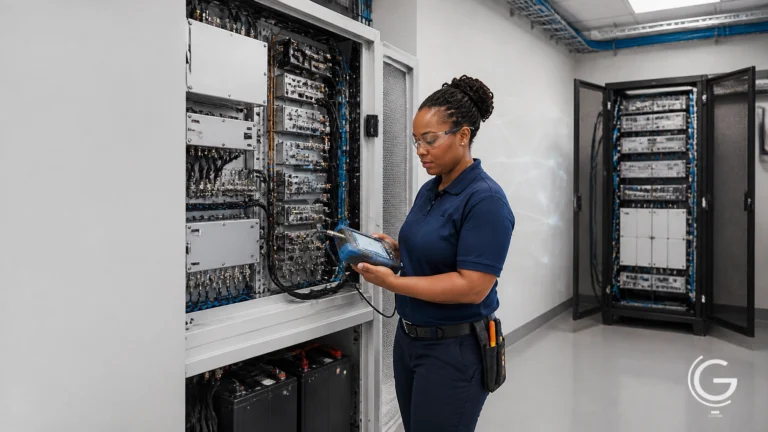
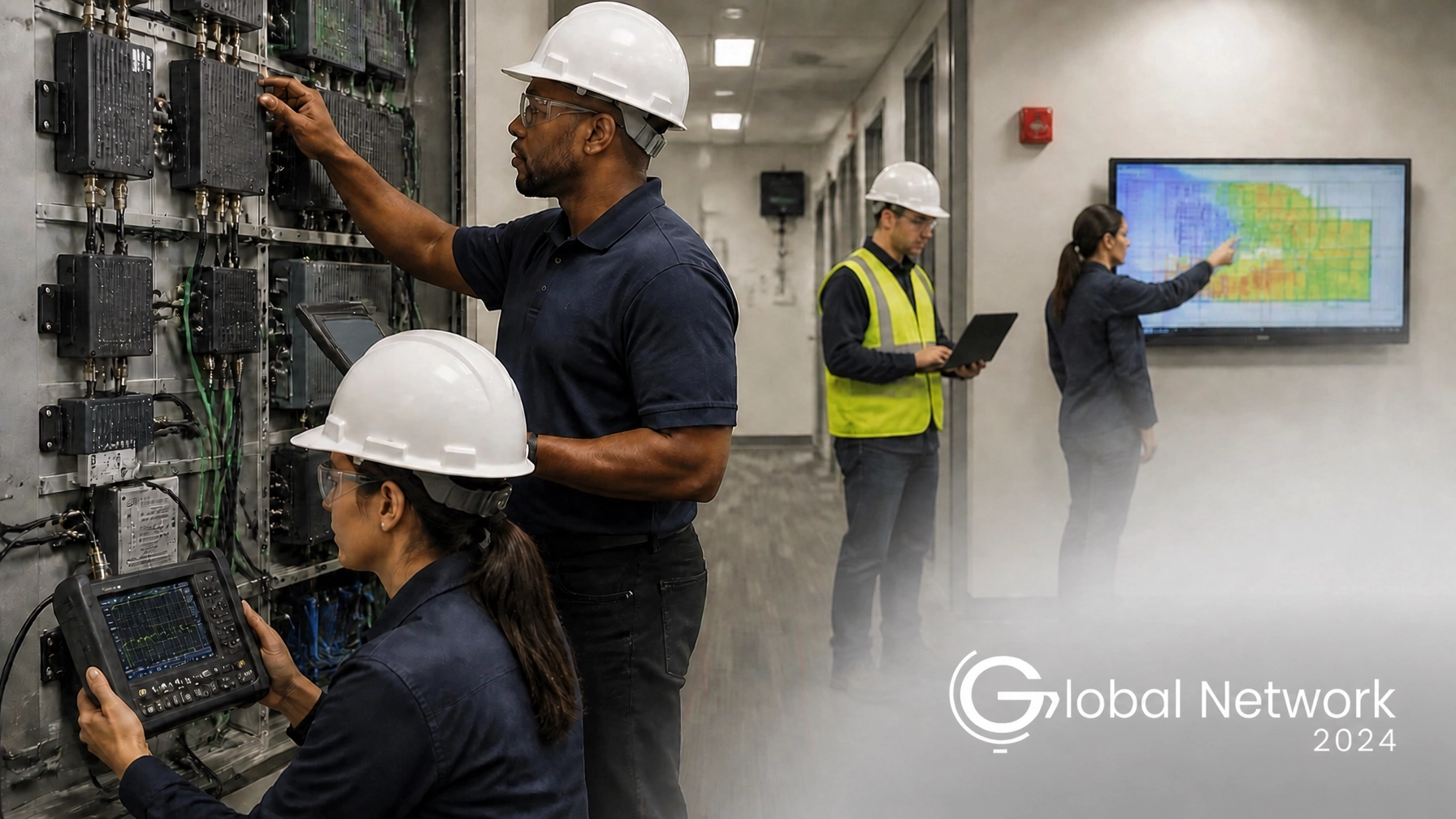
- Floor-by-floor radio frequency (RF) coverage testing
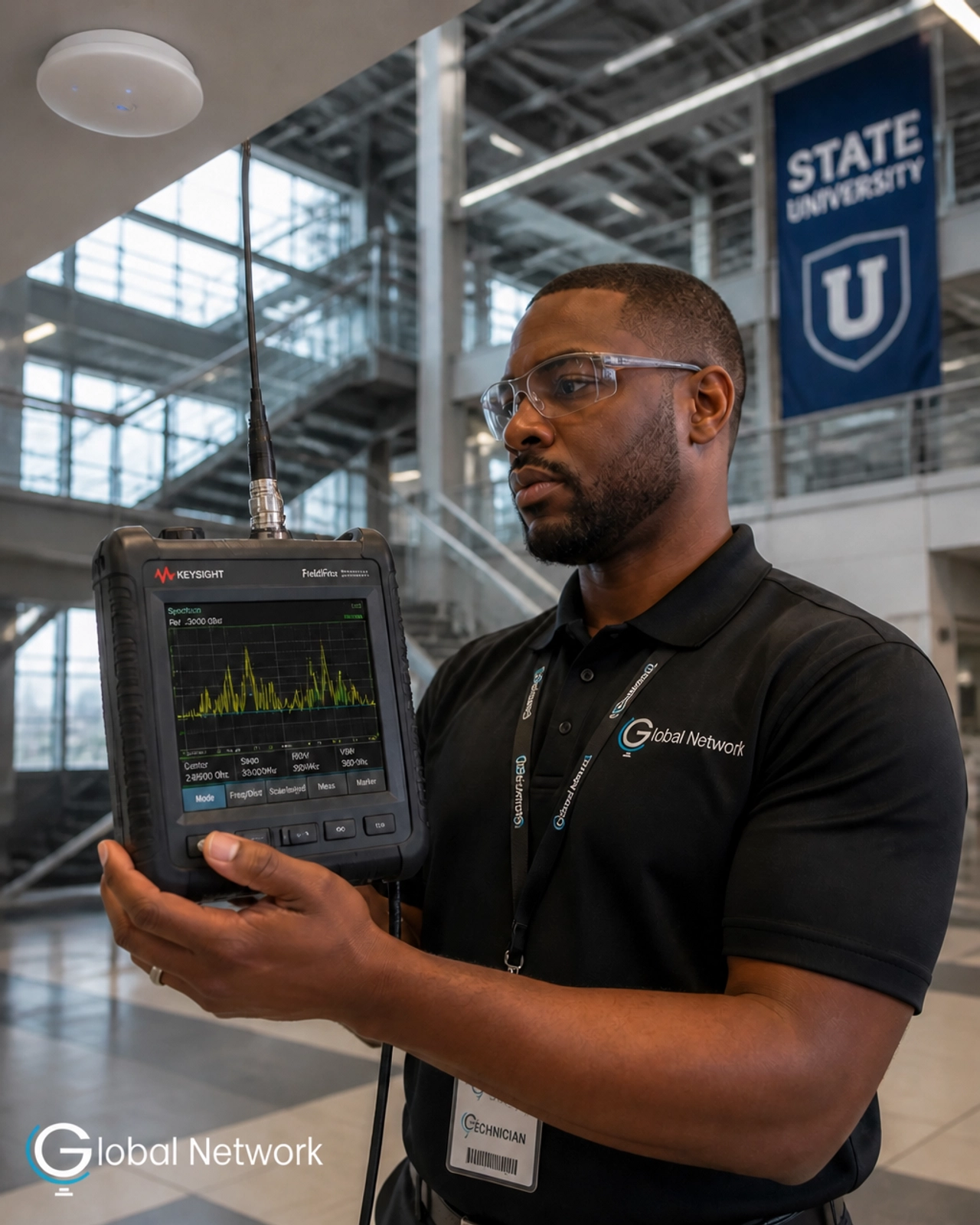
- Signal-strength measurements using calibrated test equipment
- Delivered Audio Quality (DAQ) or equivalent intelligibility testing
- Uplink and downlink verification
- BDA gain, isolation, and output-power checks
- Donor antenna and distribution network inspections
- Antenna, coupler, splitter, and cable verification
- Backup power transfer and load testing
- Alarm and supervisory signal testing
- Review of as-built drawings and equipment schedules
Many jurisdictions use a grid-based method for coverage testing. A floor is divided into measurement areas, frequently based on a 20-by-20-foot grid or a specified number of test cells. The exact grid layout, minimum signal level, percentage of required coverage, and critical-area criteria must be confirmed with the local AHJ.
Commissioning identifies deficiencies before the formal inspection. That matters because correcting a weak signal zone during commissioning is significantly easier than discovering it during a final Certificate of Occupancy inspection.

2. Acceptance Testing
Acceptance testing is the formal process used to demonstrate that the completed ERCES satisfies the approved design and jurisdictional requirements. It commonly occurs before final building approval or issuance of a Certificate of Occupancy.
The AHJ may require the test to be:
- Witnessed by a fire marshal or public safety radio representative
- Performed by an approved or qualified testing agency
- Documented on jurisdiction-specific forms
- Signed by an AHJ-approved responsible party
- Coordinated with the building’s fire alarm contractor
What is evaluated during acceptance testing?
Acceptance testing may include:
- Full-building RF coverage measurements
- Verification of required critical areas
- DAQ or equivalent voice-quality testing
- BDA and remote-unit functionality
- Donor signal integrity
- Cable and antenna system performance
- Emergency Power Off (EPO) interfaces, where applicable
- AC power failure alarms
- Battery and charger fault alarms
- System trouble and supervisory signals
- FACP or monitoring-system annunciation
- Equipment labeling and enclosure condition
- Approved drawings, test forms, and closeout documents
Coverage thresholds are not universal. Many ERCES programs reference minimum signal levels such as -95 dBm, general-area coverage targets, and higher coverage targets for critical areas such as stairwells, fire command centers, fire pump rooms, and elevator lobbies. However, the controlling requirements are those adopted and enforced by the applicable AHJ.
3. Annual Performance Testing
ERCES compliance is not a one-time event. Buildings change. Construction, tenant improvements, new mechanical equipment, damaged cables, aging batteries, and nearby radio-frequency conditions can affect system performance.
Annual performance testing verifies that the installed system continues to meet requirements.
Annual testing commonly includes
- RF coverage or required sampling methodology
- Critical-area signal verification
- BDA and remote-unit functional checks
- Battery voltage and condition checks
- Backup power operation under load
- AC failure simulation
- Charger and low-battery alarm testing
- Donor antenna and cable fault testing
- FACP or monitoring-interface verification
- Equipment inspection and labeling review
- Updated test records and deficiency reporting
Many jurisdictions require testing at least once every 12 months. Some also require more comprehensive testing at defined intervals, such as a full grid test every several years. The building owner is generally responsible for scheduling required inspections and retaining documentation.
0% Missed Annual Tests. A recurring compliance calendar is one of the simplest ways to reduce risk.
Backup Power: Proving the System Works During an Outage
An ERCES must continue supporting emergency communications when normal utility power is unavailable. Backup power may include batteries, an emergency generator, or a combination of both.
Testing typically verifies:
- Loss of normal AC power is detected.
- The ERCES transfers to secondary power automatically.
- The system continues operating without unacceptable degradation.
- Required trouble and supervisory signals are generated.
- Battery or generator capacity satisfies the adopted requirement.
Backup-power duration can vary significantly. Some jurisdictions reference 12 hours, while others require 24 hours or impose longer or more demanding load-test procedures. Certain AHJs also specify the duration of the live battery load test, which may differ from the required total standby runtime.
Do not assume that a commonly cited number applies to your building. Confirm:
- The adopted IFC edition
- The adopted NFPA 1225 edition
- Any applicable NFPA 72 requirements
- Local amendments
- Fire marshal or radio-authority bulletins
- Generator and emergency-power provisions
- Required test duration and acceptance criteria
A battery that shows acceptable voltage at rest may still fail under load. Proper testing evaluates actual performance, not just an apparent charge level.
Alarm Supervision and Monitoring
ERCES equipment must communicate trouble conditions clearly. An unmonitored failure can leave a building without reliable responder communications while creating a false sense of security.
Depending on the design and local requirements, supervised conditions may include:
- Loss of normal AC power
- Battery charger failure
- Low battery condition
- BDA or repeater failure
- Donor antenna failure
- Cable or distribution-path fault
- Remote-unit failure
- Enclosure tampering
- EPO activation
- Loss of communication with monitored equipment
These signals are often connected to the building’s FACP or another approved monitoring platform under requirements associated with NFPA 72. During testing, technicians should intentionally create each required fault condition and verify that the correct signal appears at the correct location.
What a proper supervision test confirms
- The fault is detected.
- The appropriate trouble or supervisory indication is generated.
- The signal reaches the designated monitoring point.
- The signal is labeled clearly.
- Restoration clears the condition correctly.
- No unrelated fire alarm functions are impaired.
Alarm supervision is not an administrative detail. It is the mechanism that alerts responsible personnel before a communications failure becomes an emergency failure.

Records: The Evidence of Compliance
An AHJ expects more than a verbal statement that the system passed. The closeout package should provide a traceable record of what was tested, how it was tested, and who approved the results.
A typical ERCES record set may include:
- Approved plans and specifications
- As-built drawings
- Floor plans showing test grids
- RF measurement results
- DAQ or voice-quality results
- Critical-area test results
- BDA and equipment inventory
- Manufacturer data sheets and listings
- Battery calculations
- Backup-power test results
- Alarm and supervision test results
- Deficiency reports and corrective actions
- Technician qualifications
- Calibration records
- Acceptance-test signatures
- Annual inspection and maintenance history
Keep these records accessible to facility personnel, the fire protection team, and the AHJ when requested. Accurate records also make future troubleshooting, renovations, and recertification more efficient.
What Does the AHJ Expect?
The AHJ’s role is to protect life safety and verify that the system complies with the adopted requirements. Expectations differ by jurisdiction, but early coordination is consistently valuable.
Before installation or testing, confirm:
- Which codes and editions apply
- Whether NFPA 1225 or an earlier standard is referenced
- Required coverage percentages and signal levels
- Critical areas that require enhanced coverage
- Approved test equipment and methods
- Who may perform or witness the testing
- Required backup-power duration and load-test procedure
- Required alarm-monitoring points
- Submission forms and closeout documents
- Annual recertification deadlines
Engaging the AHJ late can create avoidable redesigns, retesting, and occupancy delays. A qualified ERCES partner can help coordinate the technical process, but the AHJ remains the final authority for jurisdictional approval.
A Practical ERCES Testing Checklist
Use this beginner-friendly checklist as a starting point:
- Confirm adopted codes and local amendments.
- Review the approved ERCES design.
- Complete commissioning before requesting acceptance.
- Test all floors and designated critical areas.
- Verify BDA, DAS, antennas, cabling, and remote units.
- Simulate normal-power failure.
- Test backup power under the AHJ-required load procedure.
- Activate and verify each required supervisory condition.
- Prepare complete test and closeout records.
- Coordinate acceptance testing with the AHJ.
- Schedule annual performance testing before the anniversary date.
- Correct deficiencies and document restoration.
0% Defects. 0% Missed Deadlines. Life-safety communication demands disciplined execution.
Build Confidence With a Qualified ERCES Partner
For building owners, developers, facility managers, and government agencies, ERCES testing is about more than passing an inspection. It is about maintaining dependable first responder communications in offices, hospitals, hotels, schools, stadiums, parking structures, and public facilities.
Global Network LLC provides Public Safety DAS/ERCES design, installation, commissioning, compliance testing, and annual performance support. As Atlanta’s local DAS and BDA specialist, the company helps clients navigate IFC 510, NFPA 72, NFPA 1225, and AHJ-specific requirements while supporting FirstNet-compatible solutions where appropriate.
Explore Global Network LLC’s ERCES and DAS services, review the company’s compliance resources, or learn more about who we serve.
Do not wait until final inspection to discover a coverage gap or failed battery. Schedule a professional evaluation and establish a testing plan that protects your building, your occupants, and the responders who depend on reliable communications.
Office: 770.520.7633
Toll Free: 877.231.1084
Website: globalnetworkco.com
For additional standards information, consult the NFPA 1225 information page and coordinate directly with your local AHJ before relying on any general industry guidance.