Cellular Boosters vs. Public Safety DAS: Why You Can’t Use the Same System for Everything
A stronger wireless signal does not automatically mean a safer building.
Facility managers often hear terms such as cellular booster, cellular DAS, BDA, public safety DAS, ERRCS, and ERCES used interchangeably. That creates a serious risk: selecting a commercial wireless solution when the building actually requires a code-compliant public-safety communications system.
The two technologies may share certain infrastructure concepts, but they serve different users, operate across different frequency bands, follow different regulatory requirements, and are evaluated under different performance standards.
A commercial cellular booster cannot legally or technically replace a Public Safety DAS/ERCES system.
That distinction matters when a building is being designed, renovated, inspected, or prepared for a Certificate of Occupancy.
The Fundamental Difference: Convenience Versus Life Safety
A commercial cellular booster or cellular DAS is designed to improve wireless service for occupants. It supports smartphones, mobile hotspots, business applications, voice calls, and data traffic across commercial carrier networks.
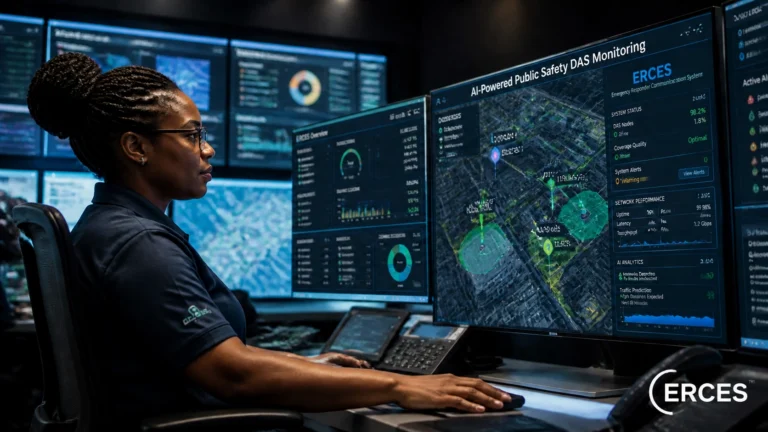
A Public Safety DAS, also known as an Emergency Responder Communications Enhancement System (ERCES) or Emergency Responder Radio Communication System (ERRCS), is designed to support first responders operating inside a building.
The primary users are different:
- Commercial cellular systems: Tenants, visitors, staff, and customers using mobile devices.
- Public-safety systems: Firefighters, law enforcement officers, emergency medical personnel, and other authorized responders using mission-critical two-way radios.
The operating objectives are different as well:
- Commercial wireless focuses on capacity, throughput, carrier availability, and user experience.
- Public-safety wireless focuses on reliable two-way voice communication, coverage continuity, survivability, monitoring, and AHJ approval.
A commercial system may provide excellent service in an office, lobby, or conference area while failing to provide adequate coverage in a stairwell, elevator lobby, basement, fire pump room, or fire command center.
Those spaces are not optional coverage areas for emergency responders.
What Is a Commercial Cellular Booster or Cellular DAS?
A commercial cellular booster receives an outside cellular signal, amplifies it, and redistributes it inside a building. A cellular DAS uses distributed antennas and a common signal source to improve coverage across larger or more complex facilities.
These systems are commonly used in:
- Office buildings
- Hotels
- Retail centers
- Hospitals
- Warehouses
- Universities
- Stadiums and event venues
- Parking structures
A cellular DAS may be designed as a neutral-host system supporting multiple commercial carriers. A smaller commercial booster may support a more limited area or carrier configuration.
Typical design priorities include:
- Improved indoor voice and data coverage
- Better 4G LTE and 5G availability
- High user capacity
- Carrier coordination
- Tenant satisfaction
- Reduced dropped calls
- Reliable connectivity in dense areas
These are valuable services. However, they do not make the system a public-safety life-safety system.
Commercial equipment is generally not designed around the same requirements for:
- Fire-resistive pathways
- Dedicated emergency power
- Fire alarm monitoring
- Public-safety frequency authorization
- AHJ acceptance testing
- Annual ERCES testing
- Critical-area coverage thresholds
- Public-safety radio performance
For a broader discussion of commercial in-building wireless options, facility managers can review Global Network LLC’s guide to small cells and cellular DAS.
What Is a Public Safety DAS/ERCES System?
A Public Safety DAS/ERCES system improves the ability of first responders to transmit and receive radio communications throughout a building.
Most systems include some combination of:
- A donor antenna or approved signal source
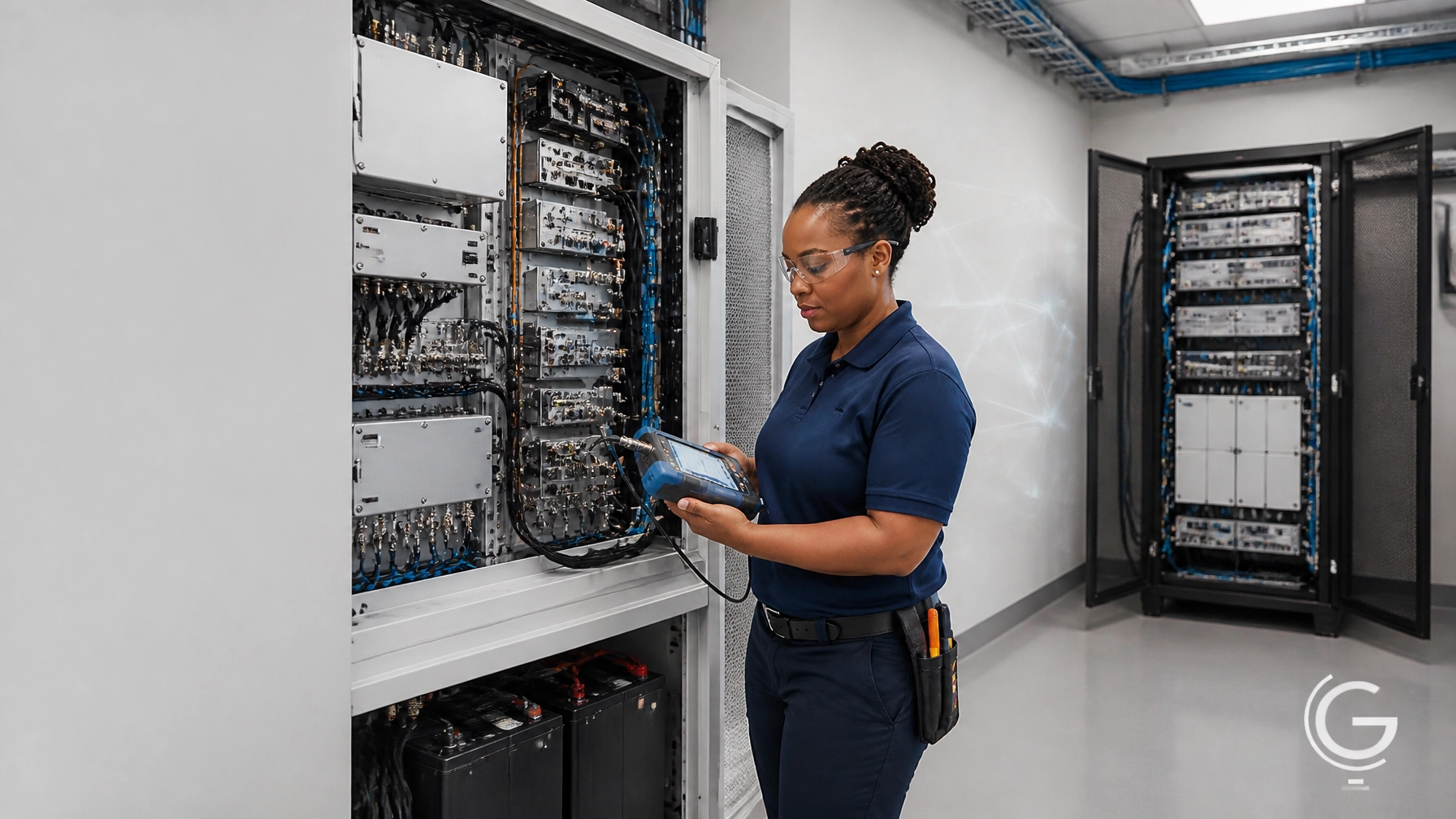
- A Bi-Directional Amplifier (BDA)
- Public-safety RF filters and other active equipment
- Coaxial cable, fiber, or hybrid distribution pathways
- Distributed indoor antennas
- Dedicated emergency power and battery backup
- Fire-rated or otherwise survivable pathways
- NEMA-rated equipment enclosures where required
- System monitoring and alarm interfaces
- Fire alarm control panel integration
- Remote annunciation
- Grounding and lightning protection
The design must be based on the frequencies required by the local jurisdiction and the public-safety agencies serving the property. Those frequencies may include VHF, UHF, 700 MHz, or 800 MHz land-mobile-radio bands.
The system must also be engineered for the building’s actual construction materials, floor plan, elevation, vertical shafts, stairwells, elevators, below-grade spaces, and other RF attenuation factors.

Why the Systems Are Not Interchangeable
1. They operate under different FCC requirements
Commercial cellular boosters operate under the FCC’s commercial mobile service framework, including the requirements in 47 CFR § 20.21.
Public-safety signal boosters operate under the Private Land Mobile Radio Services rules in 47 CFR § 90.219. The Electronic Code of Federal Regulations identifies important requirements for public-safety signal booster operation.
For example, a non-licensee seeking to operate a public-safety booster generally must obtain express consent from the applicable frequency licensee. Class B signal booster installations must also be registered in the FCC signal booster database, and operation must not cause harmful interference.
A commercial cellular booster does not provide authorization to rebroadcast public-safety radio frequencies. It cannot simply be retuned, relabeled, or connected to a different antenna system to become a compliant ERCES installation.
2. They serve different frequency bands
Commercial cellular systems are designed for commercial carrier frequencies used by cellular networks.
Public-safety systems are designed around the frequencies assigned to the jurisdiction’s first-responder radio system. These frequencies may be entirely different from the commercial cellular bands.
The distinction is technical, not cosmetic. Filters, amplifiers, duplexers, donor sources, gain levels, noise performance, isolation, and channelization must all be engineered for the required public-safety spectrum.
A system that amplifies a strong commercial 5G signal may do nothing for a firefighter’s 700 MHz or 800 MHz radio.
3. They have different survivability requirements
Public-safety communications must remain available during emergencies, including conditions involving smoke, heat, power loss, equipment faults, and damage to portions of the building.
Depending on the adopted code and AHJ requirements, ERCES infrastructure may require:
- Dedicated primary power
- Emergency or standby power
- Battery backup
- Fire-rated or protected pathways
- Hardened equipment enclosures
- Environmental protection
- Grounding and surge protection
- Separation from unrelated telecommunications systems
A normal commercial cellular system may use standard telecommunications pathways and optional backup power. That design may be completely appropriate for business connectivity but insufficient for life-safety communications.
4. They are tested for different outcomes
Commercial cellular systems are commonly evaluated using carrier performance criteria, signal levels, capacity measurements, and network management tools.
Public-safety DAS/ERCES systems are evaluated against the adopted requirements of the jurisdiction. Testing may include:
- Signal strength
- Inbound and outbound coverage
- Delivered Audio Quality (DAQ)
- General-area coverage
- Critical-area coverage
- Battery performance
- Alarm functionality
- Donor antenna performance
- Active equipment status
- Fire alarm interface
- System degradation and fault conditions
Acceptance testing and annual performance testing are central to maintaining public-safety compliance. Global Network LLC provides design, installation, testing, and compliance services for these systems.
The Code-Compliance Risk
Many jurisdictions adopt provisions based on IFC 510, NFPA 72, and NFPA 1225, along with local amendments and fire-department requirements.
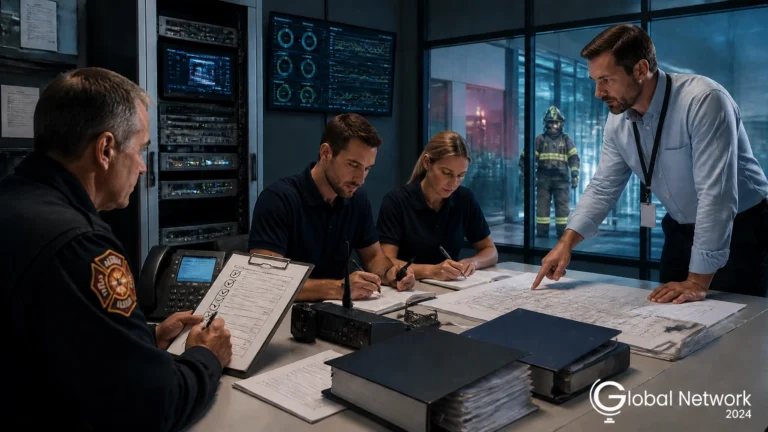
The exact requirements vary by jurisdiction. The Authority Having Jurisdiction (AHJ) determines how the adopted codes are applied, what frequencies must be supported, which areas are considered critical, and what documentation is required.
If a building fails its initial radio coverage test, the owner may be required to install an approved ERCES solution before receiving or maintaining occupancy approval.
Installing a commercial cellular booster instead may result in:
- Failed acceptance testing
- Rejected plans
- Permit complications
- Delayed inspections
- Certificate of Occupancy delays
- Required system replacement
- Rework and construction costs
- Potential interference to licensed public-safety communications
- Increased liability exposure
0% Guesswork. 0% Missed Coverage Areas. 0% Avoidable CO Delays.
The safest approach is to identify the public-safety requirement before purchasing equipment or finalizing telecommunications pathways.
Can Commercial Cellular and Public-Safety Systems Share Infrastructure?
In some projects, commercial cellular and public-safety systems may be coordinated within the same building. They may share limited physical infrastructure, such as certain pathways or building spaces, if the design is approved and technically appropriate.
That does not mean they are the same system.
The public-safety portion should maintain the required separation, monitoring, power, pathway survivability, and frequency protection established by the AHJ and applicable codes. Any shared infrastructure must be reviewed for:
- RF isolation
- Interference risk
- Cable ratings
- Pathway survivability
- Power independence
- Equipment access
- Maintenance responsibilities
- Fire alarm integration
- Future testing requirements
Treating both systems as separate engineered solutions protects the building owner and supports a cleaner approval process.

A Facility Manager’s Decision Checklist
Before approving a wireless enhancement project, ask the following questions:
For commercial cellular coverage
- Are the primary users tenants, visitors, or employees?
- Which commercial carriers must be supported?
- Is the priority voice, data, capacity, or 5G availability?
- Does the property need a small cell, booster, or neutral-host DAS?
- Has carrier coordination been completed?
For public-safety communications
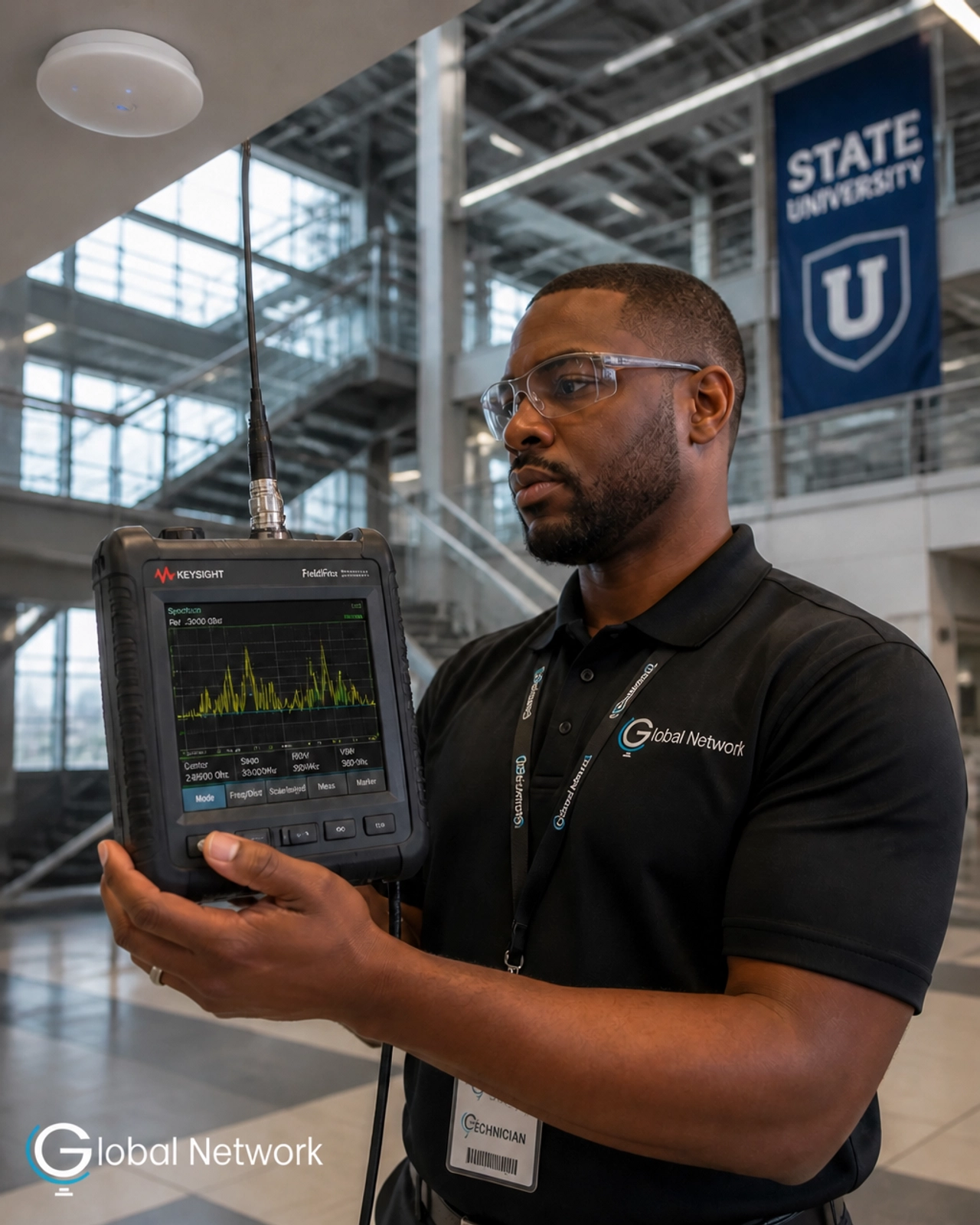
- Has the building completed an RF coverage survey or grid test?
- Which frequencies does the AHJ require?
- Has the frequency license holder provided authorization?
- Are the proposed BDAs certified for the required public-safety bands?
- Does the equipment meet applicable listing requirements?
- Are critical areas included in the design?
- Are backup power and survivable pathways compliant?
- Will alarms report to the fire alarm system?
- What acceptance and annual testing documentation is required?
If the answer to the public-safety questions is unclear, the project needs a qualified ERCES specialist: not a commercial booster vendor alone.
The Bottom Line
Commercial cellular boosters and cellular DAS systems improve connectivity for building occupants. Public Safety DAS/ERCES systems protect the communication capabilities of first responders.
They may use similar concepts: antennas, coaxial cable, fiber, RF amplifiers, and distributed coverage: but their missions are fundamentally different.
A cellular signal improvement is not proof of public-safety radio compliance.
For Atlanta property owners, facility managers, developers, and public-sector agencies, the right solution begins with testing, code review, frequency coordination, and AHJ requirements. Global Network LLC designs and supports code-focused BDA, ERCES, and Public Safety DAS solutions that help buildings remain connected when it matters most.
Schedule a compliance consultation through the Global Network LLC contact form or visit globalnetworkco.com.
Office: 770.520.7633
Toll Free: 877.231.1084