
The Ultimate Guide to NFPA 1225: Everything Atlanta Building Owners Need to Succeed with Public Safety Communication
Navigating the complex landscape of fire safety codes and building regulations in Metro Atlanta requires absolute precision. For commercial real estate developers, property managers, and institutional facility directors, securing a Certificate of Occupancy (CO) is no longer just about sprinkler systems and emergency exits. Today, in-building wireless communication is a mandatory life-safety requirement governed by rigorous national standards.
Enter NFPA 1225: the definitive national standard governing emergency services communications and in-building radio coverage systems. Understanding NFPA 1225 is essential for every building owner in Atlanta who wants to avoid costly occupancy delays, failed fire marshal inspections, and severe liabilities. Whether you are managing a high-rise office tower, a healthcare facility, a university campus, or a retail hub, mastering this standard is your key to seamless compliance and uncompromised first responder safety.
What Is NFPA 1225 and Why Does It Matter in Atlanta?
NFPA 1225 (Standard for Emergency Services Communications) represents a critical consolidation of legacy codes. Published initially in 2022, it unified and replaced major sections of NFPA 72 (Chapter 24) and NFPA 1221, creating a single, comprehensive benchmark for Emergency Responder Communications Enhancement Systems (ERCES) and Emergency Responder Radio Coverage Systems (ERRCS): commonly known as Public Safety Distributed Antenna Systems (DAS).
When local Authorities Having Jurisdiction (AHJs): including the Atlanta Fire Rescue Department and surrounding county fire marshals: enforce modern fire codes like the International Fire Code (IFC Section 510) and NFPA 1, they look directly to NFPA 1225 for the technical rules of design, installation, testing, and maintenance.
0% Defects. 0% Missed Deadlines. That is the uncompromising standard required when your building's safety infrastructure undergoes fire marshal review.
NFPA 1225 vs. IFC 510: Understanding the Regulatory Framework
Building owners frequently ask how NFPA 1225 interacts with IFC 510. While both standards serve the same ultimate mission: guaranteeing that police, fire, and emergency medical services can communicate flawlessly inside any structure: they operate in tandem:
- IFC Section 510 dictates when an in-building emergency radio coverage system is required based on building construction, dead zones, and signal attenuation.
- NFPA 1225 dictates how that system must be engineered, installed, tested, and maintained to ensure absolute reliability.
By aligning your facility with NFPA 1225 specifications, you automatically fulfill the rigorous technical demands embedded within modern fire codes. For deeper insights into how these standards intersect, review our detailed guide on compliance with fire and safety regulations.
Core Technical Requirements Under NFPA 1225
NFPA 1225 leaves no room for guesswork. It sets exact performance benchmarks for radio signal strength and audio intelligibility across every square foot of your property.

1. Floor Area Coverage Thresholds
Unlike legacy guidelines that relied on sporadic spot-checks, NFPA 1225 mandates strict percentage coverage across two distinct building classifications:
- Critical Areas (99% Coverage Required): Fire command centers, fire pump rooms, interior exit stairways, exit passageways, elevator lobbies, and standpipe cabinets must achieve 99% floor area coverage.
- General Building Areas (95% Coverage Required): Open office floors, retail spaces, tenant suites, and parking structures must achieve at least 95% floor area coverage.
2. Delivered Audio Quality (DAQ) Standards
Signal strength alone is meaningless if voice transmissions are garbled. NFPA 1225 requires a minimum Delivered Audio Quality (DAQ) of 3.0 for both downlink (from the external public safety repeater into the building) and uplink (from portable radios inside the building back to the emergency network). DAQ 3.0 ensures speech is intelligible with only occasional repetition required: a vital necessity during chaotic emergency response operations.
3. Signal Strength Criteria
In alignment with NFPA 1225, systems must maintain a minimum signal strength of −95 dBm or better within required coverage zones, coupled with robust uplink margins to ensure portable radios penetrate thick concrete and subterranean levels.
Essential Components of a Compliant ERCES / Public Safety DAS
Achieving NFPA 1225 compliance requires a carefully engineered ecosystem of hardware. As Atlanta's trusted local BDA specialists, we design and install mission-critical infrastructure built to withstand extreme operational demands:
- Bi-Directional Amplifiers (BDAs): High-gain, signal-boosting amplifiers that capture outside public safety frequencies and distribute them throughout the interior.
- NEMA-Rated Fire-Resistant Enclosures: Weather- and tamper-proof metal cabinets housing active electronics, monitored by fire alarm panels for tampering, power loss, and antenna malfunction.
- Dedicated Battery Backup (RPS): Secondary power supplies capable of sustaining full operation for 12 to 24 hours during total commercial power failures.
- Coaxial Cable and Distributed Antenna Networks: Plenum-rated coaxial cabling and strategically placed donor and indoor antennas designed to eliminate radio dead zones completely.

To explore how these components eliminate signal voids, read our technical resource on achieving IFC 510 and NFPA 72 compliance with ERRCS.
Testing Mandates and Certification Protocols
Compliance does not end at installation. NFPA 1225 mandates rigorous, recurring testing protocols to verify that signal integrity never degrades over time.
Acceptance and Commissioning Testing
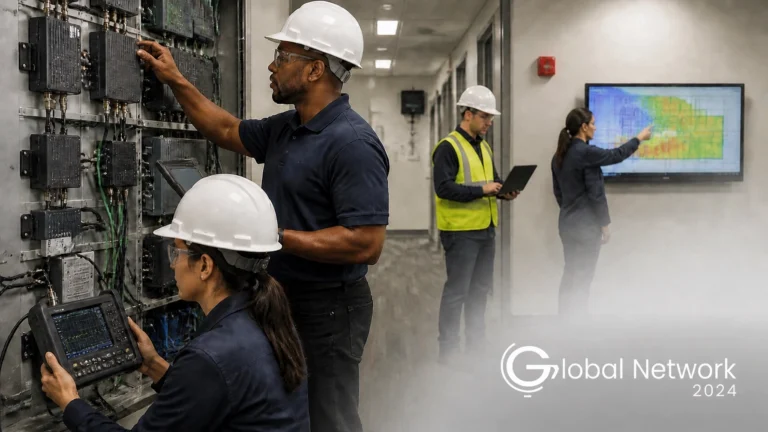
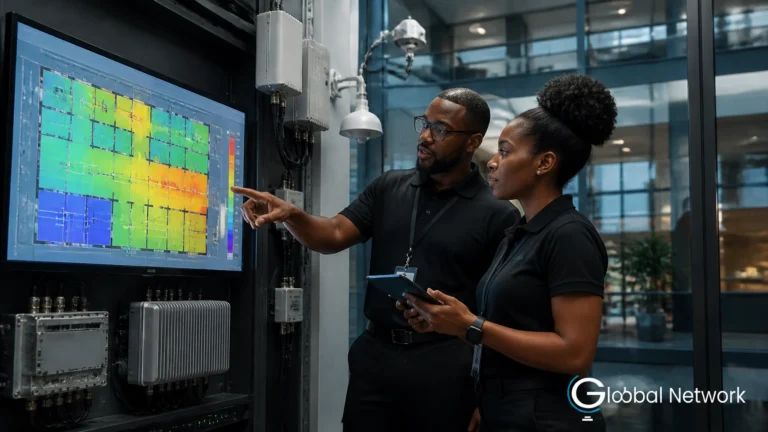
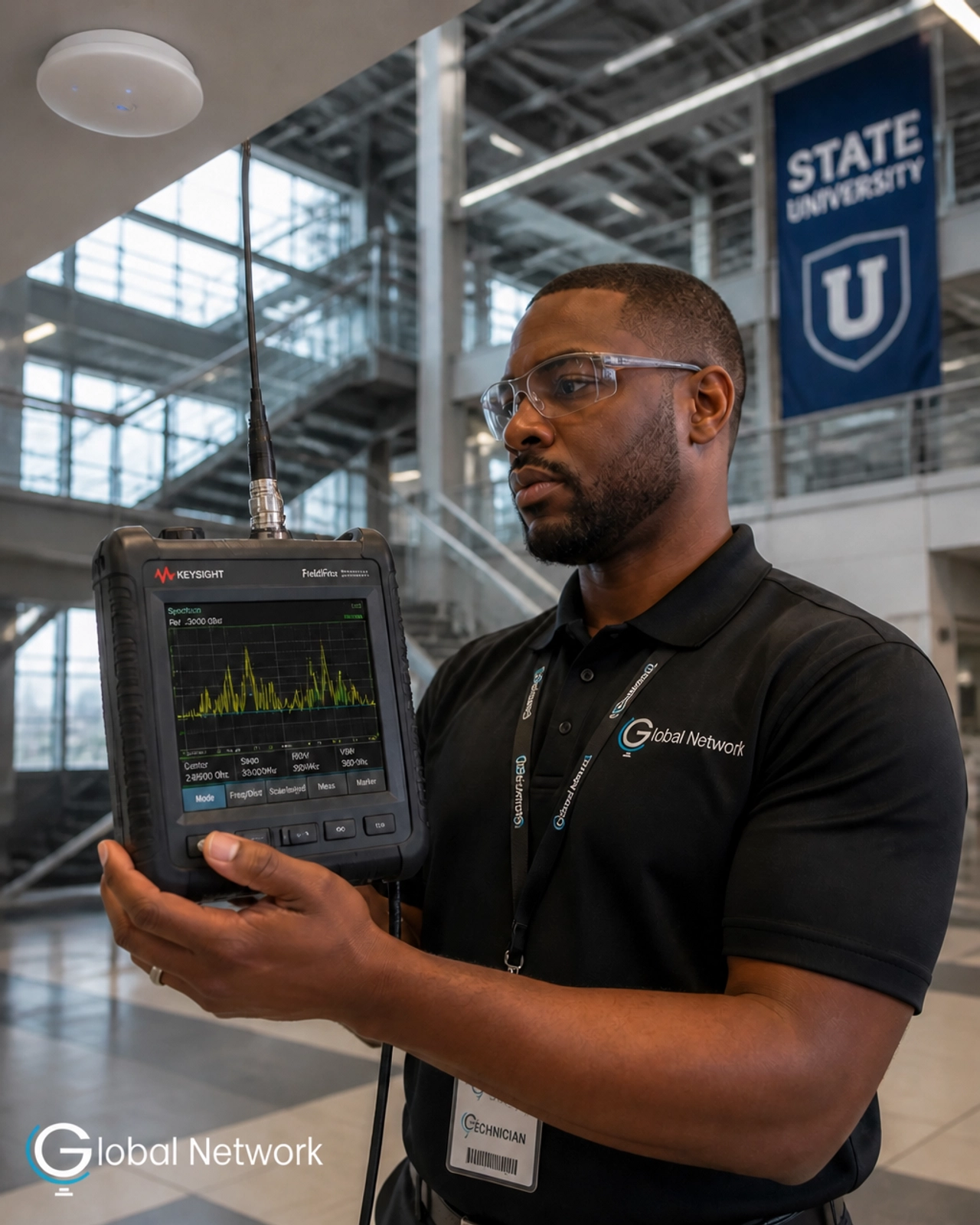
Before the AHJ grants your Certificate of Occupancy, a comprehensive grid-based RF test must be performed. Technicians traverse the building utilizing calibrated spectrum analyzers across standardized 20 ft × 20 ft testing grids in general areas and 100% test coverage in critical areas.
Annual Performance Re-Certifications
NFPA 1225 and local fire marshals require annual recertification tests performed by certified technicians. These tests inspect battery backup health, uplink/downlink gain, signal isolation, and antenna performance.
Peace of mind is knowing your facility is fully fortified against inspection failures. Discover our proven methodologies by reviewing our guide on how to pass your next fire marshal radio inspection.

Strategic Compliance Roadmap for Atlanta Property Owners
Navigating NFPA 1225 successfully requires a structured, proactive approach:
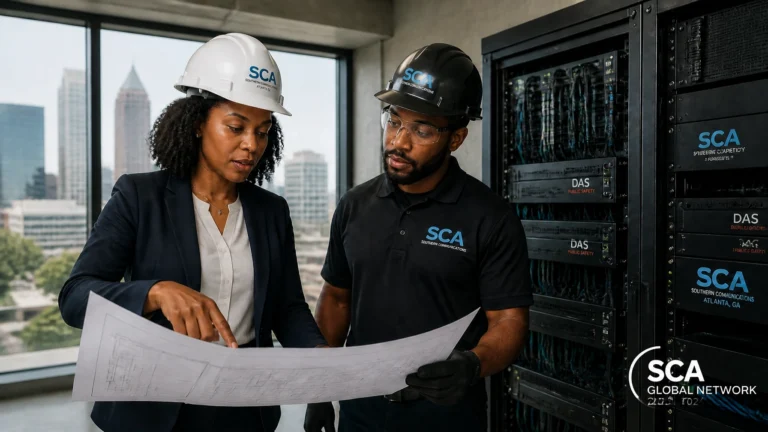
- Early Architectural Assessment: Engage wireless engineers during the pre-construction or renovation phase to review blueprints for potential RF shielding hazards (e.g., Low-E glass, reinforced concrete, subterranean parking).
- Custom Engineering & AHJ Coordination: Design a tailored public safety DAS that complies with specific local carrier frequencies (including FirstNet compatibility) and submit plans directly to local fire prevention bureaus.
- Professional Installation & Integration: Deploy carrier-grade hardware housed in red NEMA enclosures with integrated alarm monitoring.
- Rigorous Grid Testing & Certification: Execute full-spectrum commissioning tests and deliver certified documentation directly to the Fire Marshal to secure your Certificate of Occupancy.
For a complete step-by-step walkthrough, consult our ultimate public safety DAS/BDA compliance checklist.
Secure Your Building's Compliance Today
When emergency responders enter your building, every second counts: and reliable communication is their lifeline. Do not let radio dead zones jeopardize your Certificate of Occupancy or tenant safety. Partner with Atlanta's premier experts in Public Safety DAS, BDA technology, and ERCES engineering.
Global Network LLC delivers turnkey design, expert installation, and certified compliance testing tailored to meet every mandate of NFPA 1225 and IFC 510.
- Office: 770.520.7633
- Toll-Free: 877.231.1084
- Website: globalnetworkco.com
Contact us today to schedule your comprehensive site survey and ensure your property achieves 100% compliance when it matters most.