Small Cell Solutions for Atlanta Commercial Properties: When and Why to Consider Them
In the rapidly expanding commercial landscape of Atlanta, uninterrupted connectivity is no longer a luxury: it is an operational necessity. Commercial real estate owners, facility managers, and corporate tenants face unprecedented demands for high-speed voice and data reliability across multi-story office towers, hospitality hubs, healthcare facilities, and retail centers. Modern building architecture, featuring energy-efficient low-e glass, reinforced concrete, and subterranean levels, routinely blocks exterior cellular signals. To overcome these infrastructural barriers, property operators must deploy advanced in-building wireless architectures.
Among these technologies, Small Cell Solutions have emerged as a cornerstone of modern cellular optimization. When integrated strategically alongside traditional Bi-Directional Amplifier (BDA) systems and life-safety Emergency Responder Communication Enhancement Systems (ERCES), small cells deliver the targeted capacity required for enterprise efficiency. This comprehensive analysis explores when and why Atlanta property owners should incorporate small cell solutions into their master infrastructure plans.
1. Deconstructing the In-Building Wireless Paradigm: Small Cells vs. DAS and ERCES
To formulate an effective wireless strategy, decision-makers must distinguish between commercial capacity enhancement and mandatory life-safety compliance.
- Small Cells (LTE/5G): Low-power cellular radio nodes designed to cover targeted indoor or outdoor areas. They connect directly to carrier core networks via broadband backhaul, delivering exceptional data throughput and voice clarity for specific high-demand zones.
- Commercial Distributed Antenna Systems (DAS): Comprehensive networks of distributed antennas connected to a common signal source, engineered to provide broad, multi-carrier coverage across sprawling campuses or massive skyscrapers.
- ERCES / Public Safety DAS: Code-mandated radio enhancement systems utilizing BDA technology to guarantee 99% critical two-way radio coverage for first responders in stairwells, basements, and core areas, strictly adhering to IFC 510, NFPA 72, and NFPA 1225 codes.
Understanding the interplay between these technologies ensures that commercial properties achieve both optimal tenant satisfaction and strict regulatory approval. For a deeper dive into comparative choices, review our guide on Small Cell vs. DAS: Which Does Your Building Actually Need.

2. When Are Small Cells the Right Choice for Atlanta Commercial Properties?
Not every building requires a massive, enterprise-wide active DAS. For many commercial facilities in Midtown, Buckhead, and downtown Atlanta, small cells offer a streamlined, cost-effective alternative. You should evaluate small cell deployment when facing specific operational thresholds:
Targeted High-Density Zones
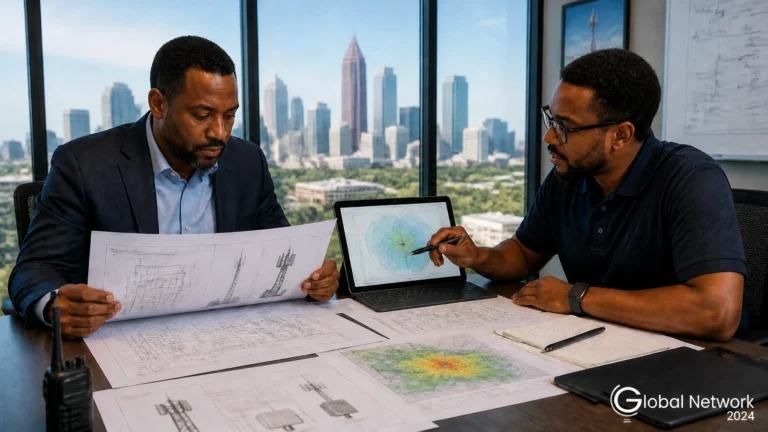
In corporate headquarters, open-plan workspaces, and conference centers, user density creates severe localized network congestion. Small cells provide high-capacity offloading for carrier traffic, ensuring seamless video conferencing, cloud access, and mobile execution without the capital expenditure of a full-scale active DAS.
Architectural Dead-Zone Remediation
Properties featuring concrete core construction often suffer from isolated pockets of zero coverage: such as executive boardrooms, subterranean cafeterias, or internal loading docks. Small cells can be strategically installed in these precise footprints to eliminate dead zones instantly.
Phased Capital Expenditure Budgets
For property owners seeking phased upgrades, small cell systems offer modular scalability. You can deploy nodes incrementally as tenant occupancy and bandwidth requirements expand, aligning infrastructure investments with revenue growth.
0% Defects. 0% Missed Deadlines. Our rigorous engineering protocols guarantee flawless execution from initial RF grid testing to final carrier commissioning.
3. Coexistence and Synergy: Integrating Small Cells with BDA and ERCES
A critical consideration in modern building engineering is the electromagnetic coexistence between commercial cellular enhancements and life-safety radio infrastructure.
Commercial small cells operate on licensed cellular frequencies (LTE and 5G bands), whereas public safety ERCES systems utilize dedicated emergency responder frequencies regulated by local Authorities Having Jurisdiction (AHJ). Improperly engineered installations can introduce RF interference, jeopardizing life-safety communications during an emergency.
To maintain compliance and safety, commercial installations must:
- Maintain strict frequency separation and adequate physical isolation between commercial small cell antennas and public safety booster antennas.
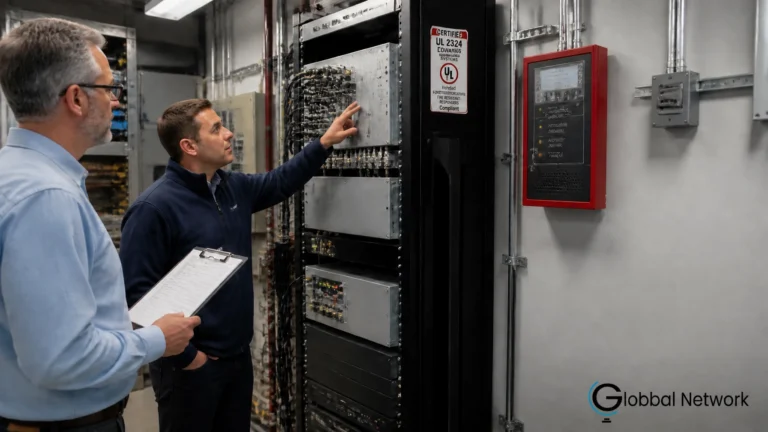
- Comply with rigorous municipal fire codes, ensuring that commercial signal enhancements never compromise emergency responder radio channels.
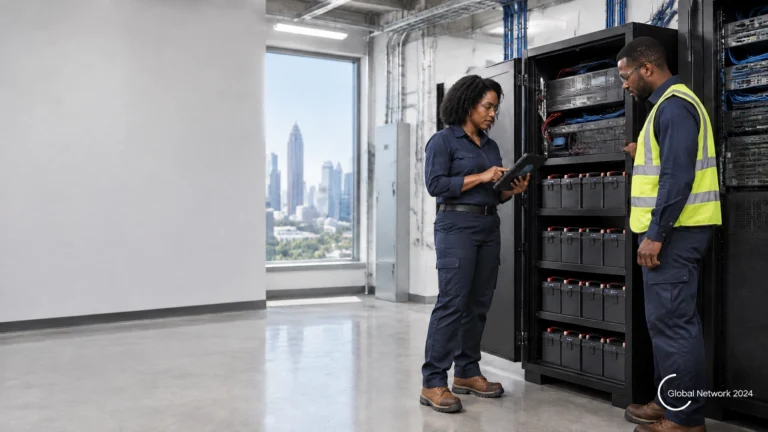
- Implement robust surge protection and battery backup units (BBUs) in code-approved NEMA enclosures to sustain operations during grid outages.
For comprehensive insights into municipal safety mandates, explore our analysis on Compliance with Fire and Safety Regulations: Understanding IFC 510 and NFPA 72.

4. Corporate Responsibility, Ethics, and Inclusive Engineering
At Global Network LLC, excellence extends beyond technical performance. We maintain a formal, corporate commitment to diversity, equity, and inclusion across our workforce, engineering teams, and executive leadership. We strictly adhere to all federal, state, and local nondiscrimination laws, fostering an inclusive corporate culture that empowers talented professionals of all backgrounds: including black men and women leading critical engineering and project management initiatives.
When your property requires advanced telecommunications infrastructure, you deserve an installation partner that honors the highest ethical standards, environmental stewardship, and community safety. Our commitment to corporate integrity ensures that every project is executed with transparency, accountability, and unwavering respect for our clients and partners.
5. Deployment Considerations for Atlanta Facility Managers
Deploying small cell solutions within Atlanta commercial real estate requires careful coordination across multiple stakeholders, including building ownership, IT leadership, utility providers, and municipal code officials. Key operational considerations include:
- Backhaul Availability: Ensuring high-capacity fiber or Ethernet routing to support individual small cell nodes.
- Carrier Coordination: Securing carrier agreements and integration approvals for multi-carrier or single-carrier small cell architectures.
- Aesthetic Integration: Placing compact nodes seamlessly within architectural ceilings and walls to preserve interior design integrity.
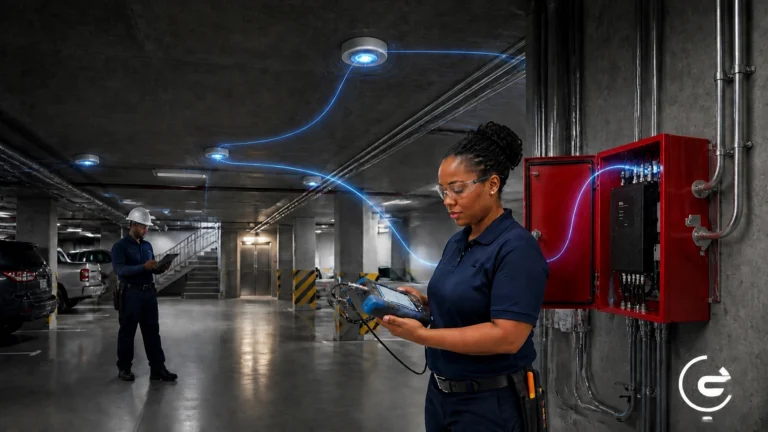
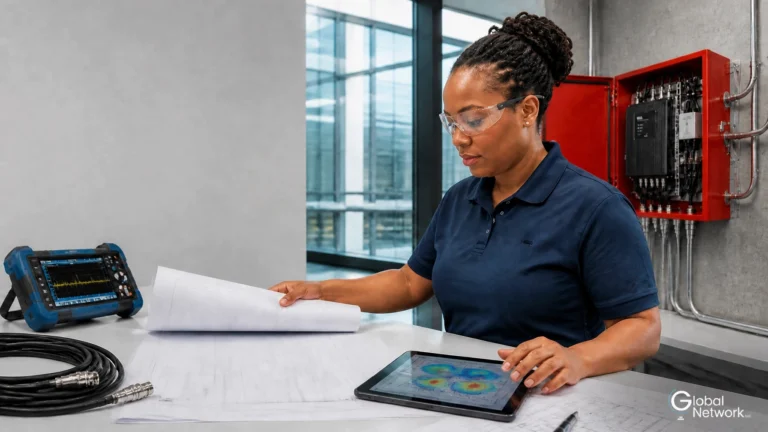
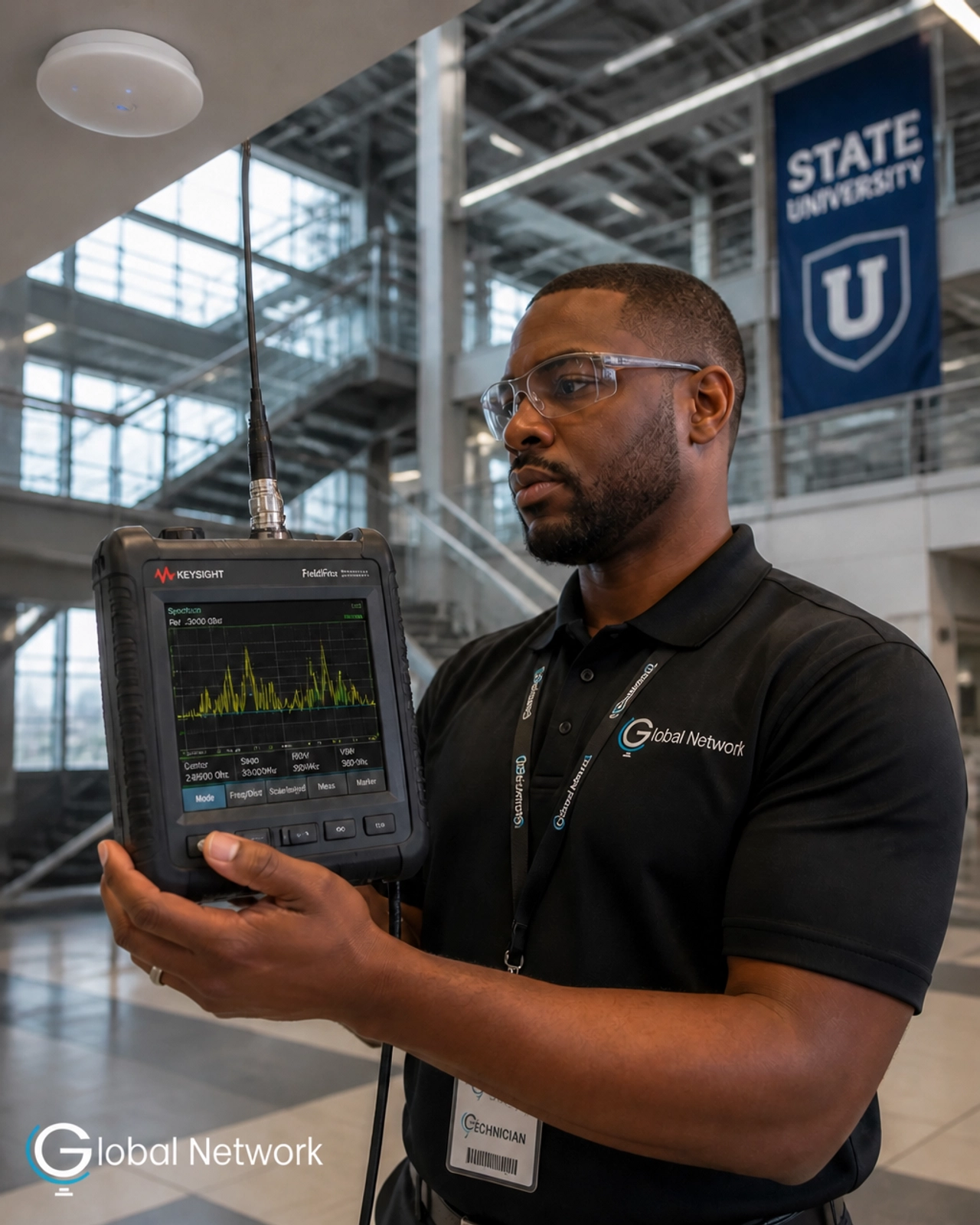
- Comprehensive Grid Testing: Conducting thorough pre- and post-installation RF signal surveys to verify coverage uniformity across all target floors.
To safeguard your Certificate of Occupancy and avoid costly occupancy delays, ensure your wireless strategy addresses both tenant data needs and public safety codes. Learn more about securing municipal approvals in our resource on Atlanta BDA Specialist Secrets: How to Pass Your Next Fire Marshal Radio Inspection.

Secure Your Building's Wireless Future Today
In today's competitive commercial market, reliable in-building connectivity directly impacts asset valuation, tenant retention, and life safety. Whether you need targeted small cell capacity for your corporate office or code-compliant ERCES infrastructure to satisfy Atlanta fire marshals, expert guidance is essential when it matters most.
Trust Atlanta’s premier telecommunications infrastructure specialists to deliver turnkey design, seamless installation, and certified compliance testing.
- Office: 770.520.7633
- Toll Free: 877.231.1084
- Website: Global Network LLC
Contact us today to schedule your comprehensive on-site RF evaluation and take the first step toward absolute connectivity and compliance.