Patient Safety Starts with Communication: Why Every Atlanta Hospital Needs ERCES Compliance
In the high-stakes environment of modern healthcare, every second counts. When a cardiac arrest occurs in an intensive care unit, or a trauma team prepares for an incoming emergency transport, seamless coordination is vital. Yet, beneath the polished exterior of Atlanta’s premier medical centers lies a hidden vulnerability that many hospital administrators and facility managers overlook: radio frequency (RF) dead zones.
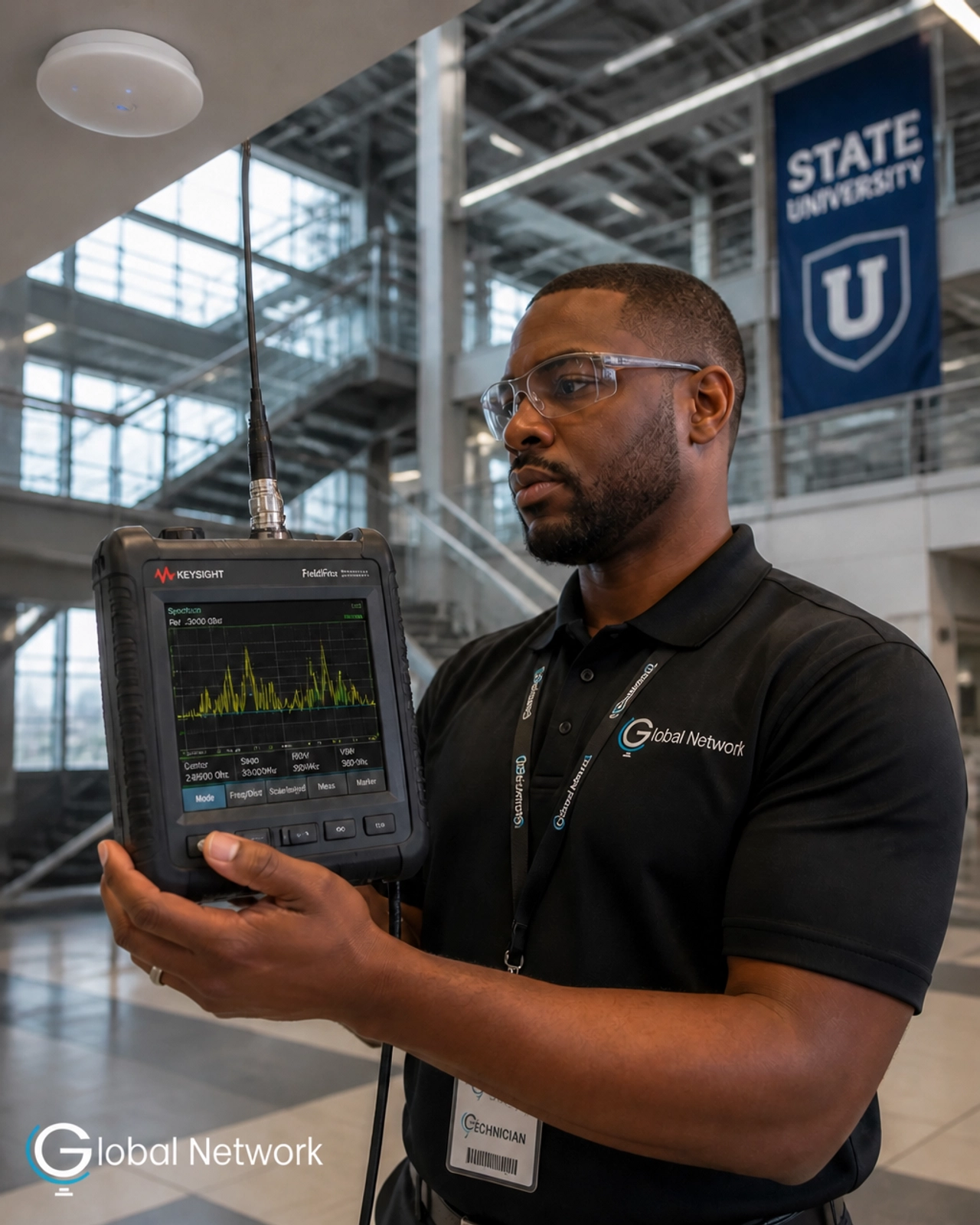
First responders rely on two-way radios to coordinate emergency responses during fires, security threats, and mass casualty incidents. When concrete walls, low-E glass, and lead-lined imaging suites block these critical signals, public safety communications break down. To eliminate this risk and satisfy mandatory municipal codes, healthcare facilities must implement an Emergency Responder Communication Enhancement System (ERCES) and Public Safety Distributed Antenna Systems (DAS).
The Regulatory Framework: Navigating IFC 510, NFPA 1225, and NFPA 99
Compliance is not merely a recommendation; it is a strict legal mandate enforced by local Authorities Having Jurisdiction (AHJs). Healthcare facilities in the Atlanta metropolitan area are subject to rigorous fire and safety codes designed to protect patients, staff, and emergency personnel.
- International Fire Code (IFC) Section 510: Mandates that buildings failing to provide adequate in-building public safety radio coverage must install an approved signal booster and DAS infrastructure.
- NFPA 1225: Governs emergency services communications systems, establishing the exact testing methods, radio coverage objectives, and performance criteria for public safety DAS.
- NFPA 72: Addresses the integration of ERCES with fire alarm monitoring systems, fault reporting, and acceptance testing.
- NFPA 99 (Health Care Facilities Code): Focuses specifically on patient safety, dictating that life-safety communication systems must operate in harmony with critical care environments without causing electromagnetic interference.
Failing to meet these standards invites severe consequences, including costly occupancy delays, denied Certificates of Occupancy, and substantial municipal fines. 0% Missed Deadlines. 100% Compliance. Safeguarding your facility requires proactive adherence to these evolving regulatory benchmarks.
Unique RF Challenges in Healthcare Construction
Hospitals represent some of the most complex RF environments on the planet. Architectural choices that prioritize energy efficiency, sterilization, and structural integrity often create impenetrable barriers for public safety frequencies.

1. Signal-Blocking Building Materials
Modern healthcare architecture relies heavily on reinforced concrete, structural steel, and specialized glazing. Low-E glass and thick masonry attenuate external radio waves, preventing police and fire department frequencies from penetrating interior spaces.
2. Shielded Medical Environments
Diagnostic imaging departments: including MRI suites, X-ray rooms, and nuclear medicine labs: frequently incorporate lead-lining and copper RF shielding. While these measures protect sensitive medical devices and patients from outside interference, they simultaneously trap emergency radio signals, creating severe dead zones in subterranean or core diagnostic wings.
3. Below-Grade Sub-Levels and Multi-Tiered Campuses
Emergency rooms, subterranean parking structures, central utility plants, and multi-tower medical complexes stretch signal propagation to its absolute limits. Because stairwells and evacuation routes are designated critical areas under IFC 510, maintaining 99% coverage in these zones is non-negotiable.
Engineering Excellence: Designing a Dedicated Healthcare ERCES
Achieving compliance in a healthcare facility demands precision engineering that isolates public safety communications from commercial cellular networks and critical medical telemetry.
A comprehensive ERCES deployment utilizes Bi-Directional Amplifier (BDA) technology to capture outdoor signals, amplify them cleanly, and distribute them evenly via a dedicated coaxial and antenna network.

Key Technical Performance Benchmarks
- General Coverage Areas: At least 95% floor area coverage with a minimum inbound signal strength of -95 dBm and an acceptable DAQ (Audio Quality) metric of 3.0 or higher.
- Critical Areas: 99% area coverage in fire command centers, stairwells, elevator lobbies, and fire pump rooms.
- System Survivability: Minimum 24-hour battery backup power paired with emergency generator integration and fire-resistive cable pathways.
- Rigorous Testing Protocols: Commissioning acceptance tests, annual performance verifications, and annual battery load tests.
0% Defects in installation and testing guarantee that when emergency personnel cross your threshold, their radios will perform flawlessly.
Patient Safety, Liability, and Corporate Responsibility
When evaluating capital expenditures, hospital boards and facility directors must weigh compliance against the profound ethical obligation of patient care. In an active emergency, the ability of municipal fire and rescue units to coordinate evacuation, suppress fires, and triage patients depends entirely on reliable indoor connectivity.
From a corporate and legal standpoint, operating a healthcare facility with known radio dead zones exposes leadership to severe liability. Adhering strictly to IFC 510, NFPA 72, and NFPA 1225 demonstrates an unwavering commitment to corporate responsibility, risk mitigation, and community welfare.
Partnering with Local Atlanta Expertise
Navigating the intricacies of local fire marshals, frequency coordination, and hospital-grade installation requires specialized local experience. Generic, out-of-market contractors often fail to account for the unique operational workflows and infection control constraints of active Atlanta medical centers.

By partnering with dedicated local specialists, healthcare organizations ensure seamless project execution from initial RF site surveys and design submittals to final AHJ sign-off. Whether you are managing an existing facility upgrade or planning a new medical tower, proactive compliance secures your Certificate of Occupancy and protects the lives entrusted to your care.
Secure Your Healthcare Facility Today
Do not wait for a failed fire inspection or an emergency communication failure to address your building's RF integrity. Ensure your facility meets all mandatory local codes and guarantees uninterrupted communication when it matters most.
To schedule a comprehensive site assessment, RF evaluation, or code compliance review for your healthcare facility, explore our core capabilities at Global Network LLC or review our services page.
Contact our Atlanta office today:
- Office: 770.520.7633
- Toll-Free: 877.231.1084
- Website: globalnetworkco.com