Why the NFPA 72-2025 Update Will Change the Way You Monitor Your Public Safety DAS
For building owners, facility managers, developers, and public agencies, a public safety Distributed Antenna System (DAS) is more than a radio enhancement system. It is a life-safety asset that must remain available, supervised, documented, and tested when first responders need it most.
The 2025 edition of NFPA 72, National Fire Alarm and Signaling Code, places renewed attention on how emergency responder communication systems interface with building fire alarm infrastructure. The practical result is clear: ERCES monitoring can no longer be treated as an isolated telecommunications issue.
However, one point requires careful attention:
NFPA 72-2025 is the current published edition, but enforceability depends on the edition adopted by the applicable jurisdiction, the International Fire Code (IFC) provisions in effect, and the specific requirements of the local Authority Having Jurisdiction (AHJ).
A code edition does not automatically become enforceable everywhere on its publication date. Building owners should confirm the adopted requirements before designing, modifying, or certifying an ERCES or public safety DAS.
What NFPA 72-2025 Means for Public Safety DAS and ERCES
NFPA 1225 generally addresses the performance and installation of Emergency Responder Communication Enhancement Systems (ERCES), including systems commonly referred to as Emergency Responder Radio Coverage Systems (ERRCS) or public safety DAS.
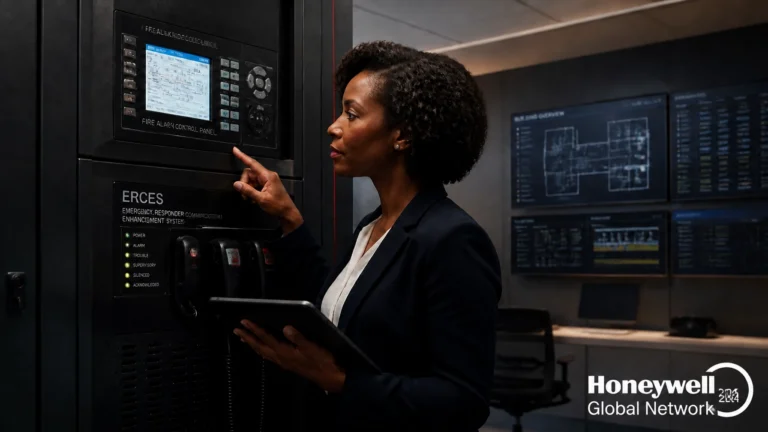
NFPA 72 governs the fire alarm and signaling environment into which ERCES supervisory conditions may be connected. That includes the fire alarm control panel (FACP), circuit supervision, annunciation, transmission, testing, and documentation.
This creates an important division of responsibility:
- NFPA 1225 addresses how the ERCES performs and supports emergency responder communications.
- NFPA 72 addresses how required ERCES conditions are supervised, annunciated, transmitted, and tested through the fire alarm system.
- IFC Section 510, where adopted, establishes building radio coverage and system performance requirements.
- The AHJ determines how these requirements are applied locally, including acceptable interface methods and documentation.
For your facility, this means the ERCES designer, fire alarm contractor, electrical contractor, commissioning team, and AHJ must align before installation begins.

1. Supervisory Signals Become a Core Design Requirement
The most significant operational change is the emphasis on monitoring ERCES supervisory conditions through the building’s fire alarm system.
An ERCES should be capable of identifying conditions that could compromise radio coverage or system availability. Depending on the approved design, equipment listing, adopted codes, and AHJ direction, monitored conditions may include:
- Failure of the signal source or donor connection
- Active RF-emitting device failure
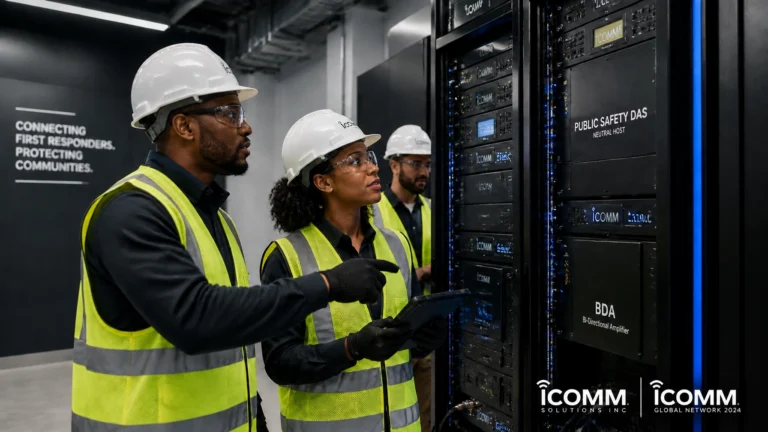
- BDA or amplifier malfunction
- Antenna system fault
- Critical active component failure
- Oscillation or system instability
- Loss of normal AC power
- Battery charger failure
- Low battery capacity
- Failure of the communication link between the ERCES and FACP
These conditions generally represent supervisory or trouble conditions, not evacuation alarm signals. The FACP must identify the condition correctly so that building personnel, supervising stations, and service providers can respond according to the approved sequence of operation.
Single Input or Multiple Inputs?
NFPA 72-related guidance may allow an AHJ-approved approach using a single aggregated supervisory input for multiple ERCES conditions. Other jurisdictions may require discrete inputs so that each condition is individually identified at the FACP.
The decision affects:
- FACP point count
- Interface modules
- Programming
- Troubleshooting
- Remote annunciation
- Supervising station reporting
- Acceptance testing
- Long-term maintenance
Do not assume that the least expensive interface is acceptable. The correct solution is the one documented in the approved design and accepted by the AHJ.
2. Monitoring Must Include Interface Integrity
A monitored ERCES is only as reliable as the connection between the ERCES equipment and the fire alarm system.
The interface should be designed to identify an open circuit, wiring fault, loss of communication, or other condition that prevents the FACP from receiving required supervisory information. This is where fire alarm design principles become essential to public safety DAS work.
A complete interface review should address:
- The FACP model and available monitoring points
- Listed interface modules and relay arrangements
- Wiring pathways and circuit supervision
- Power sources for interface equipment
- Survivability requirements where applicable
- Signal priority and annunciation
- Remote transmission requirements
- Impairment procedures
- Access for service and testing
The goal is not simply to connect a relay. The goal is to ensure that a fault affecting first responder communications is recognized and communicated through an approved life-safety pathway.
3. Documentation Will Receive Greater Scrutiny
Incomplete documentation is a common reason for permit comments, delayed inspections, and failed acceptance tests.
For an integrated ERCES and fire alarm project, the submittal package should clearly explain how the systems operate together. Depending on the project and AHJ, documentation may include:
- Written system narrative
- Fire alarm riser diagram
- ERCES riser diagram
- Floor plans
- BDA and active equipment locations
- Antenna and coaxial cable routing
- Interface wiring diagrams
- FACP input and output point descriptions
- Sequence of operations
- Equipment data sheets
- Battery calculations
- Power source information
- RF design criteria
- Signal coverage heat maps
- Acceptance test procedures
- As-built drawings
- Operation and maintenance information
- Maintenance and inspection requirements
The Sequence of Operations Matters
A sequence of operations should answer practical questions in plain language:
- What happens when the BDA loses AC power?
- How is a battery charger failure reported?
- What indication appears at the FACP?
- Is the condition transmitted to a supervising station?
- Does the system identify a specific component or only a general ERCES fault?
- Who receives notification?
- What action is required during an impairment?
- How is the condition cleared and documented?
If the sequence cannot be understood before testing, it is not ready for approval.

4. Testing Must Verify Both RF Performance and Fire Alarm Reporting
An ERCES acceptance test is not complete when a technician confirms that a few radios work inside the building.
Testing should verify two separate but connected functions:
RF Coverage and System Performance
The ERCES must be evaluated against the approved design and local performance requirements. Testing may include:
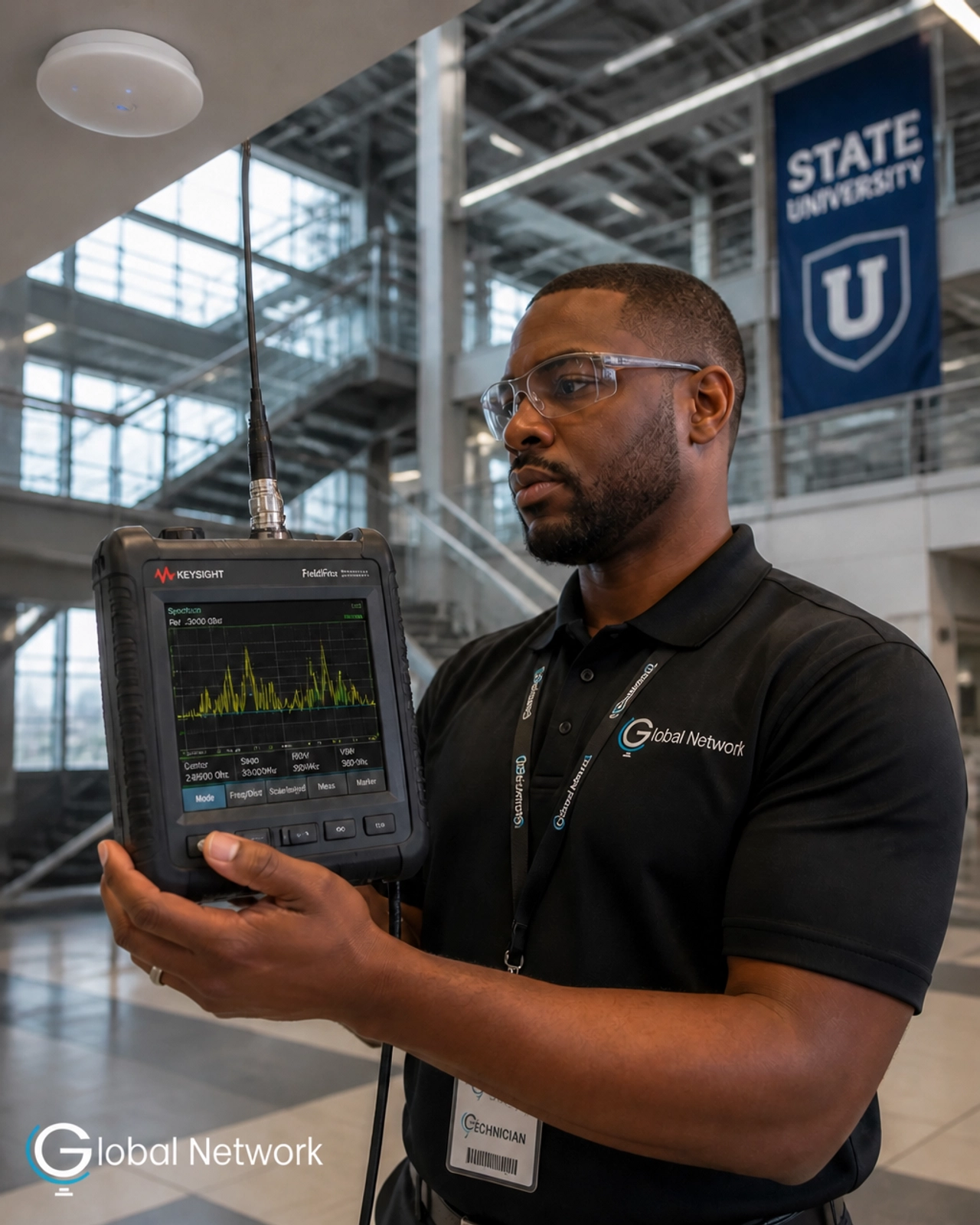
- Signal strength measurements
- Signal quality and noise measurements
- General and critical area coverage
- Fire command center coverage
- Stairway and exit passageway coverage
- Elevator lobby coverage
- Fire pump room coverage
- Standpipe and sprinkler valve locations
- Battery operation
- BDA output and gain
- Antenna and cable condition
- Donor signal performance
Supervisory and Fire Alarm Integration
The integrated system should also be tested for:
- AC power loss
- Battery charger failure
- Low battery
- BDA or amplifier failure
- Antenna fault
- Signal source failure
- Communication link failure
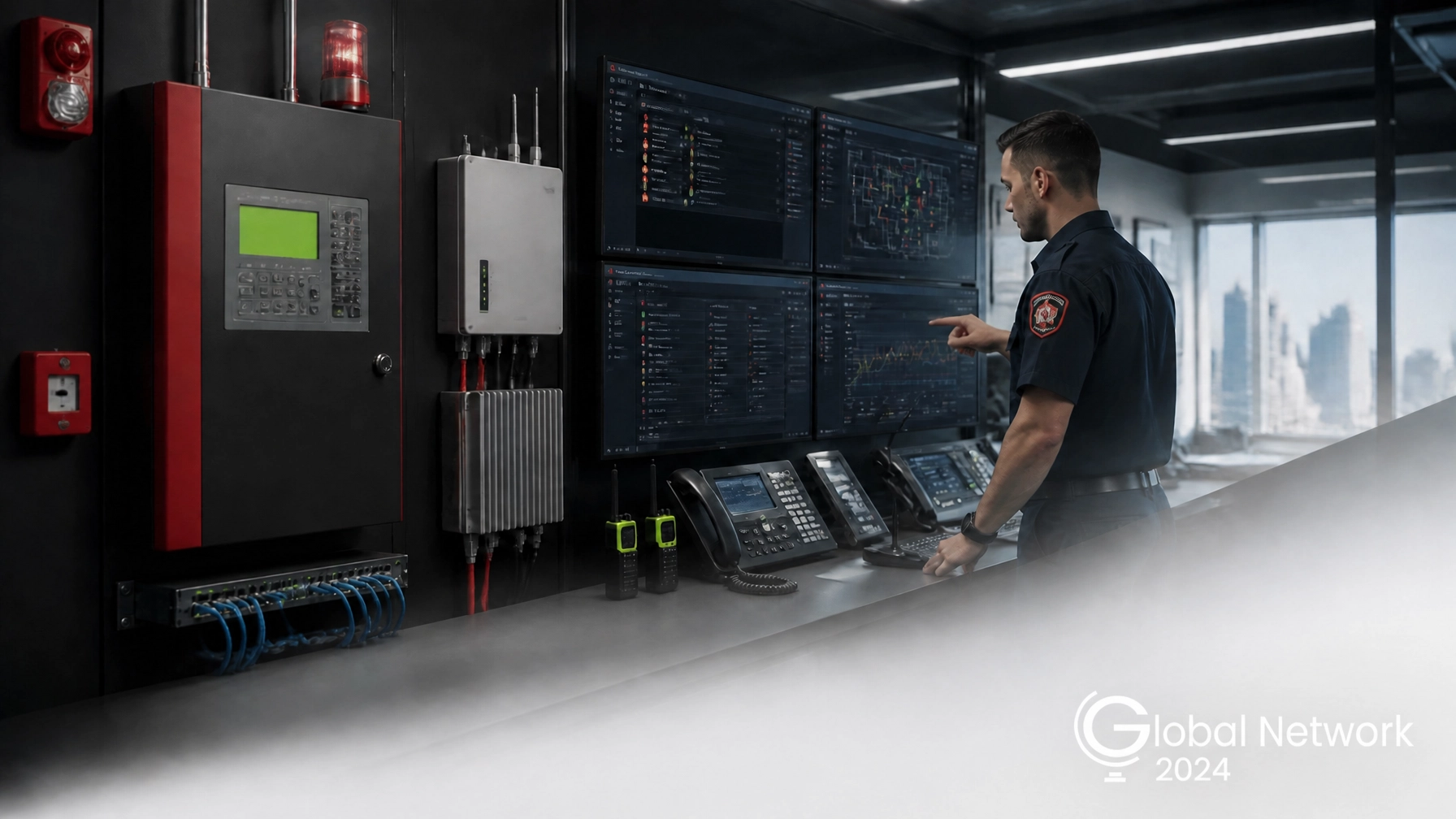
- FACP annunciation
- Remote monitoring transmission
- Restoration and reset behavior
Joint acceptance testing between the ERCES contractor and fire alarm contractor is often the most effective way to identify integration problems before the AHJ inspection.
0% Guesswork. 0% Missed Signals.
5. Annual Testing Is an Ongoing Responsibility
Compliance is not a one-time event at the end of construction. Building modifications, new interior finishes, equipment changes, damaged cable, battery degradation, and changes to the donor environment can affect system performance.
Where required by the adopted code and local ordinance, ongoing inspection and testing may include:
- Annual RF coverage verification
- Battery capacity testing
- BDA functionality testing
- Antenna and coaxial pathway inspection
- Supervisory signal verification
- FACP interface testing
- Review of impairment and service records
- Confirmation that drawings remain accurate
- Documentation of corrective actions
NFPA 72 and NFPA 1225 requirements should be evaluated together with the local fire code, permit conditions, equipment listings, and AHJ directives. The most recently published standard is not necessarily the enforceable standard for every existing building.
Building owners should maintain test reports and service records according to the adopted requirements and any longer retention period imposed by the jurisdiction, contract, insurer, or facility policy.

6. AHJ Coordination Should Begin Before Design Approval
The AHJ is not simply the final stop in the project schedule. Early coordination can prevent redesign, rejected submittals, and Certificate of Occupancy delays.
Before installation, confirm:
- Which edition of NFPA 72 is adopted
- Which edition of NFPA 1225 is recognized
- Whether IFC 510 applies
- Required signal strength and coverage criteria
- Critical areas requiring enhanced coverage
- FACP interface expectations
- Single-input versus discrete-input preferences
- Required supervising station connections
- Battery and survivability requirements
- Acceptance test procedures
- Annual inspection requirements
- Required documentation and record retention
This process is particularly important for high-rise buildings, healthcare facilities, educational campuses, government facilities, hotels, stadiums, parking structures, and other complex properties.
How Global Network LLC Supports NFPA and ERCES Compliance
Global Network LLC provides public safety DAS/ERCES design, installation, commissioning, compliance testing, and annual performance testing for facilities that require dependable first responder communications.
Our approach connects the technical and regulatory requirements:
- RF design and field surveys
- BDA and public safety DAS installation
- FACP/ERCES interface coordination
- Coverage testing and documentation
- Commissioning and acceptance testing
- Annual inspection and performance testing
- AHJ coordination
- FirstNet-compatible system planning
- Maintenance and corrective service
As Atlanta’s local DAS/ERCES specialist, Global Network LLC helps building owners pursue reliable communication, code compliance, and peace of mind when it matters most.
Review our ERCES and DAS services, learn who we serve, or explore our guide to IFC 510 and NFPA 72 compliance.
Prepare Your Facility Now
Do not wait for an inspection failure to discover that your ERCES supervisory signals are not correctly integrated with the fire alarm system.
Ask your design and compliance team to:
- Confirm the locally adopted code editions.
- Review the ERCES-to-FACP interface.
- Verify required supervisory points.
- Update the sequence of operations.
- Assemble complete submittal documentation.
- Schedule joint acceptance testing.
- Establish an annual inspection and maintenance plan.
0% Defects. 0% Missed Deadlines. Reliable communication when it matters most.
For an ERCES consultation or compliance review, contact Global Network LLC at 770.520.7633 or toll free at 877.231.1084. Visit globalnetworkco.com to request service and keep your facility at the forefront of public safety communication readiness.
Important: This article is provided for general educational purposes. NFPA provisions, IFC requirements, amendments, equipment listings, and enforcement practices vary by jurisdiction. Always confirm applicable requirements with the local AHJ and qualified design professionals.