
Your Certificate of Occupancy Is Delayed: Here’s Why ERCES Might Be the Culprit
Introduction: The Hidden Bottleneck in Your Project Timeline
The countdown to opening day is down to the final hours. Contractors have cleared out, interior finishes are polished, and prospective tenants or buyers are eager to move in. Yet, when you submit your final documentation to secure your Certificate of Occupancy (CO), your application stalls.
For many property owners and facility managers across the Atlanta metropolitan area, the culprit behind unexpected occupancy delays is not architectural misalignment or plumbing sign-offs: it is an uncertified or missing Emergency Responder Communication Enhancement System (ERCES).
When emergency personnel enter a newly constructed or substantially renovated building, their portable two-way radios must function flawlessly across every square foot, from subterranean parking garages to top-floor executive suites. Under the strict enforcement of International Fire Code (IFC) Section 510 and NFPA 1225, local authorities having jurisdiction (AHJs): specifically the Atlanta Fire Rescue Department (AFRD): will withhold final life-safety approval until robust indoor wireless coverage is proven. 0% Tolerance. 0% Missed Deadlines. Your business requires absolute compliance to avoid devastating financial penalties and scheduling logjams.
The Regulatory Landscape: Why AFRD Mandates ERCES Compliance
Navigating municipal building codes requires strict adherence to federal, state, and local mandates. In Atlanta, public safety infrastructure is treated with uncompromising legal gravity.
International Fire Code (IFC) Section 510 and NFPA Standards
The mandate for in-building emergency radio coverage stems from recognized safety codes adopted by municipalities nationwide. IFC 510 and NFPA 72 / NFPA 1225 establish the rigorous criteria for signal strength, radio frequency (RF) penetration, and survivability.
When building materials such as reinforced concrete, low-emissivity (Low-E) glass, and dense steel framing attenuate cellular and public safety radio signals, radio dead zones are created. If an emergency occurs, these structural barriers can isolate first responders from command and each other, creating catastrophic life-safety hazards.
The Legal Authority of the Fire Marshal
Under Georgia law and local municipal ordinances, the local fire marshal holds explicit statutory authority to deny a request for a Certificate of Occupancy or issue a stop-work order if life-safety standards are not satisfied. AFRD’s Section 510 technical bulletins stipulate that required emergency responder radio coverage must be fully installed, tested, and operational before occupancy of the structure and before any temporary or permanent CO can be issued.
- Strict Inspection Gates: Final building inspections cannot be marked as fully passed in municipal tracking systems if life-safety radio testing is incomplete or deficient.
- Liability and Corporate Responsibility: Building owners and developers carry fiduciary and legal responsibility for occupant safety and regulatory conformity.
- Enforcement Rigor: Missing permits, uncalibrated systems, or undocumented test results are treated as direct code violations.
Anatomy of an ERCES Delay: Real-World Scenarios

Understanding how ERCES issues derail project timelines helps facility managers proactively address vulnerabilities before inspector walkthroughs.
Scenario A: The Last-Minute Discovery
Many developers assume standard commercial telecommunications or cellular boosters satisfy building codes. Unfortunately, commercial cellular enhancement and Public Safety DAS (Distributed Antenna System) are governed by entirely different regulatory frameworks and frequencies. Discovering that public safety bands are blocked only days before the scheduled fire marshal inspection inevitably triggers a scramble.
Designing, permitting, sourcing equipment, and installing a full Bi-Directional Amplifier (BDA) system under immediate deadline pressure introduces weeks or months of unexpected delay.
Scenario B: Incomplete Documentation and Acceptance Testing
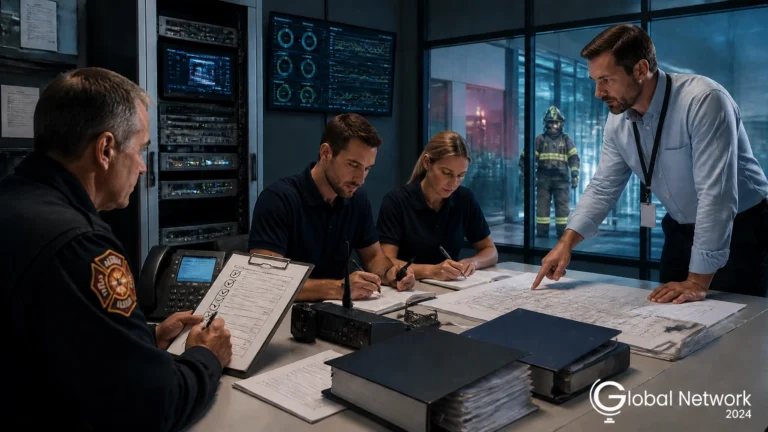
Even when physical equipment has been installed, administrative oversights can stall your CO. AHJs require exhaustive commissioning reports, grid test data, battery backup calculations, and proof of FCC-certified technician oversight.
"Compliance is not a formality; it is a legally binding guarantee of life-safety operational readiness."
If your acceptance testing documentation lacks required sign-offs or fails to meet the minimum Grid Test criteria (typically requiring 95% general coverage and 99% in critical areas like fire pump rooms and exit stairwells), the AHJ will reject the submission outright.
The Solution: Engineering a Bulletproof Compliance Strategy
To prevent ERCES from holding your Certificate of Occupancy hostage, property owners must integrate wireless infrastructure planning into the earliest phases of project development.
Comprehensive RF Site Surveys
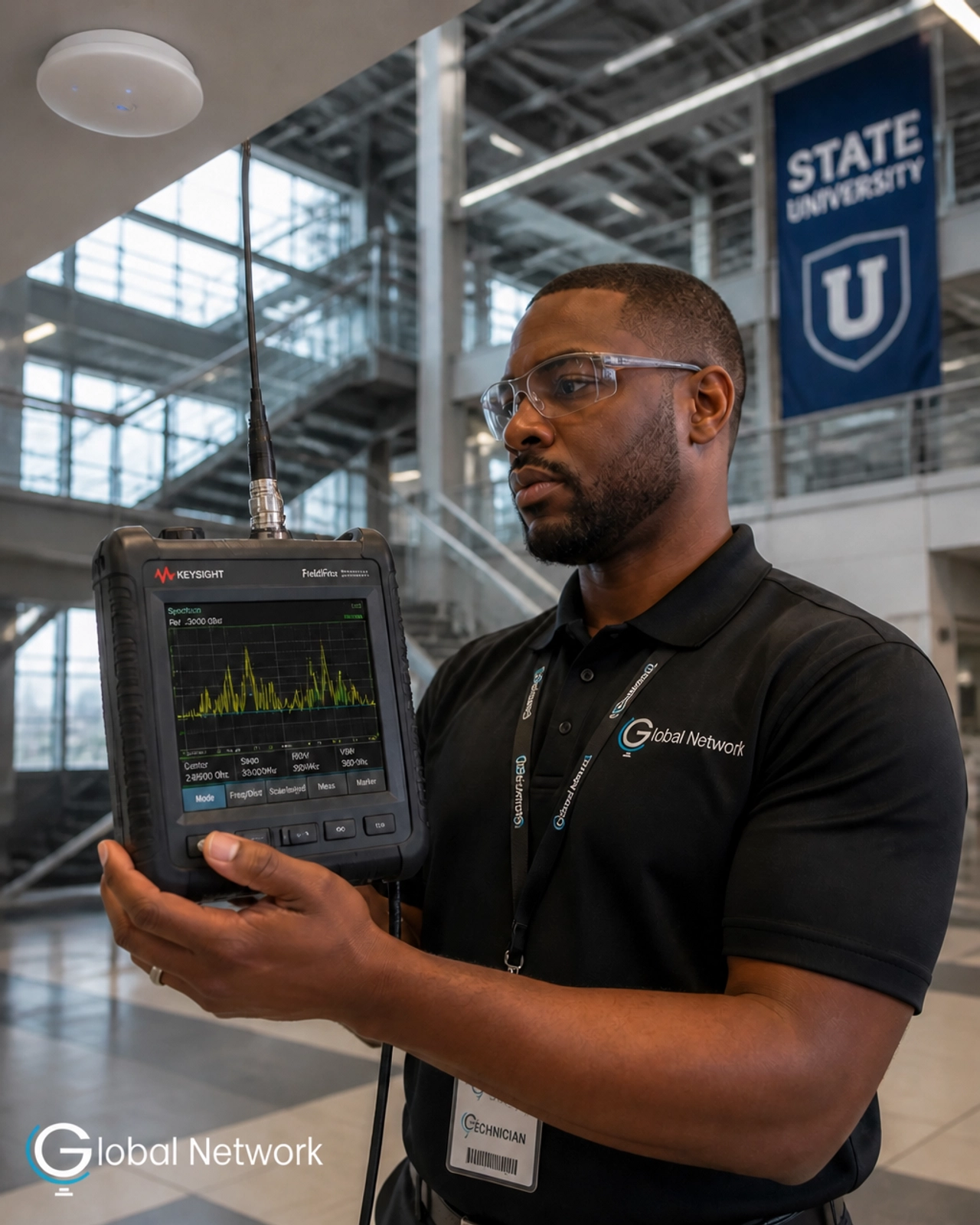
Every building has unique propagation characteristics. Partnering with a dedicated local expert ensures accurate baseline measurements. Our certified specialists conduct thorough pre-construction and post-construction RF surveys to identify signal attenuation before official inspections occur.
Advanced BDA and DAS Integration
When dead zones are detected, deploying a custom-engineered Public Safety DAS utilizing BDA technology is essential.
- Signal Amplification: Captures outside emergency frequencies and distributes them uniformly throughout the building architecture.
- FirstNet Compatibility: Systems are engineered to be fully compatible with FirstNet standards, guaranteeing priority and preemption capabilities for first responders.
- Dedicated Battery Backup: Incorporates secondary power supplies to maintain continuous operation during commercial power failures.
Streamlining Your Path to Occupancy with Global Network LLC

At Global Network LLC, we understand that every day your building sits vacant represents lost revenue and deferred operational momentum. As Atlanta's trusted local DAS and ERCES specialist, we eliminate regulatory friction and deliver absolute peace of mind.
Our comprehensive service portfolio is engineered for certainty:
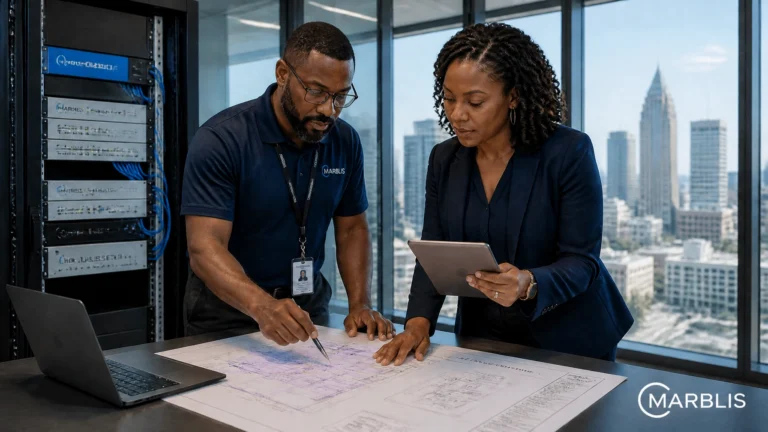
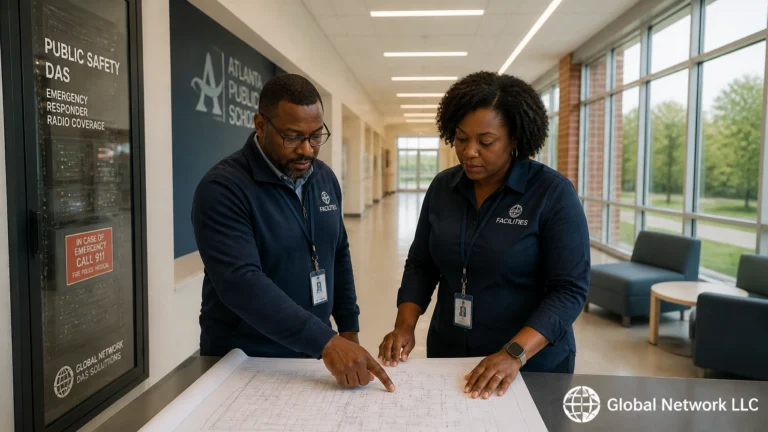
- Turnkey Design and Engineering: Custom system layouts tailored to architectural blueprints and stringent AFRD guidelines.
- Rigorous Compliance Testing: Commissioning, acceptance, and annual performance tests ensuring 100% adherence to NFPA and IFC codes.
- Expedited Permitting and Coordination: Direct liaison with local building departments and fire prevention bureaus to streamline approvals.
Conclusion: Secure Your Certificate of Occupancy Today

Do not let an unforeseen radio dead zone compromise your grand opening or delay your Certificate of Occupancy. Partner with industry leaders dedicated to uncompromising safety, technical precision, and regulatory excellence.
Contact Global Network LLC today to schedule your expedited RF survey or ERCES compliance consultation. Visit us online at Global Network LLC or explore our service offerings directly through our Services Page.
Speak directly with our engineering team:
- Office: 770.520.7633
- Toll-Free: 877.231.1084
Global Network LLC : Delivering uncompromising public safety connectivity, code compliance, and operational readiness when it matters most.