The Anatomy of a BDA System: What Each Component Does (And Why It Matters for Compliance)
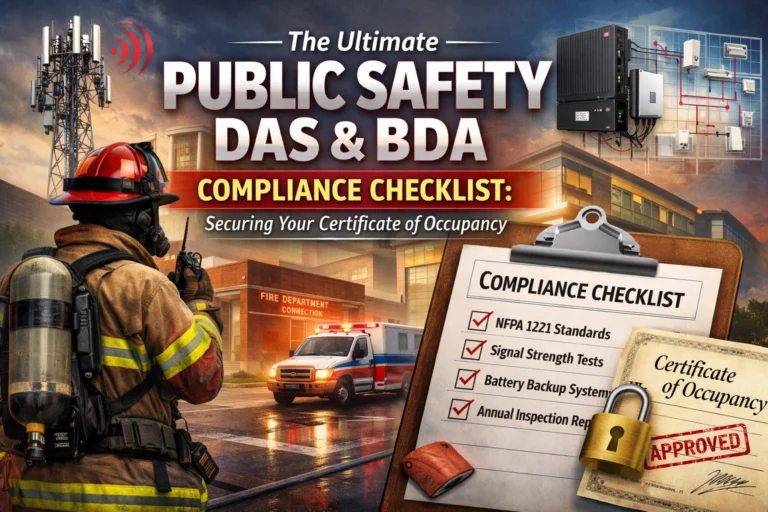
When emergency responders enter a burning or compromised commercial structure, every second counts. Lives hang in the balance, and seamless, uninterrupted two-way radio communication is the vital link between crews inside and command posts outside. Yet, modern architectural materials: such as low-emissivity glass, reinforced concrete, and dense steel framing: act as impenetrable Faraday cages, blocking critical public safety frequencies.
To overcome this hazard and satisfy mandatory municipal fire codes, building owners and facility managers must install an Emergency Responder Communication Enhancement System (ERCES), powered by a robust Bi-Directional Amplifier (BDA) and Distributed Antenna System (DAS).
Understanding the anatomy of a BDA system is no longer just an engineering exercise; it is a vital regulatory requirement for securing your Certificate of Occupancy and safeguarding your occupants. At Global Network LLC, Atlanta's premier DAS/ERCES specialist, we engineer, install, and certify mission-critical wireless infrastructure to ensure 0% Defects and 0% Missed Deadlines.
What is an ERCES and Why Does Architecture Block First Responder Signals?
Before examining individual hardware components, it is essential to understand the regulatory framework governing modern real estate. Under International Fire Code (IFC) Section 510 and National Fire Protection Association (NFPA) standards (including NFPA 72 and NFPA 1225), local Authorities Having Jurisdiction (AHJs) mandate that all commercial buildings maintain reliable emergency radio coverage.
When structural attenuation blocks local public safety radio frequencies, traditional handheld radios fail. An ERCES resolves this by capturing outside radio signals, amplifying them, and distributing them throughout every corner of the facility: from basement parking structures to top-floor executive suites.

The Core Anatomy of a BDA / Public Safety DAS System
A code-compliant ERCES is a synchronized network of specialized hardware components. Each element plays a non-negotiable role in maintaining signal integrity and passing rigorous local fire department inspections.
1. The Donor Antenna (The Exterior Gateway)
Mounted externally on the roof or highest structural point of the building, the donor antenna serves as the system's primary interface with the outside world.
- Function: It is precisely aimed at the AHJ-designated public safety radio tower or repeater. It captures inbound downlink signals from emergency dispatch and transmits outbound uplink signals from within the building back to first responders.
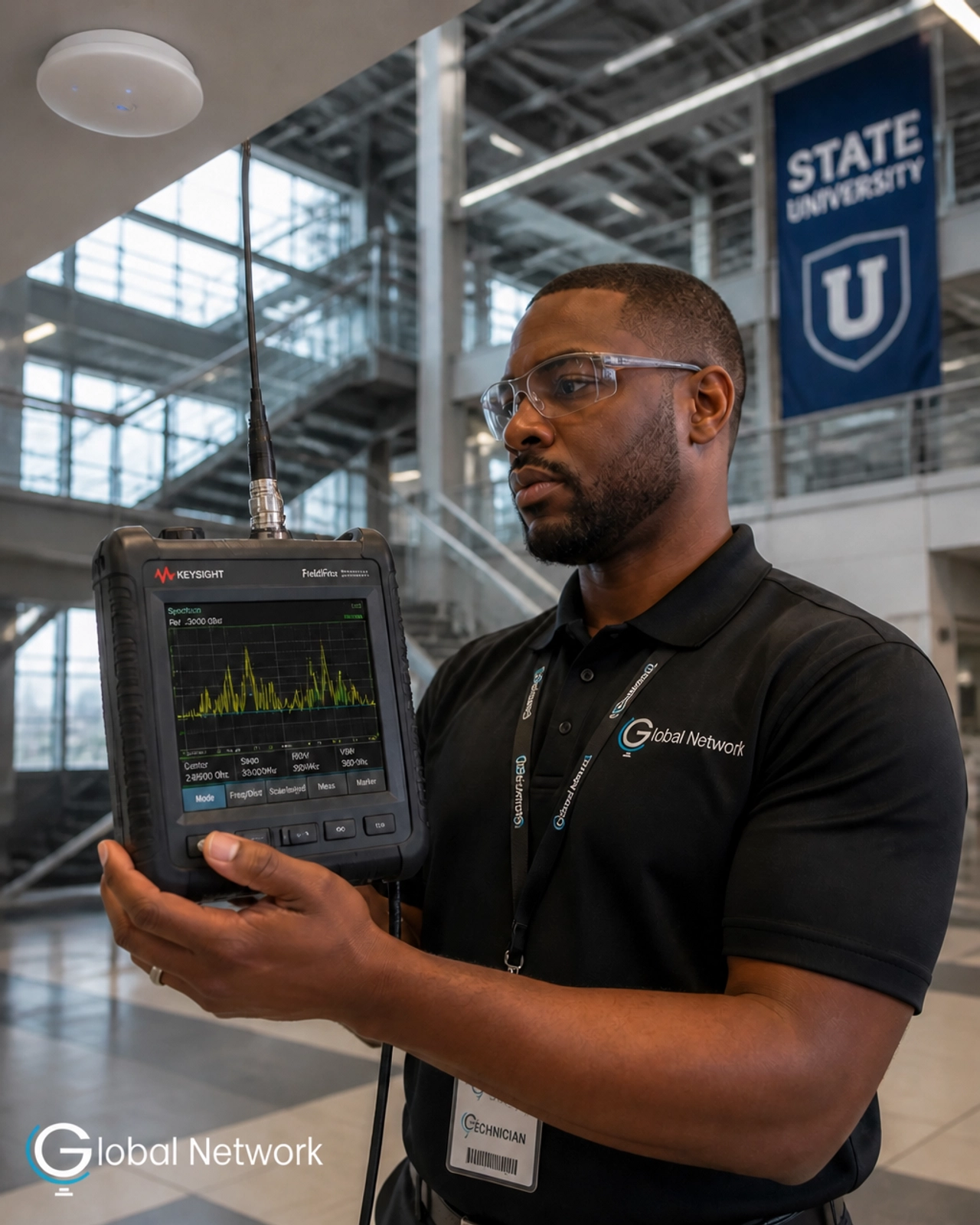
- Compliance Impact: If the donor antenna is misaligned, subject to excessive path loss, or suffering from co-channel interference, the entire system fails local inspection. Proper placement and professional radio frequency (RF) surveying are mandatory.
2. The Bi-Directional Amplifier (The Central Engine)
Housed within a secure, code-compliant enclosure, the Bi-Directional Amplifier (BDA) is the computational and amplification engine of the ERCES.
- Function: It amplifies signals simultaneously in both directions: boosting the downlink from the tower to building radios, and boosting the uplink from indoor radios back to the tower. Modern public safety BDAs must be UL 2524-certified to meet strict public safety survivability criteria.
- Compliance Impact: BDAs must feature advanced gain controls and channelized filtering to eliminate spurious emissions and prevent harmful interference with municipal radio networks. Unfiltered signal boosters risk severe regulatory penalties and immediate citation by fire marshals.

3. Distributed Antenna System (The In-Building Network)
While the BDA amplifies the signal, the Distributed Antenna System (DAS) distributes that signal across the physical expanse of the facility.
- Function: Comprising coaxial or fiber-optic backbone cabling, RF splitters, directional couplers, and low-profile indoor ceiling or wall antennas, the DAS ensures uniform signal propagation.
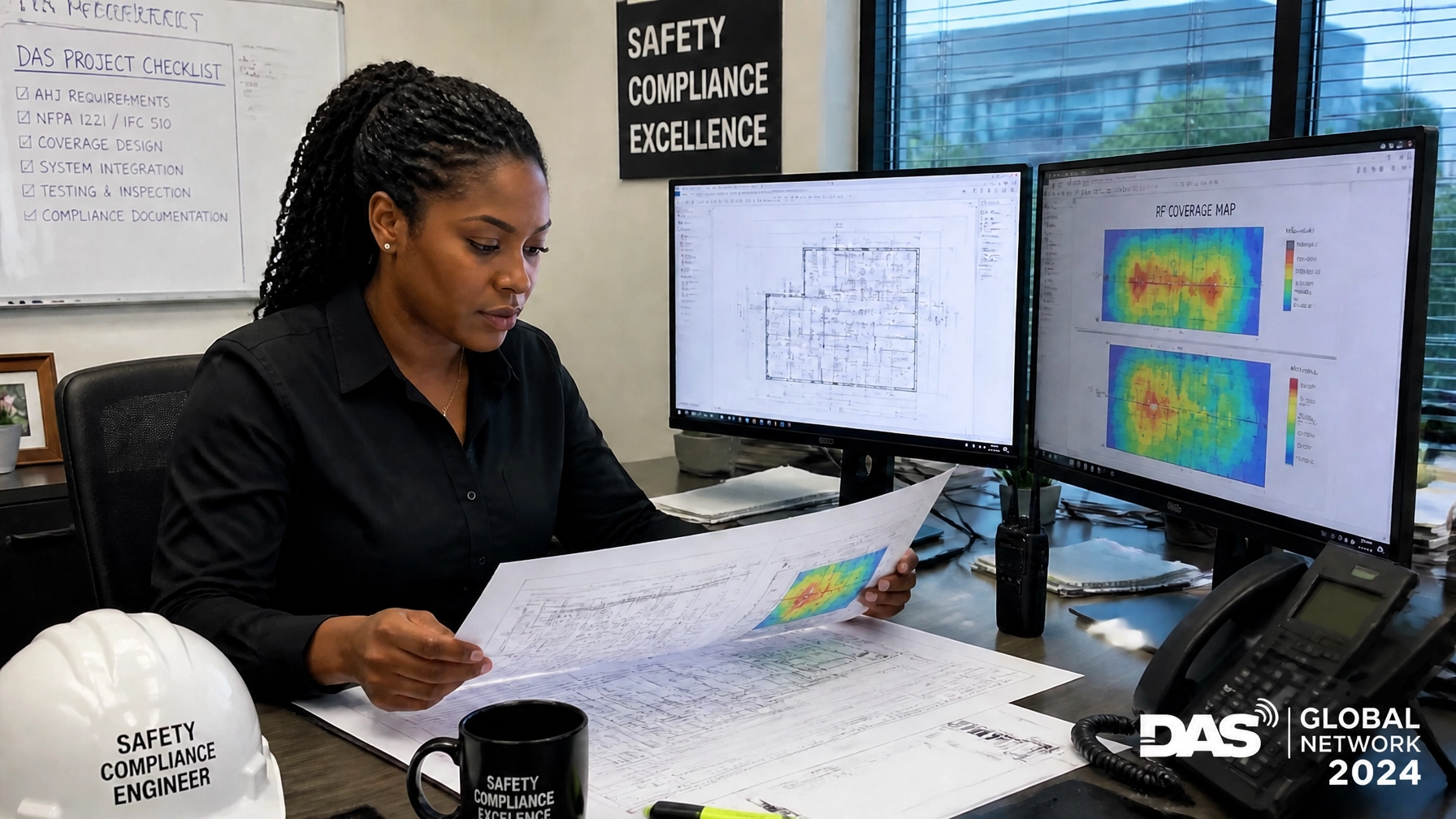
- Compliance Impact: Code mandates minimum signal strength thresholds: typically -95 dBm or stronger: across 90% of general building areas and 99% of critical areas such as fire command centers, exit stairwells, and elevator lobbies. Discover more about our approach on our services page.
4. Backup Power and Battery Backup Units (BBU)
Commercial power grid failures frequently accompany emergencies. Therefore, reliable secondary power is an absolute regulatory prerequisite.
- Function: A dedicated Battery Backup Unit (BBU) automatically engages upon commercial AC power failure, supplying uninterrupted power to the BDA system.
- Compliance Impact: Under NFPA standards, public safety BDA systems must maintain emergency operations for a minimum of 24 hours on secondary battery power, ensuring seamless functionality when it matters most.

5. Dedicated Monitoring and Annunciator Panels
Safety systems must never fail silently. Transparency and real-time fault reporting are critical for building management and fire personnel.
- Function: A separate ERCES/BDA annunciator panel is installed in a prominent location: often adjacent to the main fire alarm control panel or within the fire command center: to display operational status.
- Compliance Impact: NFPA 72 requires continuous electronic supervision of vital fault conditions, including loss of normal AC power, low battery voltage, charger failure, BDA malfunction, and donor antenna tampering or failure. These faults are hardwired directly into the building's central fire alarm system.
6. NEMA Enclosures and Fire-Rated Cabling
Environmental protection and physical survivability dictate how hardware is housed and connected.
- Function: Amplifiers, batteries, and control panels are enclosed in NEMA-4 (or NEMA-4X) rated waterproof and dustproof enclosures, safeguarding sensitive electronics against water discharge from fire sprinkler systems or harsh environmental contaminants.
- Compliance Impact: Backbone and riser cabling must feature 2-hour fire resistance ratings or be routed through protected pathways to guarantee system survivability during active structural fires. Explore further insights regarding compliance strategies in our article on achieving IFC 510 and NFPA 72 compliance.
Why Understanding Component Anatomy Matters for Your Certificate of Occupancy
For commercial real estate developers, property owners, and facility managers, cutting corners on BDA/ERCES components is a costly mistake. Municipal fire marshals across Atlanta and surrounding jurisdictions conduct rigorous commissioning and acceptance tests before granting a Certificate of Occupancy.
If any single component: from an uncertified amplifier to an improper coaxial connector: fails inspection, your project faces indefinite occupancy delays, severe financial penalties, and compromised legal liability. Achieving peace of mind requires partnering with seasoned local experts who understand the intricate interplay between hardware specification and municipal fire codes.

Secure Your Facility with Global Network LLC
At Global Network LLC, we stand at the forefront of in-building wireless advancements, delivering uncompromising quality, rigorous code adherence, and turnkey compliance testing. Whether you are retrofitting an existing high-rise or finalizing construction on a new commercial development, our certified engineers guarantee 0% Defects and seamless coordination with local AHJs.
Protect your occupants, eliminate regulatory hurdles, and ensure your building is FirstNet compatible when it matters most.
Contact Global Network LLC today to schedule your professional ERCES consultation:
- Office: 770.520.7633
- Toll-Free: 877.231.1084
- Website: globalnetworkco.com