
The True Cost of ERCES Compliance: What Atlanta Building Owners Are Paying (and What It Costs to Skip It)
For Atlanta building owners, Emergency Responder Communication Enhancement Systems (ERCES) are not simply another technology expense. They are life-safety infrastructure designed to help firefighters, police officers, and EMS personnel communicate inside structures where concrete, steel, low-E glass, and below-grade construction can block radio signals.
The true cost of ERCES ownership includes more than a Bi-Directional Amplifier (BDA) and a few antennas. It may include RF testing, engineering, permitting, installation, fire-rated pathways, backup power, commissioning, documentation, annual certification, repairs, and future system modifications.
There is no responsible universal price for an ERCES project. Every building requires a project-specific estimate based on its size, construction materials, floor layout, radio environment, occupancy, local Authority Having Jurisdiction (AHJ) requirements, and existing infrastructure.
The most expensive mistake is treating compliance as an afterthought.
Why ERCES Costs Vary So Significantly
A small, open commercial building may require a relatively limited system. A high-rise, hospital, hotel, stadium, parking structure, university facility, or subterranean complex may require extensive cable pathways, multiple remote units, additional antennas, enhanced survivability, and more complex testing.
Key cost drivers include:
- Building square footage and number of floors
- Concrete, steel, low-E glass, and other RF-obstructive materials
- High-rise, basement, tunnel, or parking-garage construction
- Required coverage in general and critical areas
- Existing cable tray, conduit, risers, and fire-rated pathways
- Public-safety frequencies used by the jurisdiction
- Access limitations during occupied-building retrofits
- Local requirements for monitoring, labeling, documentation, and acceptance testing
- Coordination with the fire alarm system and fire command center
Atlanta projects must also be evaluated against the requirements adopted by the local AHJ. Building owners should review the Atlanta Fire Rescue Department’s IFC 510 requirements and confirm current requirements before design begins.
The Six Core Categories of ERCES Ownership Cost

1. RF Surveys, Grid Testing, and Engineering Design
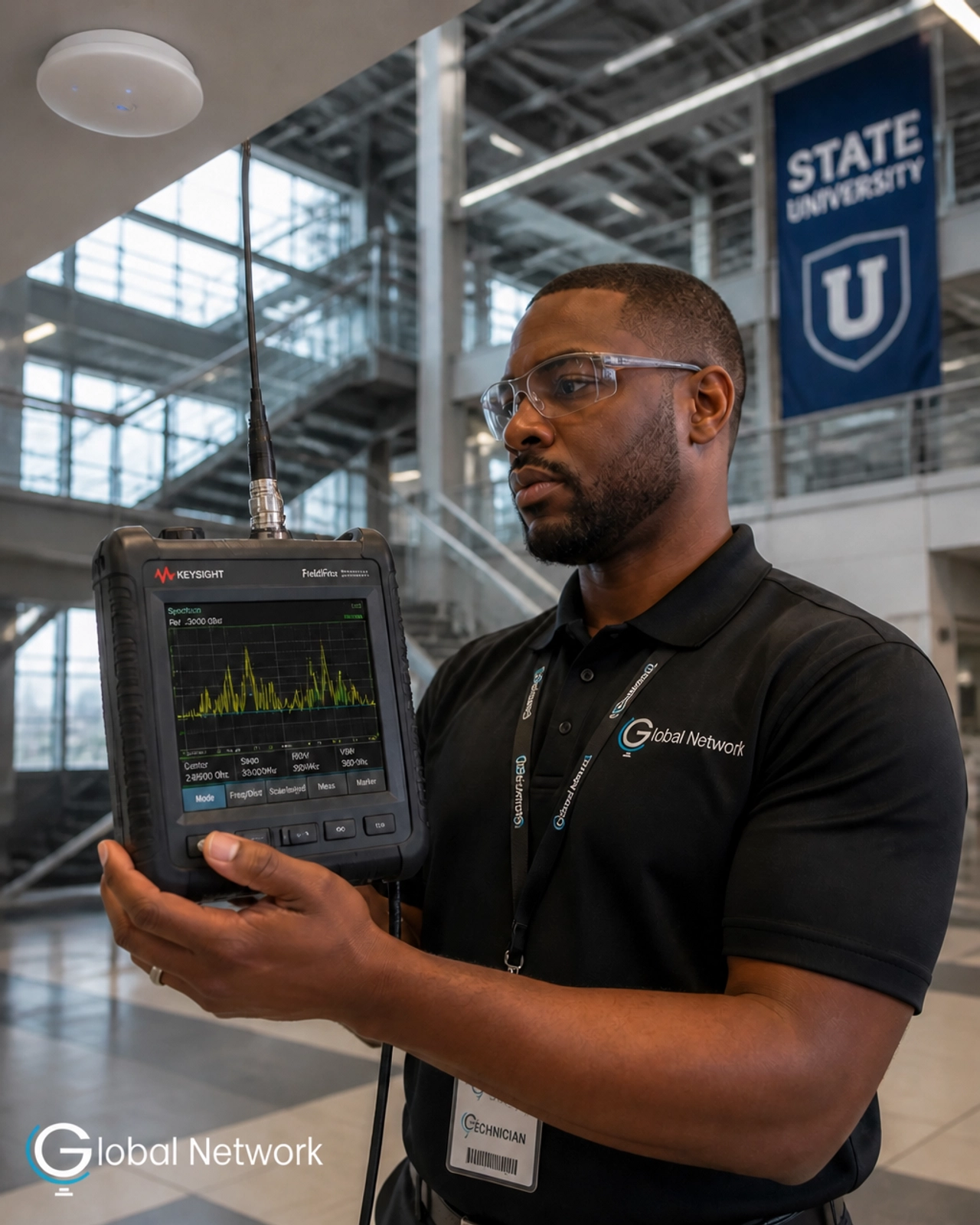
Before equipment is selected, a qualified communications professional should determine whether the building has adequate emergency responder radio coverage.
This typically begins with:
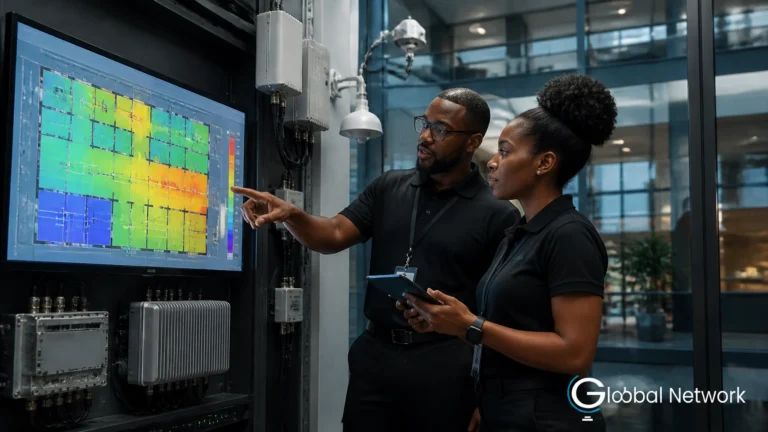
- Pre-construction or existing-building RF surveys
- Floor-by-floor grid testing
- Signal-strength measurements
- Uplink and downlink analysis
- Identification of critical areas
- RF propagation modeling
- Donor-signal evaluation
- Preliminary antenna and cable-pathway planning
A professional survey prevents two costly errors: overbuilding a system that is larger than necessary or under-designing a system that fails acceptance testing.
Design costs may include engineered drawings, equipment schedules, riser diagrams, battery calculations, coverage predictions, cable survivability details, and AHJ submittal support. The correct design is not the cheapest drawing package. It is the one that accounts for actual RF conditions and the building’s long-term operational needs.
Learn more about the technical side of this process in The Science of RF: How Signal Levels Are Measured.
2. Equipment and Materials
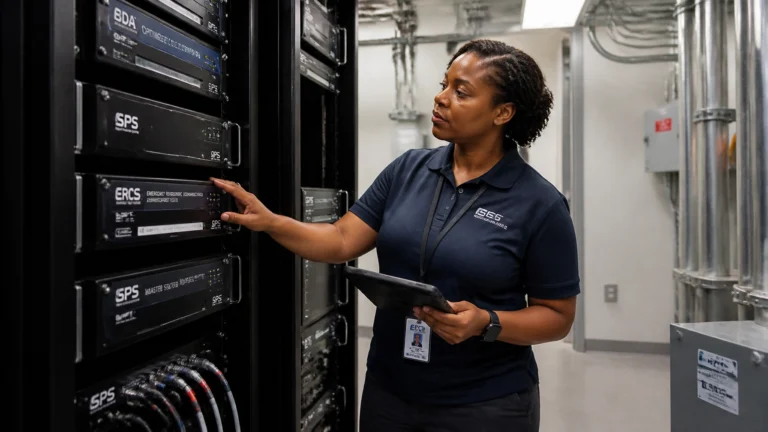
The equipment package is only one part of the total investment, but it is a critical one. Depending on the building, an ERCES may include:
- UL 2524-listed BDA equipment
- Donor antennas
- Server and indoor antennas
- Coaxial cable, fiber, splitters, and couplers
- Remote amplifier units
- NEMA-rated enclosures
- Fire-rated cable and pathway assemblies
- Battery backup equipment
- Surge protection and grounding components
- Monitoring interfaces
- Fire alarm integration equipment
- Labels, placards, and identification materials
Equipment selection must be based on the required frequency bands, output levels, coverage objectives, survivability requirements, and local AHJ criteria. FirstNet compatibility may also be an important consideration for facilities planning future public-safety communications capability.
The lowest equipment bid is not necessarily the lowest ownership cost. Incompatible components, inadequate battery capacity, poor documentation, or limited manufacturer support can produce expensive rework later.
3. Installation and Construction Coordination
Installation labor can become one of the largest portions of an ERCES project, particularly in retrofit environments.
Installation may require:
- Core drilling and pathway preparation
- Cable routing through multiple floors
- Firestopping and rated penetrations
- Antenna mounting
- BDA cabinet installation
- Grounding and bonding
- Battery installation
- Electrical coordination
- Fire alarm interface work
- Lift access or after-hours work
- Restoration of finished surfaces
New construction generally provides more opportunities to coordinate pathways early. Retrofitting an occupied facility may require phased work, tenant coordination, infection-control procedures in healthcare environments, or restricted access in government and institutional properties.
0% Missed Deadlines begins with early coordination. ERCES requirements should be discussed during schematic design, construction planning, and the project kick-off: not immediately before the Certificate of Occupancy inspection.
4. Commissioning, Acceptance Testing, and Certification
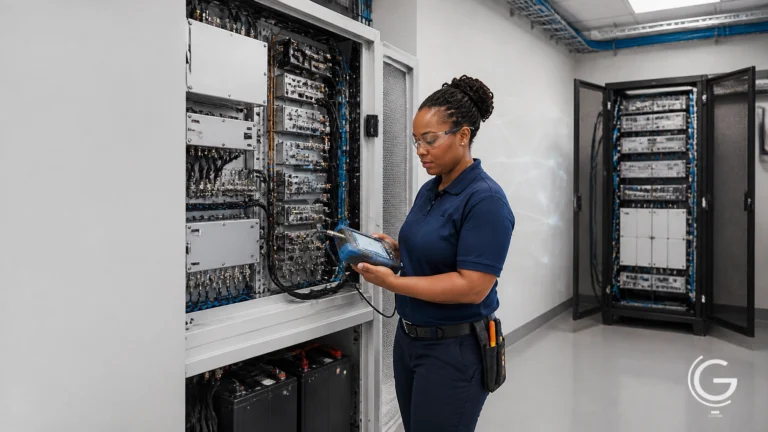
An installed system is not automatically a compliant system. The system must be commissioned and tested against the applicable code requirements and AHJ specifications.
Testing may evaluate:
- Signal strength throughout required grid areas
- General-area and critical-area coverage
- Delivered Audio Quality (DAQ)
- Uplink and downlink performance
- Donor-signal integrity
- Battery operation and backup duration
- BDA fault conditions
- Alarm and supervisory signals
- Fire alarm panel integration
- Cable and equipment survivability
- Antenna and component performance

Testing is also where design weaknesses become visible. If the system fails, the owner may face additional engineering, equipment, labor, access, and reinspection costs.
The final deliverable should be a clear acceptance package that the owner and AHJ can use to verify performance. It should not rely on informal assurances or a general statement that the system is “working.”
Documentation Is a Cost: and a Protection
A complete closeout package may include:
- Approved design drawings
- As-built drawings
- Equipment inventories
- Manufacturer data sheets
- Battery calculations
- Test results
- Coverage maps
- Alarm verification
- Commissioning records
- FCC-related documentation, where applicable
- Maintenance instructions
- Warranty information
- Head-end cabinet labeling
Documentation has a direct operational value. Facility managers need to know what is installed, where it is located, which components require service, and what the AHJ may request during an inspection.
Poor documentation can create avoidable costs during ownership. When a component fails or a renovation changes the building, the owner may need to repeat surveys and reconstruct the system history before work can proceed.
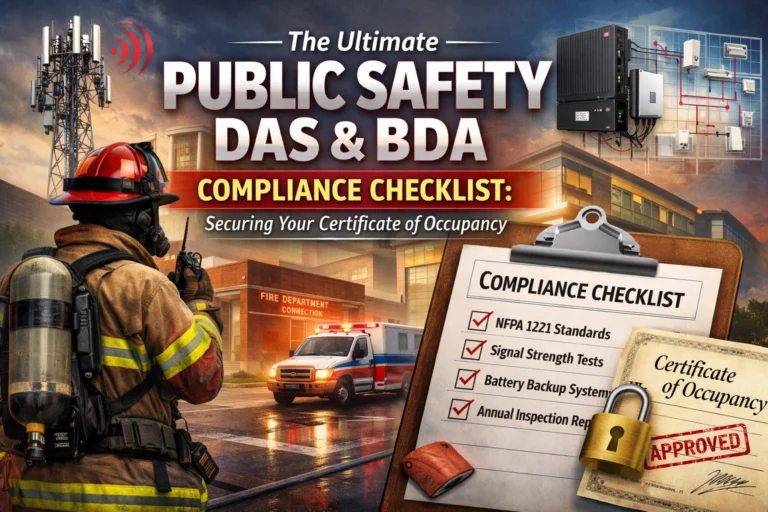
Review the Public Safety DAS and BDA Compliance Checklist before project closeout.
The Recurring Cost: Annual Testing and Maintenance
ERCES compliance is not a one-time capital project. Systems must remain operational and verifiable throughout the life of the building.
Annual service commonly includes:
- Visual inspection of active and passive components
- RF coverage verification
- Battery inspection and testing
- BDA alarm and monitoring checks
- Fire alarm interface verification
- Cable, antenna, and enclosure inspection
- Updated test reports
- Head-end labeling
- Corrective recommendations
- AHJ documentation support
Battery replacement, storm damage, water intrusion, construction activity, and equipment obsolescence can create additional lifecycle expenses. Major renovations may also change RF conditions and trigger retesting.

A maintenance agreement can make these obligations more predictable. It can also help facility teams identify degraded performance before an inspection exposes a failure.
0% Defects. 0% Missed Deadlines. That standard requires scheduled testing, accurate records, and prompt corrective action.
What It Can Cost to Skip or Delay ERCES Compliance
Avoiding an ERCES project does not eliminate the cost. It often transfers the cost into more disruptive and less predictable categories.
Potential consequences include:
- Delayed temporary or permanent Certificate of Occupancy
- Failed fire marshal or AHJ inspections
- Construction schedule extensions
- Reinspection and retesting expenses
- Emergency change orders
- Tenant move-in delays
- Lost rental or operating revenue
- Contractor standby costs
- Accelerated installation premiums
- Unplanned work in finished spaces
- Code violations or enforcement actions
- Increased insurance and risk-management concerns
- Greater exposure to communication failures during an emergency
The financial impact depends on the project, contract structure, occupancy status, and jurisdiction. No single penalty figure applies to every Atlanta property. The prudent approach is to identify the risk during planning and obtain a site-specific scope before construction decisions limit available options.
A Better Budgeting Method for Atlanta Owners
A responsible ERCES budget should separate one-time costs from recurring costs.
One-Time Project Costs
- RF survey and grid testing
- Engineering and design
- AHJ coordination and permitting
- Equipment and materials
- Installation
- Fire-rated pathways and restoration
- Commissioning
- Acceptance testing
- Closeout documentation
Recurring Ownership Costs
- Annual testing and certification
- Preventive maintenance
- Battery replacement
- Corrective repairs
- Monitoring
- Retesting after renovations
- Technology or code-related upgrades
The best estimate comes after a qualified provider reviews the building plans, performs or validates RF testing, confirms AHJ requirements, and evaluates construction conditions. Square footage can support preliminary planning, but it cannot replace an engineered assessment.
Choose Compliance Before the Deadline
For Atlanta building owners, ERCES is an investment in code compliance, operational continuity, and responder safety. The system must be designed for the building that exists: not for an assumed model of it.
Global Network LLC provides Public Safety DAS/ERCES design, installation, commissioning, compliance testing, and lifecycle support. As Atlanta’s local DAS and ERCES specialist, the team helps building owners, facility managers, developers, and public agencies address IFC 510, NFPA requirements, and AHJ expectations with a disciplined, project-specific approach.
When it matters most, reliable communication cannot be improvised.
Request a site evaluation or compliance consultation through the Global Network LLC contact page, review our DAS and ERCES services, or call:
- Office: 770.520.7633
- Toll Free: 877.231.1084
Protect your Certificate of Occupancy. Protect your schedule. Protect the people who respond when it matters most.