The Donor Antenna Dilemma: Why Placement Matters for Your Public Safety DAS
When first responders enter a high-rise office building, commercial center, or educational facility during an active emergency, every second counts. Their life-safety communication relies entirely on robust in-building wireless infrastructure. Yet, behind every compliant Public Safety Distributed Antenna Systems (DAS) and Emergency Responder Communication Enhancement System (ERCES) lies a critical hardware component that often dictates whether first responders communicate seamlessly or face devastating radio dead zones: the donor antenna.
In the complex ecosystem of Radio Frequency (RF) engineering, poor donor antenna placement can cripple an otherwise state-of-the-art Bi-Directional Amplifier (BDA) installation. For building owners, facility managers, and developers across the Metro Atlanta area, understanding the intricacies of donor antenna design is no longer optional: it is a strict legal and life-safety mandate governed by IFC 510, NFPA 72, and NFPA 1225 codes.
Achieving a flawless Certificate of Occupancy (CO) and ensuring absolute code compliance demands rigorous attention to how your system interfaces with external public safety radio towers. Let us examine why donor antenna placement is the ultimate linchpin of your in-building wireless compliance strategy.
1. The Anatomy of a Donor Antenna: Bridging Exterior Towers and Interior Coverage
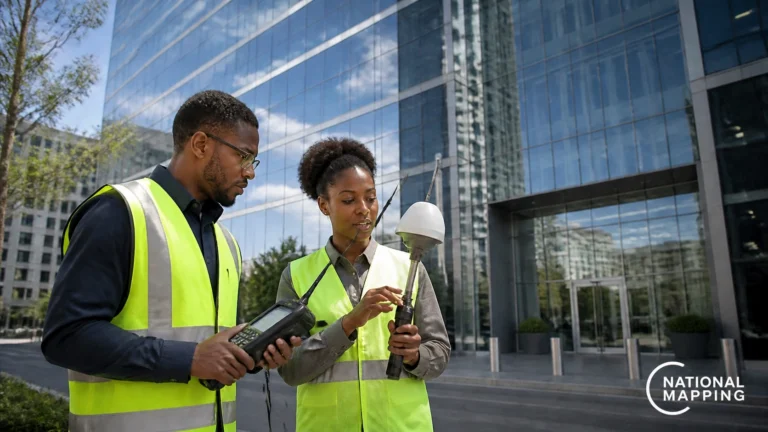
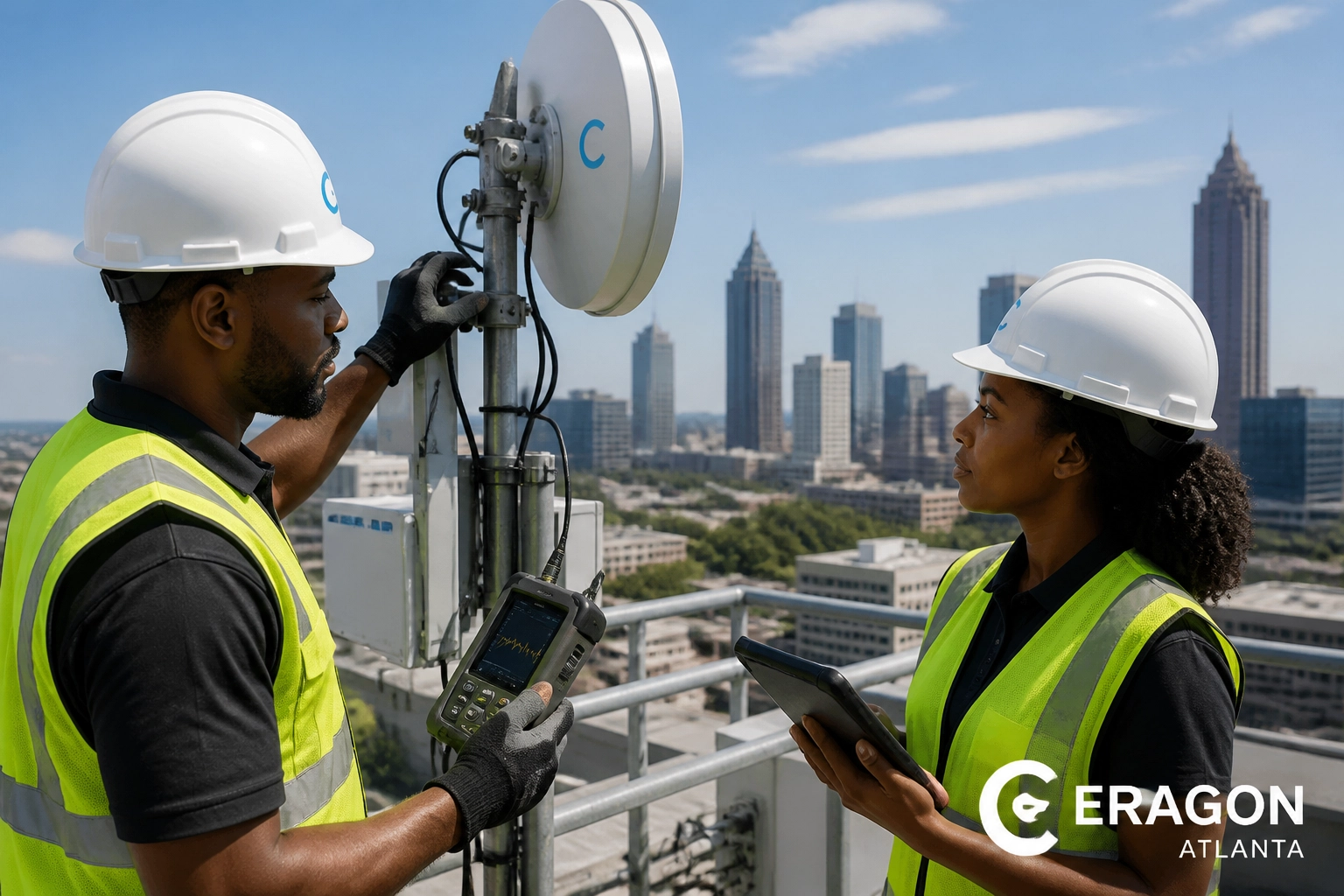
At its core, a public safety donor antenna serves as the critical bridge between outside emergency radio networks and your building’s interior grid. Positioned on the roof or upper exterior facade, the donor antenna captures signals transmitted by municipal public-safety towers and funnels them directly into the BDA. Conversely, it transmits outgoing radio signals from first responders back out to the municipal repeater network.
If this initial capture point is flawed, distorted, or subjected to excessive interference, the amplification process inside the building only magnifies the underlying defects.
- Signal Capture & Amplification: The donor antenna must extract a pristine signal from distant public safety towers without capturing destructive noise.
- Directional Precision: High-gain directional antennas focus narrowly on approved donor sites, rejecting stray signals.
- Uplink/Downlink Integrity: Maintaining strict balance between incoming and outgoing signals prevents network saturation.
2. The Dangers of Interference: Overload, Desensitization, and Noise Floors
One of the most pervasive challenges in RF engineering is managing the electromagnetic environment surrounding commercial rooftops. Modern urban skylines are saturated with commercial cellular traffic, FirstNet 5G spectrums, Wi-Fi networks, and mechanical HVAC emissions.
When a donor antenna is improperly positioned or lacks sufficient selectivity, it risks capturing unintended signals from adjacent cellular carriers. This introduces severe operational hazards:
- BDA Overload and Desensitization: Saturating signals overwhelm amplifier circuits, effectively blinding the BDA to true public safety frequencies.
- Elevated Noise Floor: A poorly aimed antenna can raise the noise floor at the municipal donor site receiver, degrading network performance for entire emergency response districts.
- Self-Oscillation: Insufficient isolation between the donor antenna and interior service antennas can cause the system to loop onto itself, generating wideband interference and triggering immediate automatic shutdown features mandated by safety codes.

When dealing with municipal life-safety infrastructure, compromise is never an option. Our commitment is absolute: 0% Defects and 0% Missed Deadlines for every project we undertake.
3. Best Practices for Donor Antenna Placement in Atlanta Buildings
Navigating local jurisdictional requirements across Atlanta requires specialized engineering expertise. Authorities Having Jurisdiction (AHJs) enforce strict compliance parameters to protect first responder radio channels. To ensure your facility passes inspection on the first attempt, professional system design must adhere to proven placement protocols:
- Unobstructed Line-of-Sight (LOS): The donor antenna must maintain a clean, direct visual path to the designated municipal donor tower, clearing the first Fresnel zone of obstructions.
- Strategic Height Optimization: Elevating the antenna just high enough to achieve LOS: rather than mounting it at maximum height: minimizes exposure to distant, competing RF sources.
- Shielding from Mechanical Noise: Locating antennas away from heavy HVAC cooling towers, elevator penthouses, and large metallic parapets prevents severe signal reflections and multi-path distortion.
- Strict Isolation Margins: Designing systems to achieve an antenna-to-antenna isolation value at least 15 dB greater than the maximum gain of the BDA eliminates self-oscillation risks.
4. Selecting the Right Antenna Type and Beamwidth
Not all antennas are created equal. For public safety ERCES deployments, omni-directional antennas are generally prohibited because they capture signals from every direction, drastically increasing interference risks.
Instead, professional installations rely on high-gain directional antennas featuring narrow horizontal and vertical beamwidths (typically 30 degrees or less) and high front-to-back ratios. These specifications ensure that your system listens exclusively to the authorized municipal tower while rejecting unwanted off-axis signals.

Corporate Responsibility and Legal Compliance
Under strict legal and ethical obligations, building owners and operators are held legally accountable for ensuring that their private infrastructure does not jeopardize public safety communications. Unauthorized interference caused by improper BDA installations can disrupt emergency dispatches across entire municipalities, inviting severe legal liabilities, regulatory penalties, and immediate revocation of your Certificate of Occupancy.
Prioritizing professional Compliance Testing and Certification safeguards your investment and upholds the highest standards of corporate responsibility.
5. Commissioning, Testing, and Long-Term Reliability
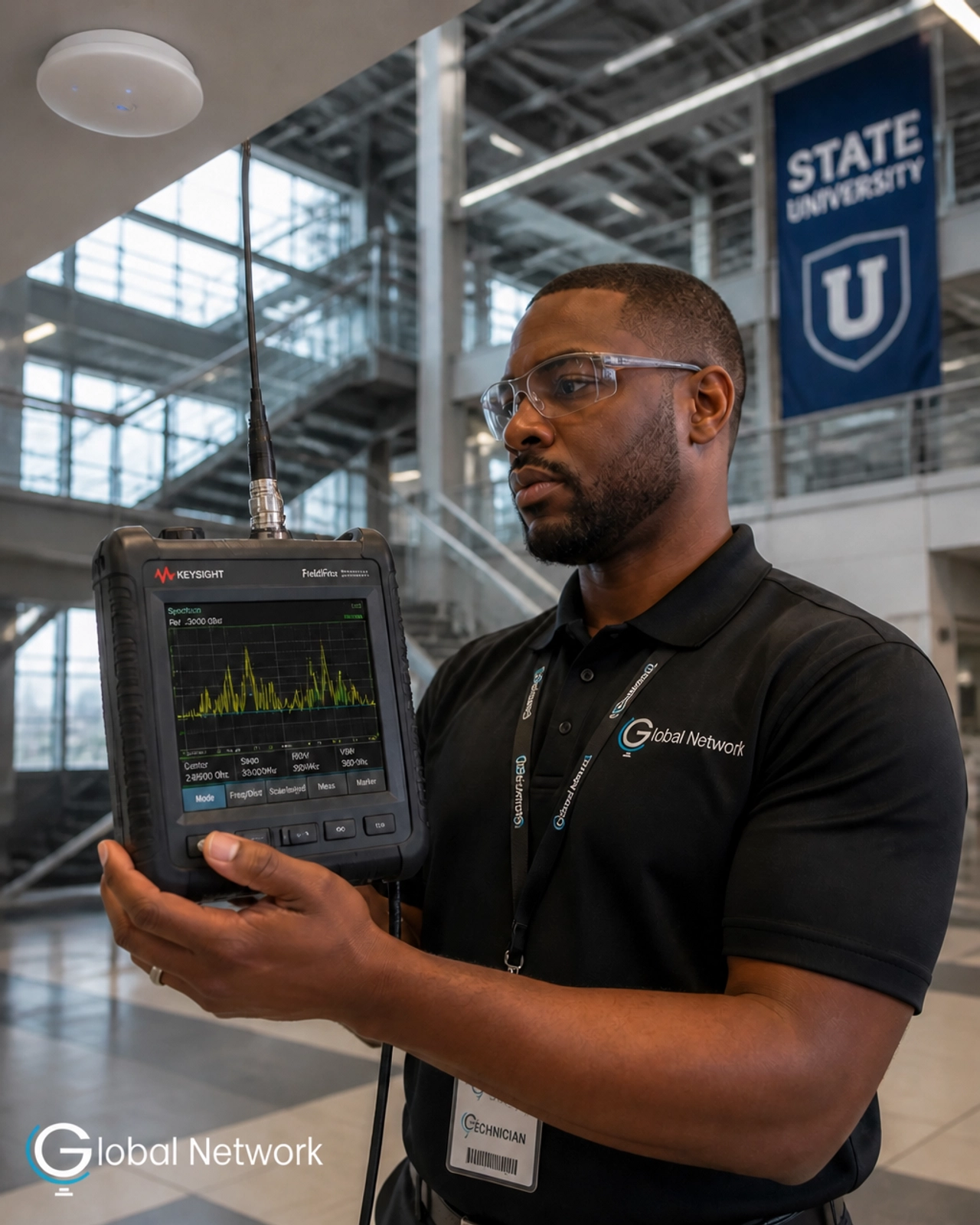
Proper physical placement is only half the battle. Rigorous commissioning and acceptance testing are essential to verify that the donor antenna and BDA operate within strict regulatory thresholds. Using advanced spectrum analyzers and signal generators, certified technicians measure:
- Delivered Audio Quality (DAQ) scores across 100% of critical coverage zones.
- Uplink signal strength relative to the municipal donor site noise floor (ensuring levels remain within approved limits).
- Return loss and VSWR (Voltage Standing Wave Ratio) sweeps to confirm cable and antenna integrity.

By partnering with Atlanta's premier local DAS and ERCES specialist, you ensure that every technical variable: from donor antenna azimuth to system gain balance: is meticulously calibrated for peak reliability.
Secure Your Building's Compliance Today
When emergency responders step inside your facility, they rely on uncompromising wireless coverage. Do not leave your Certificate of Occupancy or occupant safety to chance. At Global Network LLC, we deliver turnkey public safety DAS, BDA design, and rigorous compliance testing tailored to your exact municipal jurisdiction.
Experience absolute peace of mind with our proven expertise in Public Safety DAS/ERCES Installation and Design and annual certification testing.
Call our office today at 770.520.7633 or reach our toll-free line at 877.231.1084 to schedule your comprehensive site survey and RF evaluation. Visit us online at globalnetworkco.com to secure your building's future today.