Property Value and Public Safety: Why ERCES Compliance Boosts Your Building’s Bottom Line
For Atlanta building owners and property managers, Emergency Responder Communication Enhancement System (ERCES) compliance is more than a fire-code obligation. It is a strategic investment in occupancy readiness, tenant confidence, risk management, and long-term asset performance.
A building may have modern finishes, efficient mechanical systems, and strong leasing potential. But if firefighters, police officers, or EMS personnel cannot communicate reliably inside the structure, the property has a serious operational and life-safety vulnerability.
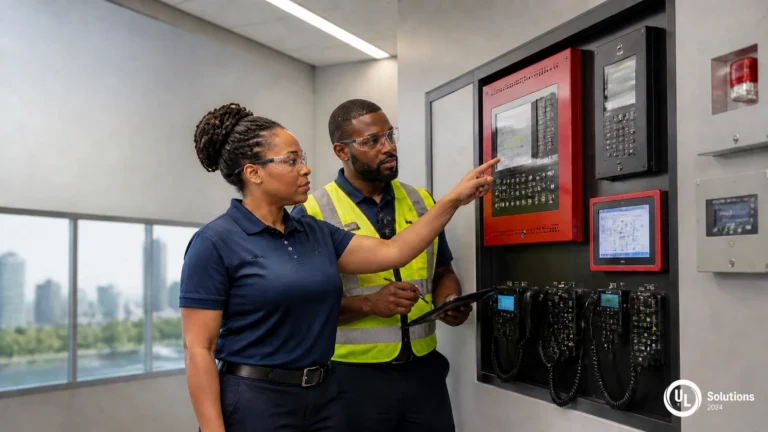
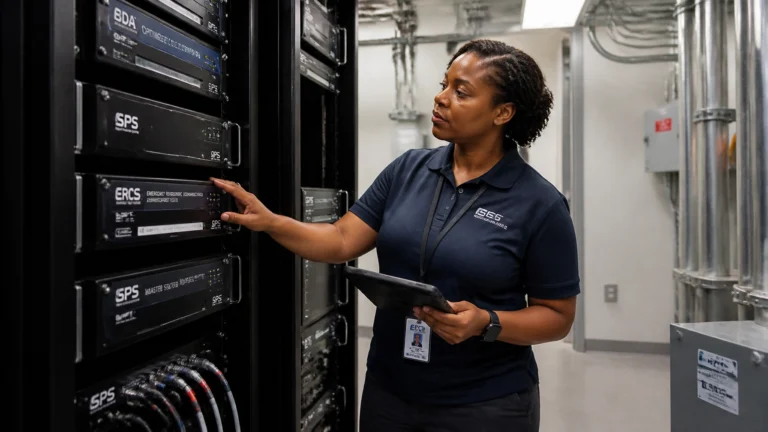
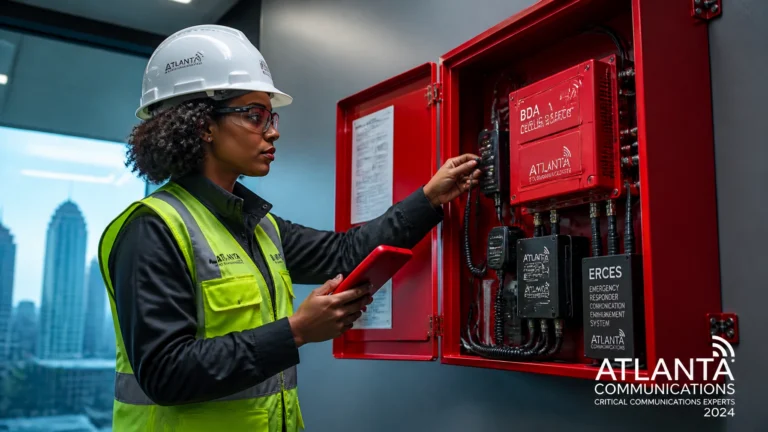
Concrete, structural steel, Low-E glass, elevators, underground parking, and dense mechanical spaces can weaken public-safety radio signals. An ERCES: often implemented through a Public Safety Distributed Antenna System (DAS) and Bi-Directional Amplifier (BDA) technology: helps distribute and amplify those signals throughout the building.
0% Missed Deadlines starts with planning compliance before it becomes a final-inspection problem.
ERCES Compliance Is a Property Performance Issue
Building owners often evaluate capital improvements through rent growth, operating efficiency, tenant retention, and asset valuation. Life-safety infrastructure belongs in that same conversation.
A code-compliant ERCES can support the financial health of a property in several practical ways:
- Protecting the path to a Certificate of Occupancy (CO)
- Reducing the likelihood of inspection-related delays and rework
- Supporting documented due diligence for owners and facility operators
- Strengthening tenant confidence in the building’s emergency readiness
- Preserving the property’s competitiveness as codes and safety expectations evolve
- Helping control lifecycle costs through planned testing and maintenance
Compliance does not guarantee a specific return, rent increase, insurance result, or valuation outcome. However, it can reduce avoidable uncertainty around a building’s ability to open, operate, lease, and remain acceptable to an Authority Having Jurisdiction (AHJ).
1. Occupancy Readiness Protects Revenue Timing
For a new development, major renovation, or adaptive-reuse project, ERCES work can become part of the critical path to occupancy.
If required in-building radio coverage is not available, the AHJ may require additional testing, corrective work, redesign, or system installation before approving occupancy. That can affect:
- Tenant move-in dates
- Lease commencement
- Construction closeout
- Financing milestones
- Contractor schedules
- Operating plans
- Revenue projections
A building that is technically complete but not ready for final life-safety approval may remain unavailable for its intended use. In commercial real estate, schedule disruption can be expensive even when the direct cost of the corrective work is manageable.
The solution is to evaluate public-safety radio coverage early. A professional RF survey and grid test can identify dead zones before walls are closed, ceilings are finished, or tenants are preparing to occupy the space.

2. Reliable Communication Supports Tenant Confidence
Tenants increasingly evaluate properties through a broader lens than location and appearance. Corporate occupiers, healthcare organizations, educational institutions, hospitality groups, government agencies, and multifamily operators all have a responsibility to demonstrate reasonable attention to safety.
A documented ERCES program gives property teams a stronger answer to a basic question:
Can emergency personnel communicate throughout the building when it matters most?
Reliable radio coverage is especially important in areas where signal loss is common:
- Stairwells and exit passageways
- Elevator lobbies and shafts
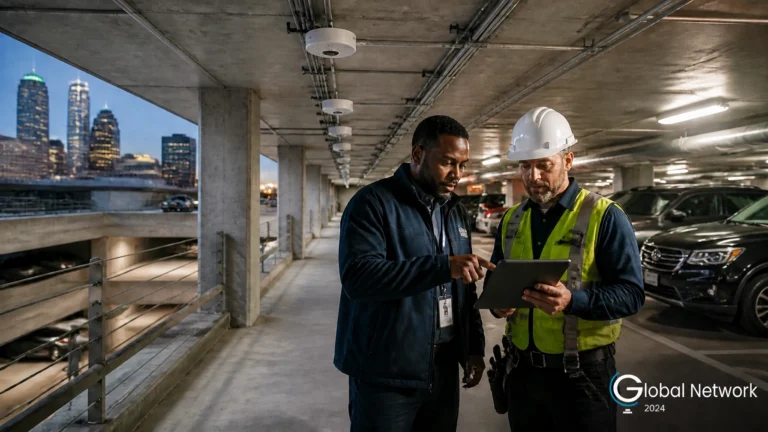
- Basements and underground parking garages
- Fire command centers
- Fire pump and sprinkler rooms
- Mechanical and electrical rooms
- Areas with heavy concrete, steel, or shielded glazing
When tenants see that public-safety communication has been professionally designed, tested, monitored, and maintained, it can reinforce confidence in the property’s overall management practices.
That confidence matters during leasing, renewal discussions, inspections, investor reviews, and corporate risk assessments.
3. Compliance Creates Better Risk Documentation
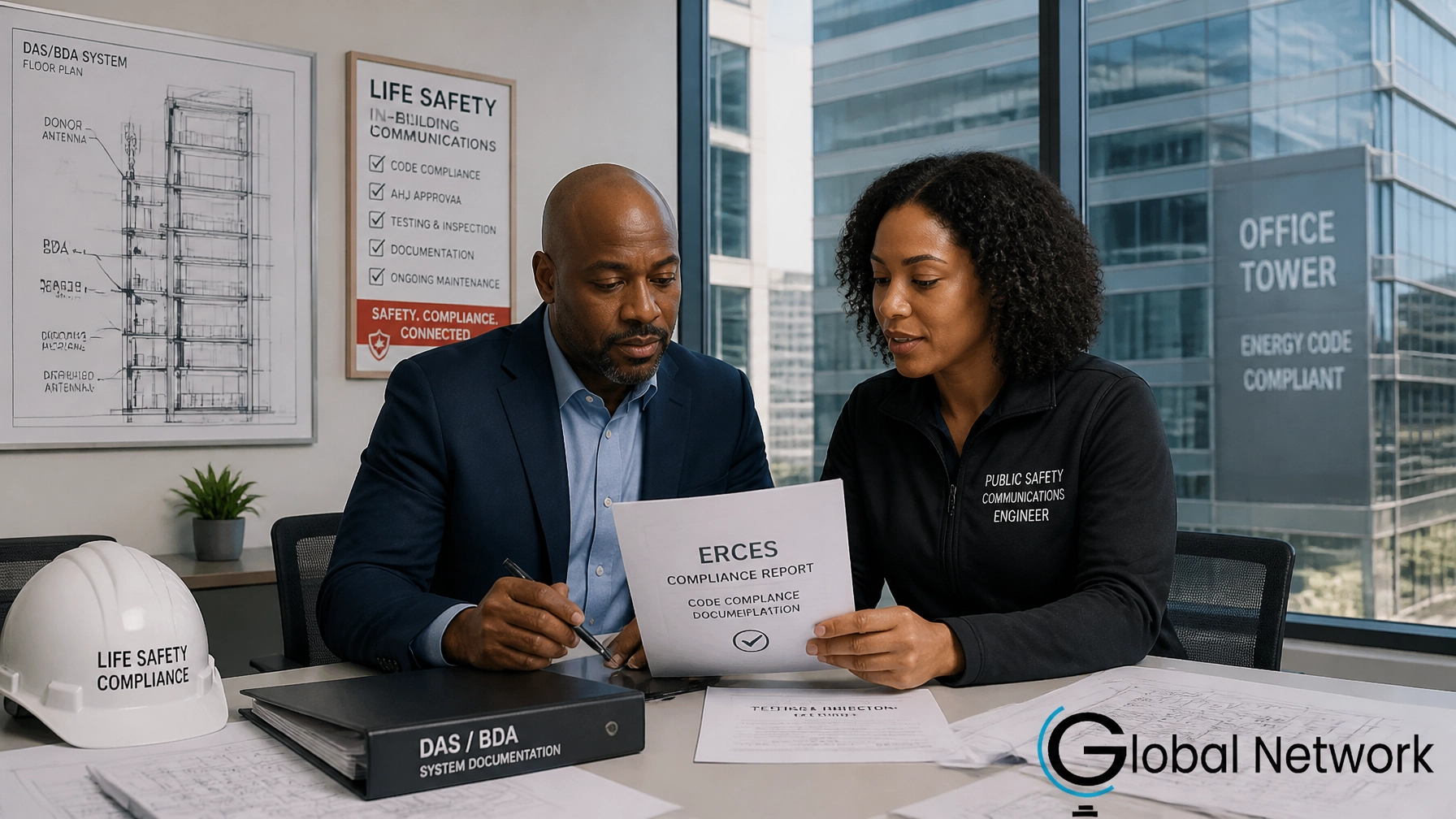
An ERCES is a life-safety system. Its value is not limited to the equipment mounted in a communications room or on a rooftop. The broader value includes the design records, test reports, maintenance history, and corrective-action documentation that demonstrate responsible ownership.
A complete compliance program may include:
- Pre-installation RF surveys
- Engineered DAS or ERCES drawings
- BDA and donor antenna specifications
- Cable and antenna documentation
- Coverage maps and grid-test results
- Acceptance and commissioning reports
- Fire alarm supervisory monitoring verification
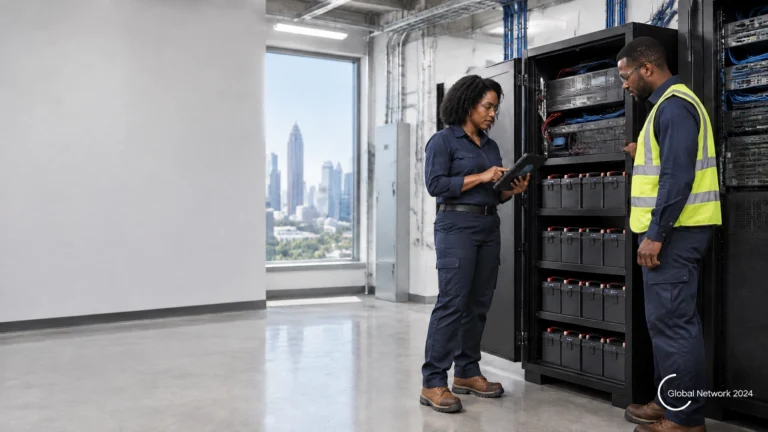
- Battery-backup testing
- Annual performance testing
- As-built documentation
- Records of repairs and system modifications
This documentation helps facility managers communicate clearly with owners, contractors, fire officials, and future buyers. It also reduces dependence on assumptions such as “the building has good cell service” or “the system passed several years ago.”
Cellular coverage is not the same as public-safety Land Mobile Radio (LMR) coverage. A consumer signal booster is not automatically an ERCES. Compliance must be evaluated against the requirements of the applicable jurisdiction and public-safety radio system.
4. IFC 510 and NFPA Standards Influence Long-Term Asset Planning
In Atlanta and surrounding jurisdictions, code requirements can vary based on local adoption, amendments, building classification, construction scope, and AHJ interpretation. Property owners should verify the requirements that apply to the specific site.
IFC Section 510 is commonly associated with in-building emergency responder radio coverage requirements. NFPA 72, the National Fire Alarm and Signaling Code, addresses monitoring and life-safety signaling considerations. NFPA 1225 provides a current framework for emergency services communications systems where adopted or referenced by the jurisdiction.
Equipment listing requirements may also apply. For example, UL Solutions explains the role of UL 2524 for ERCES, including system safety and performance considerations for code authorities.
The important point for owners is straightforward: code compliance is jurisdiction-specific and must be confirmed with the AHJ and qualified professionals.
Planning only for the minimum visible requirement can create future problems if a property undergoes:
- A major renovation
- A change in occupancy
- An expansion
- A new tenant build-out
- A fire alarm upgrade
- A change in building use
- A jurisdictional code update
A properly engineered, maintainable ERCES can help avoid treating the property as a stranded asset when safety and communications expectations become more demanding.
5. Planned Maintenance Helps Control Lifecycle Costs
ERCES compliance is not a one-time installation event. Coverage can change when walls are added, tenant spaces are reconfigured, building materials are modified, or system components age.
Ongoing responsibilities may include:
- Annual performance testing
- Battery inspection and replacement planning
- BDA alarm and supervisory-signal verification
- Antenna and coaxial cable inspection
- Fire alarm panel integration checks
- Coverage testing after significant renovations
- Documentation updates after equipment changes
A planned maintenance agreement makes these obligations more predictable. It also gives the property team an opportunity to identify developing issues before they become failed inspections, emergency repairs, or unbudgeted corrective projects.
0% Defects is the standard for disciplined execution: not a substitute for continued testing.

A Practical Atlanta ERCES Action Plan
Property owners and managers can begin with five steps:
1. Confirm the Applicable Requirements
Engage the local AHJ or fire-prevention office to confirm whether ERCES is required and which edition of the IFC, NFPA 72, NFPA 1225, or local amendments applies.
2. Schedule a Professional RF Survey
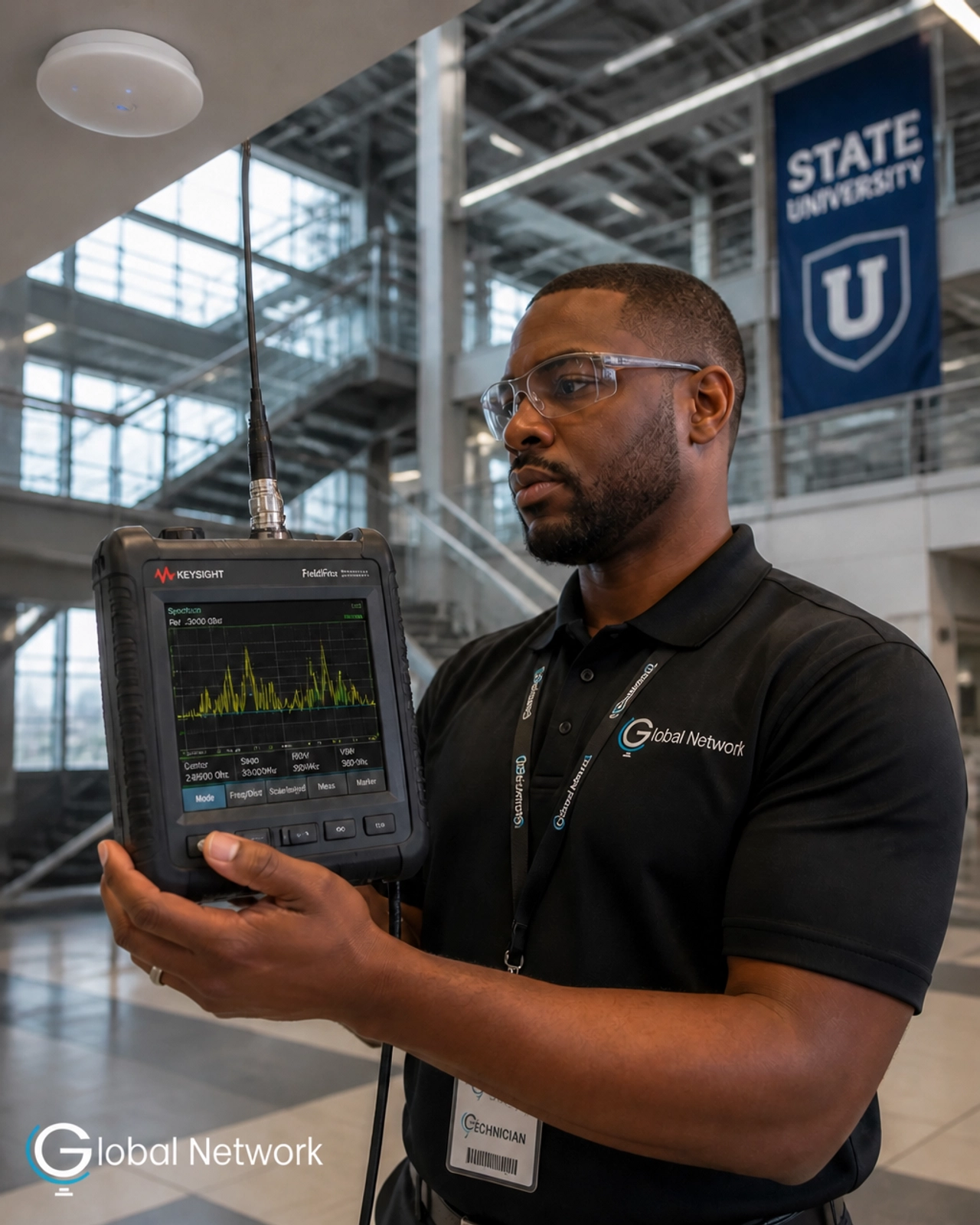
Do not rely on smartphone bars or informal radio checks. Use calibrated test equipment and a documented grid-testing process to evaluate uplink, downlink, signal strength, and audio quality.
3. Coordinate ERCES With the Project Schedule
For new construction or renovation, coordinate DAS design with architectural, electrical, fire alarm, mechanical, and low-voltage plans. Early coordination can reduce pathway conflicts and costly retrofit work.
4. Specify Appropriate Equipment
A compliant system may include a donor antenna, BDA, indoor antennas, coaxial or fiber distribution, backup power, monitoring interfaces, and protected equipment enclosures. Equipment should be selected based on the design, frequency requirements, AHJ specifications, and applicable listing standards.
5. Maintain the System After Approval
Acceptance testing is only the beginning. Establish an annual testing and maintenance process, preserve the closeout package, and update records after renovations or system changes.
For additional planning guidance, review Global Network LLC’s Public Safety DAS and BDA compliance checklist and our overview of IFC 510 and NFPA compliance.
Protect the Building, the People, and the Investment
The bottom-line value of ERCES compliance is measured in more than dollars. It is measured in readiness, accountability, and confidence.
A properly designed and maintained Public Safety DAS/ERCES solution helps first responders communicate across the building, supports the owner’s duty of care, and gives tenants greater assurance that critical infrastructure has been addressed professionally.
For Atlanta property owners, the next step is not to wait for a failed inspection or a last-minute coverage concern. Begin with a site assessment, confirm the local requirements, and build compliance into the property’s operating and capital plan.
Global Network LLC provides ERCES and Public Safety DAS design, installation, commissioning, acceptance testing, and annual performance testing for commercial, government, healthcare, hospitality, and educational facilities.
When it matters most, communication must work.
Contact Global Network LLC to evaluate your building’s public-safety radio coverage:
- Office: 770.520.7633
- Toll Free: 877.231.1084
- Website: globalnetworkco.com
- ERCES and DAS resources: Explore our ERCES/DAS articles
Schedule a professional compliance assessment today and protect your property’s occupancy readiness, safety posture, and long-term resilience.