BDA vs Small Cell: Which In-Building Solution Is Right for Your Atlanta Property?
Navigating the complex landscape of in-building wireless connectivity requires absolute precision. For commercial real estate owners, facility managers, and developers across the Metro Atlanta area, the distinction between life-safety compliance and commercial cellular enhancement is not merely technical: it is a mandatory legal obligation. When preparing a facility for tenant move-in or securing a Certificate of Occupancy, property decision-makers frequently encounter two distinct technological solutions: Bi-Directional Amplifiers (BDAs) and Small Cells.
Misunderstanding the function of these systems can lead to catastrophic inspection failures, costly construction delays, and severe code violations. At Global Network LLC, Atlanta's premier DAS and ERCES specialist, we engineer mission-critical wireless solutions tailored to strict regulatory mandates. In this comprehensive guide, we dissect the fundamental differences between BDAs and Small Cells, evaluate their regulatory standing under IFC 510 and NFPA standards, and outline actionable strategies to guarantee 0% defects and first-pass AHJ (Authority Having Jurisdiction) approval.
Understanding the Core Technologies: Public Safety BDA (ERCES) vs. Commercial Small Cells
To design an infrastructure that satisfies both municipal fire codes and occupant satisfaction, you must first understand the fundamental divergence in purpose, frequency bands, and governance between public-safety systems and commercial networks.
What is a Public Safety BDA and ERCES?
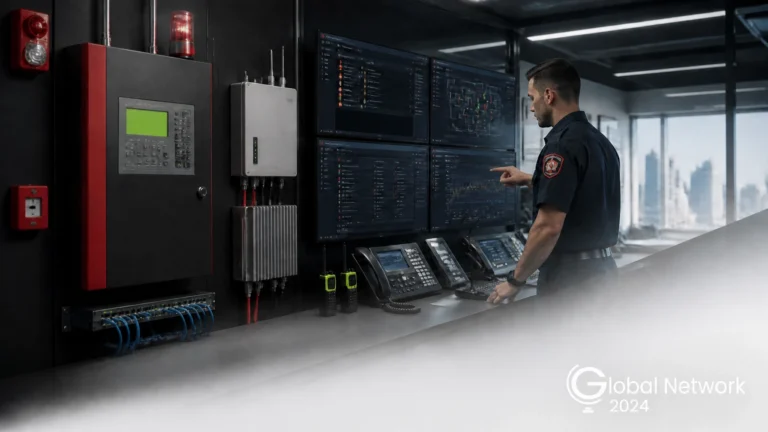
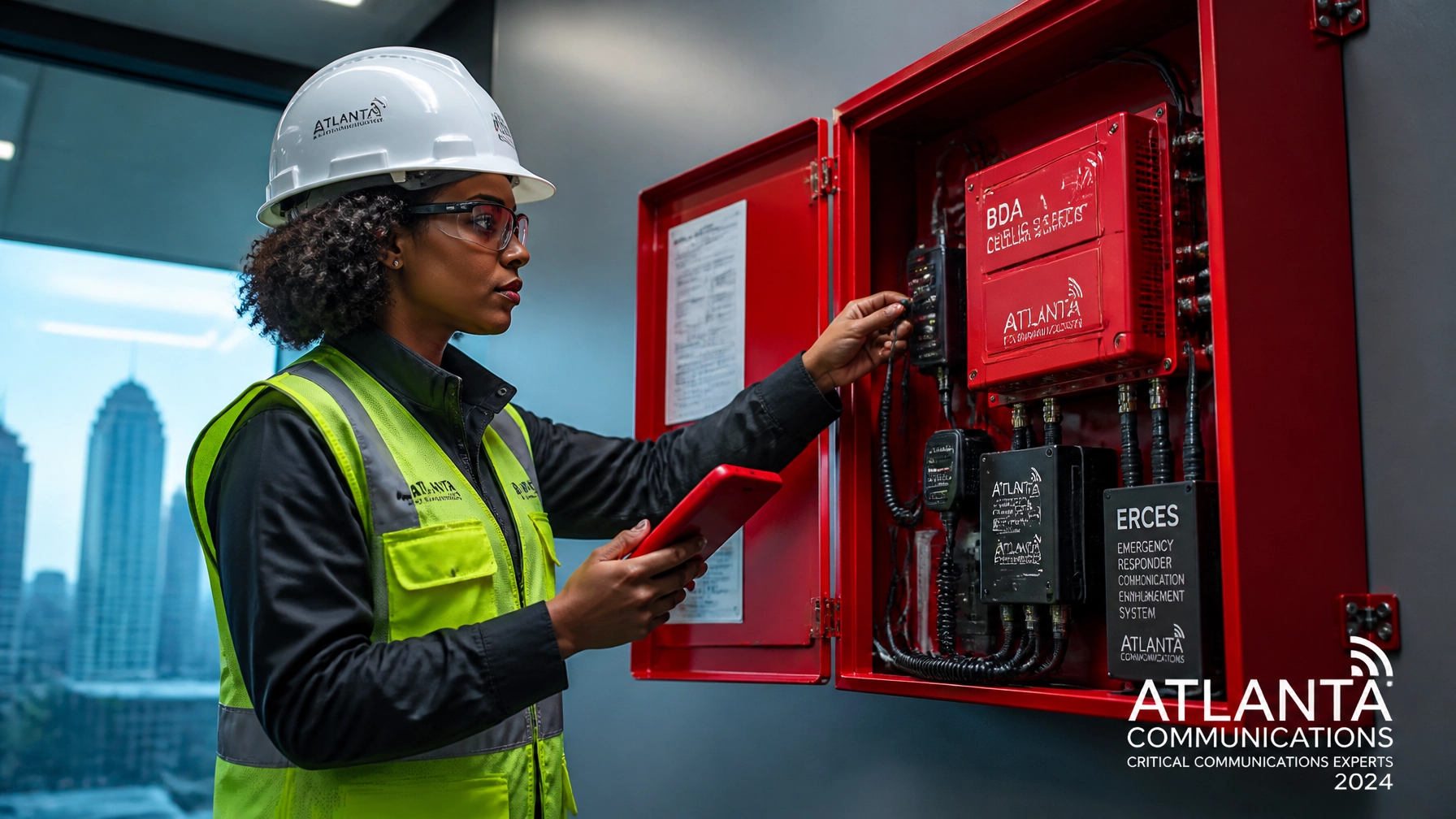
A Bi-Directional Amplifier (BDA) is the active RF amplification core of an Emergency Responder Communication Enhancement System (ERCES), also known in legacy codes as a public-safety DAS.
- Downlink & Uplink Amplification: The system captures off-air signals from local municipal radio towers via a specialized donor antenna, amplifying frequencies across Land Mobile Radio (LMR) bands (typically 700/800 MHz, UHF, and VHF) used by fire, police, and EMS personnel.
- Building-Wide Distribution: The BDA feeds an in-building distributed antenna system composed of coaxial cables, fiber-optic pathways, and indoor antennas to eliminate radio dead zones in stairwells, elevator shafts, underground parking structures, and core utility rooms.
- Life-Safety Mandate: Governed strictly by the International Fire Code (IFC §510), NFPA 1225, and local Atlanta amendments, an ERCES is not an optional tenant amenity. It is a mandatory life-safety system required to maintain building occupancy.

What is a Small Cell (and Where Does It Belong)?
In contrast, a Small Cell (such as an eNodeB or gNodeB base station) is engineered to enhance commercial cellular capacity and coverage (LTE/5G) for tenant devices, voice calls, and data streaming.
- Carrier Infrastructure: Small cells interface directly with commercial carriers (AT&T, Verizon, T-Mobile) to offload macro network traffic inside high-density office buildings, shopping malls, and healthcare facilities.
- Commercial Focus: While small cells solve dropped phone calls and slow data speeds for employees and visitors, they operate on commercial carrier frequencies and protocol standards.
- The Compliance Barrier: Because small cells do not support public-safety LMR frequencies, lack mandatory battery backup resilience (NEMA 4/4X fire-rated survivability), and are not monitored by a UL-listed fire alarm control panel in compliance with NFPA standards, small cells cannot legally satisfy municipal ERCES mandates.
As explored further in our analysis on Small Cell vs. DAS Solutions, treating a commercial enhancement tool as a substitute for fire-code infrastructure guarantees an immediate inspection red tag.
Regulatory Compliance: IFC 510, NFPA 72, and the Atlanta AHJ Mandate
When the Atlanta Fire Rescue Department or surrounding county AHJs conduct their mandatory pre-occupancy radio signal strength survey, they test specifically for first-responder two-way radio intelligibility.
- The 99% Coverage Standard: Critical areas such as exit corridors, fire command centers, elevator lobbies, and standpipe cabinets must achieve a minimum of 99% radio coverage reliability.
- Zero Tolerance for Dead Zones: Even a single isolated stairwell lacking adequate signal penetration will result in a failed inspection and a withheld Certificate of Occupancy.
- Rigorous Monitoring Requirements: Under updated codes, the ERCES must feature continuous supervisory monitoring for AC power loss, battery charger failure, antenna malfunction, and amplifier faults, routing all alarm signals directly to a supervising station.

We champion 0% missed deadlines and absolute compliance precision. By implementing robust engineering protocols and proactive grid testing, we ensure your building meets every statutory requirement when it matters most.
Direct Comparison: BDA vs. Small Cell for Property Managers
To clarify the distinct roles of these technologies in your property planning, review the architectural and regulatory breakdown below:
| Feature / Specification | Public-Safety BDA (ERCES) | Commercial Small Cell / Cellular DAS |
|---|---|---|
| Primary Purpose | Guarantee uninterrupted two-way radio communication for first responders. | Enhance commercial LTE/5G data speeds and voice coverage for building occupants. |
| Operating Frequencies | Public Safety Land Mobile Radio (LMR) bands (700/800 MHz, UHF, VHF). | Commercial carrier frequency bands (Licensed LTE / 5G spectrum). |
| Regulatory Governance | IFC 510, NFPA 1225, NFPA 72, local municipal fire codes. | Commercial carrier service agreements, FCC Part 20/22/24 rules. |
| Enclosure & Power Standards | UL 2524 listed, NEMA 4/4X red fire-rated enclosure with dedicated 24-hour battery backup. | Standard commercial indoor electronics enclosures with standard utility power. |
| Can Satisfy Fire Inspection? | Yes. Mandatory requirement for building occupancy certification. | No. Commercial amenity only; ineligible for life-safety sign-off. |
Best Practices for Atlanta Properties: Achieving First-Pass Approval
Securing your building against radio dead zones requires a systematic, engineered approach. Facility managers and general contractors across the Southeast trust our proven methodology to eliminate administrative friction and technical surprises.
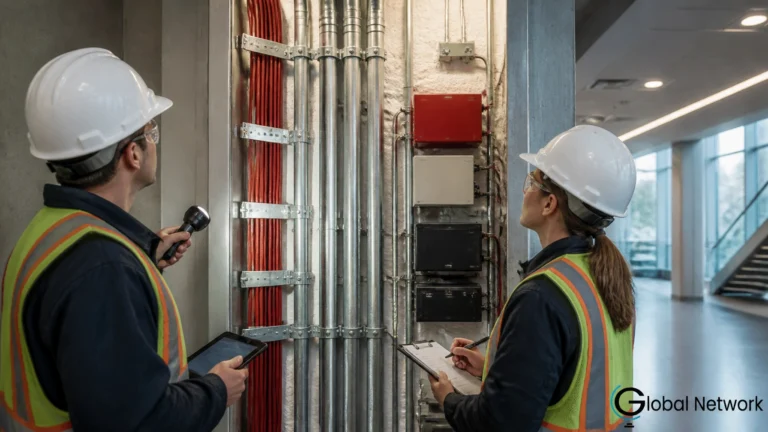
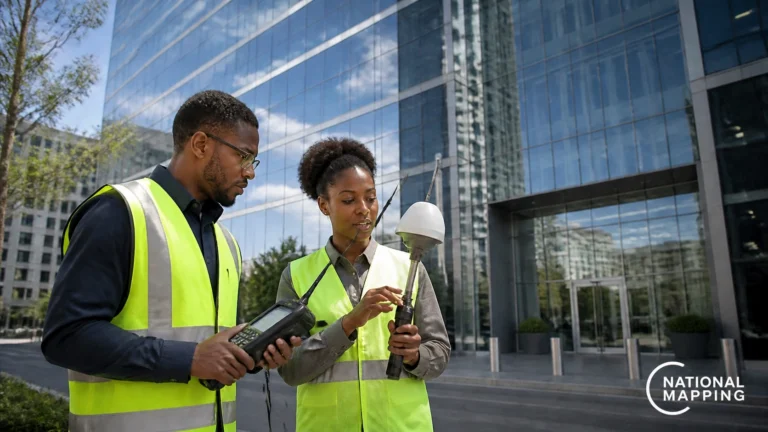
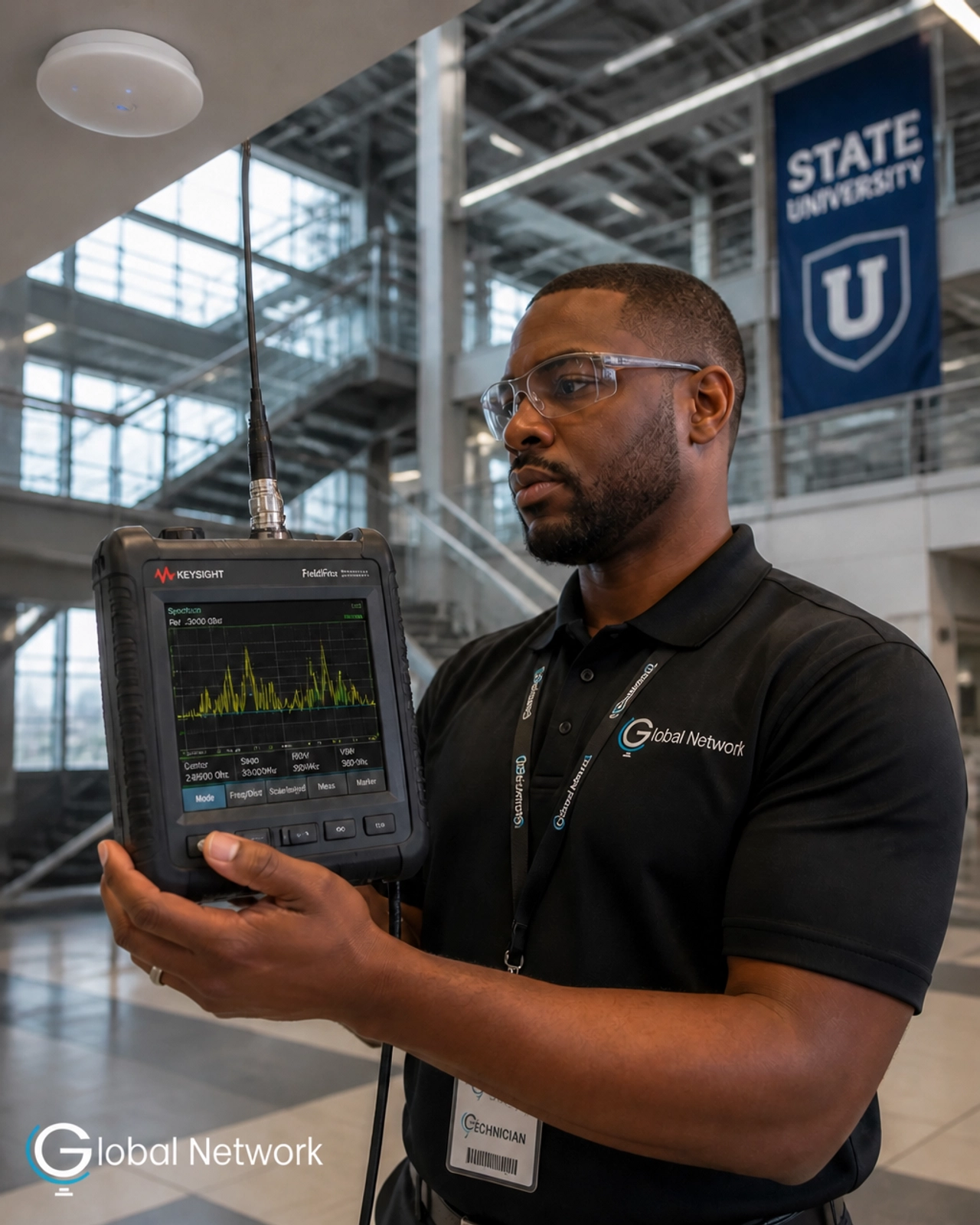
- Conduct an Early RF Site Survey: Do not wait until drywall is finished. Partner with our engineering team during the pre-construction or core-and-shell phase to measure off-air signal strengths entering your property.
- Delineate Public Safety and Cellular Infrastructures: If your commercial building requires both robust tenant cellular coverage and mandatory fire-code compliance, deploy two distinct, purpose-built systems. While physical pathway sharing (such as cable trays) can be optimized, public-safety BDA hardware must remain entirely independent to satisfy AHJ fault-tolerance rules.
- Engage Local Expertise: Atlanta municipalities enforce specific local amendments regarding donor tower azimuths, signal thresholds, and carrier coordination. Working with a dedicated regional specialist ensures seamless navigation of local permitting and inspection protocols.

Our commitment to excellence is reflected in our unwavering standard: 0% defects, 100% compliance. We stand at the forefront of advancements in wireless infrastructure, delivering turnkey design, installation, and commissioning services that protect your investment and safeguard human life.
Partner with Atlanta’s Trusted In-Building Wireless Experts
Whether you are retrofitting a historic commercial high-rise, constructing a modern corporate campus, or finalizing compliance for a multi-family residential complex, Global Network LLC delivers uncompromised safety and regulatory certainty. Avoid costly occupancy delays and protect your occupants with an expertly engineered public-safety BDA and ERCES installation.
Contact our expert engineering team today to schedule your comprehensive site evaluation and secure your Certificate of Occupancy with confidence.
- Office: 770.520.7633
- Toll-Free: 877.231.1084
- Website: globalnetworkco.com