Low-E Glass and Dead Zones: Why Energy-Efficient Buildings Need Better Radio Coverage
Modern commercial architecture has achieved remarkable milestones in sustainability, thermal performance, and environmental responsibility. Across Atlanta and commercial centers nationwide, high-performance building envelopes featuring Low-Emissivity (Low-E) glass, multi-layer glazing, and reinforced concrete have become the gold standard for reducing energy consumption and lowering operational carbon footprints.
However, this triumph in energy efficiency has created an unintended and critical engineering vulnerability: severe radio frequency (RF) signal attenuation.
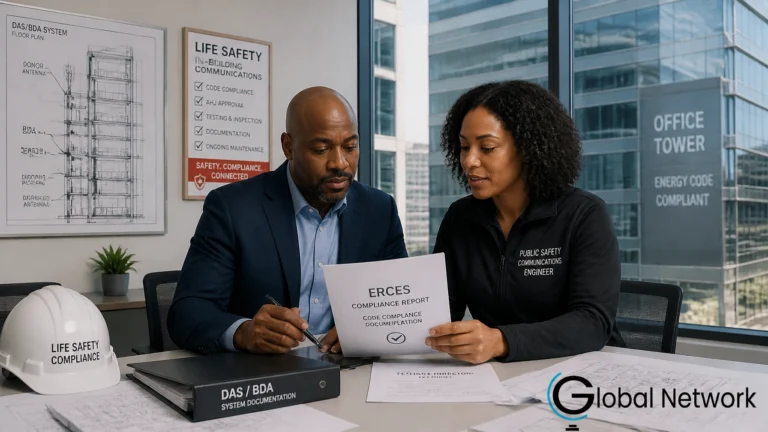
For building owners, property managers, and facility executives, navigating the intersection between green building mandates and mandatory public safety compliance is paramount. When Low-E glass blocks vital two-way emergency radio signals, it creates dangerous indoor dead zones that can trigger inspection failures and stall Certificates of Occupancy. At Global Network LLC, we specialize in engineering advanced Public Safety Distributed Antenna Systems (DAS) and Emergency Responder Communication Enhancement Systems (ERCES) to ensure absolute code compliance and uncompromising life safety.
The Physics of Failure: Why Low-E Glass Blocks Radio Waves
To understand why modern energy-efficient buildings struggle with indoor wireless communication, one must examine the microscopic composition of Low-E glass. Designed to reflect thermal infrared radiation and keep interior temperatures stable, Low-E glass is manufactured using one or more microscopic metallic or metal-oxide coatings (such as silver, tin oxide, or zinc oxide).
While these metallic layers are transparent to visible light, they act as highly effective reflectors for radio frequency (RF) energy.
- High Attenuation Metrics: Standard double- or triple-silver Low-E glass can introduce 27 dB to over 50 dB of signal loss (attenuation) across typical public safety and cellular frequency bands.
- The Faraday Cage Effect: When installed across entire curtain walls, Low-E glass transforms the building exterior into an effective RF shield: similar to a Faraday cage: preventing outdoor emergency radio transmissions from penetrating the interior.
- Compounded Structural Loss: Combined with reinforced concrete core walls, Low-E glazing ensures that outdoor macro towers cannot provide reliable indoor coverage for first responders.
As emergency management authorities emphasize in our comprehensive guide on the zero dead zone and ERCES compliance, relying on exterior signal penetration in a modern sustainable building is a regulatory and life-safety gamble.
Regulatory Mandates: IFC 510, NFPA 72, and the Certificate of Occupancy
Building codes no longer treat indoor wireless coverage as an optional luxury; it is a strict statutory requirement enforced by local Authorities Having Jurisdiction (AHJ) and Fire Marshals. Under IFC 510 (International Fire Code) and NFPA 72 / NFPA 1225, commercial and institutional facilities must maintain robust, reliable two-way radio communication for police, fire, and emergency medical services across 99% of critical areas (such as fire command centers, stairwells, and elevator lobbies) and 90% of general building areas.
+-------------------------------------------------------------------------+
|                  MANDATORY CODE COMPLIANCE THRESHOLDS                   |
+-------------------------------------------------------------------------+
| • Critical Areas (Stairwells, Lobbies, Fire Pumps): 99% Coverage        |
| • General Building Areas (Tenant Spaces, Corridors): 90% Coverage       |
| • Minimum Signal Strength Threshold: -95 dBm (Inbound / Outbound)       |
+-------------------------------------------------------------------------+
When building inspectors conduct mandatory signal strength grid tests prior to granting a Certificate of Occupancy, buildings shielded by Low-E glass frequently fail. Failing these tests results in costly occupancy delays, legal liabilities, and mandatory retrofits.
For a deeper dive into regulatory standards, review our analysis on compliance with fire and safety regulations under IFC 510 and NFPA 72.
Engineering the Solution: Bi-Directional Amplifiers (BDAs) and Public Safety DAS
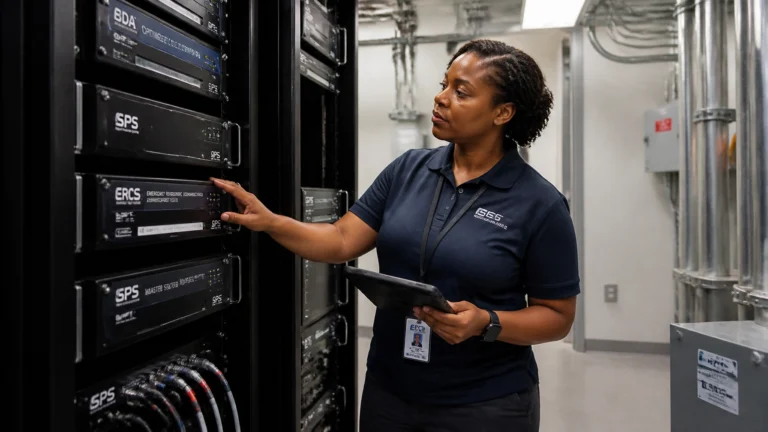
To counteract the RF-blocking properties of Low-E glass and modern construction materials, facilities require an active, code-compliant amplification infrastructure. This is where Bi-Directional Amplifiers (BDA) and Distributed Antenna System (DAS) architecture become indispensable.

A robust Public Safety DAS/ERCES solution operates through a carefully engineered framework:
- Donor Antenna: Mounted strategically on the roof or exterior facade to capture clean, high-gain public safety signals directly from nearby emergency transmission towers.
- Active BDA Core: Amplifies both inbound signals (from the outside network into the building) and outbound signals (from responder portable radios inside back out to the municipal network) without introducing distortion or interference.
- In-Building Distribution Network: A network of coaxial cables, fiber optics, and low-profile indoor antennas that evenly distribute the amplified signal across all floors, basements, and shielded interior corridors.
- FirstNet Compatibility: Engineered to support dedicated public safety broadband networks, ensuring seamless interoperability for multi-agency disaster response.
By bridging the exterior environment with the interior core, a properly designed BDA system completely neutralizes the RF attenuation caused by Low-E glass. Explore our technical insights on why your new building has radio dead zones and how a BDA system fixes it.
Atlanta’s Local Expert in Mitigating Low-E RF Obstruction
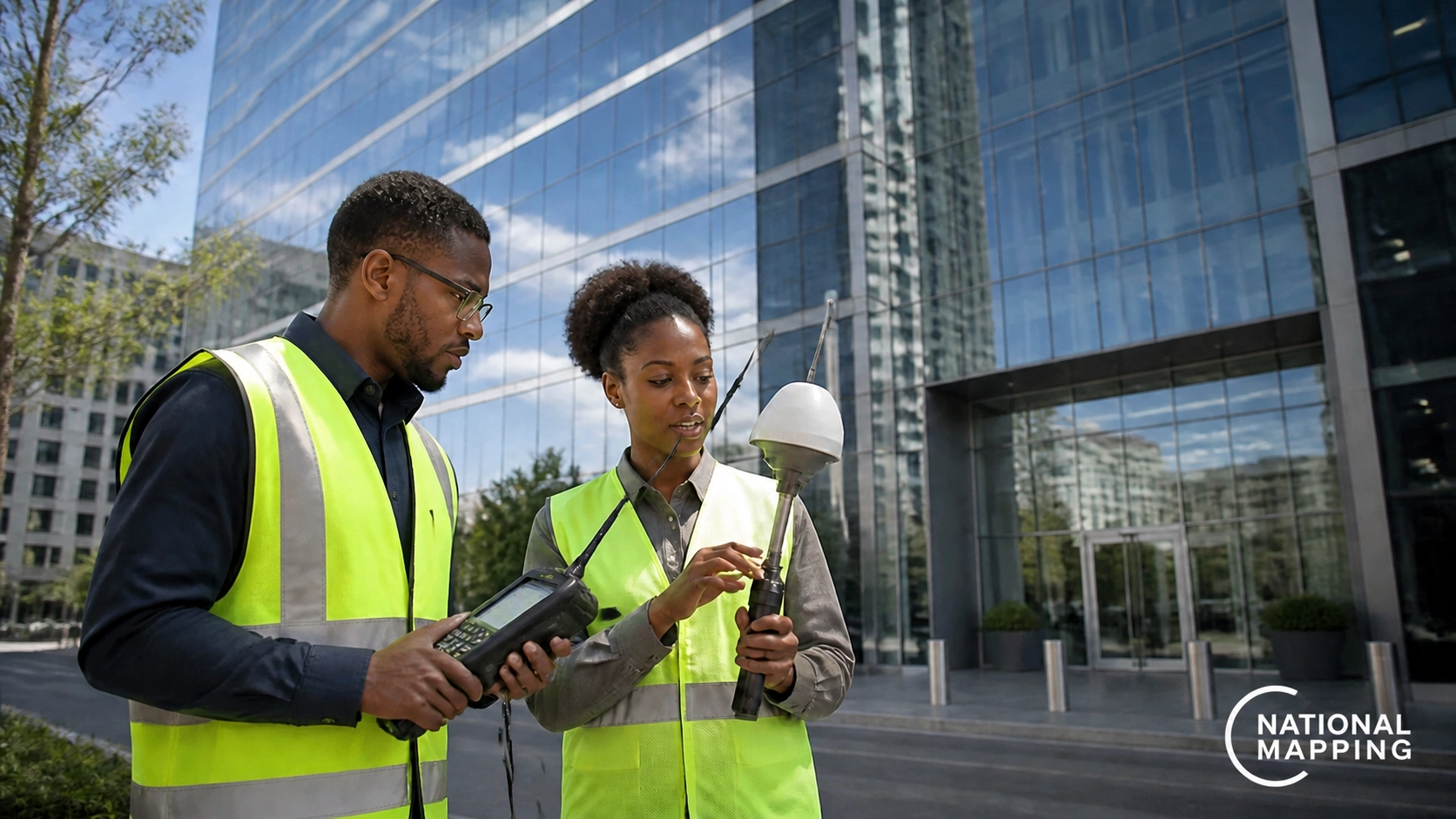
Designing and certifying an ERCES installation in a modern sustainable building requires meticulous local expertise, frequency coordination with spectrum license holders, and rigorous adherence to AHJ guidelines. Every building envelope is unique; varying glass thicknesses, solar control coatings, and floorplate geometries demand custom RF engineering.

At Global Network LLC, our engineering team approaches every project with an unwavering commitment to excellence and accountability:
- 0% Defects in system design and component integration.
- 0% Missed Deadlines for fire inspection sign-offs and occupancy schedules.
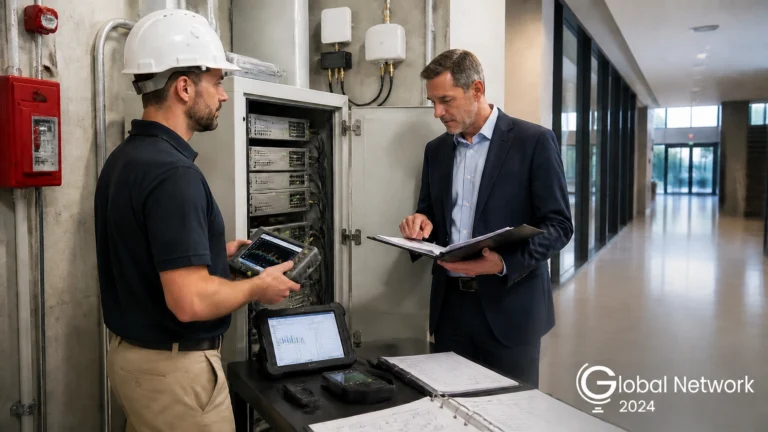
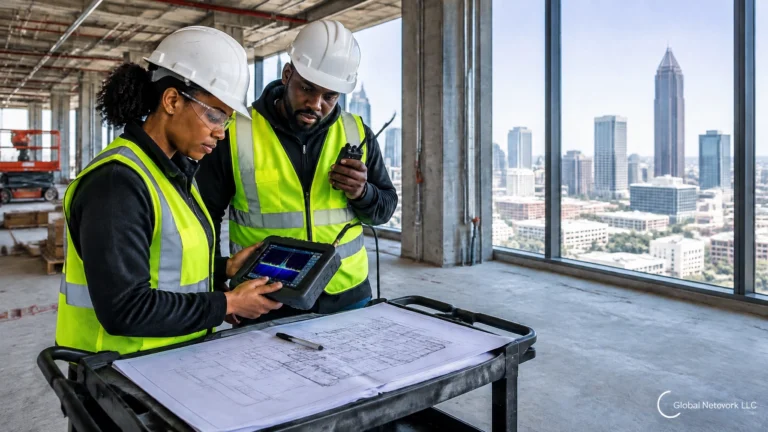
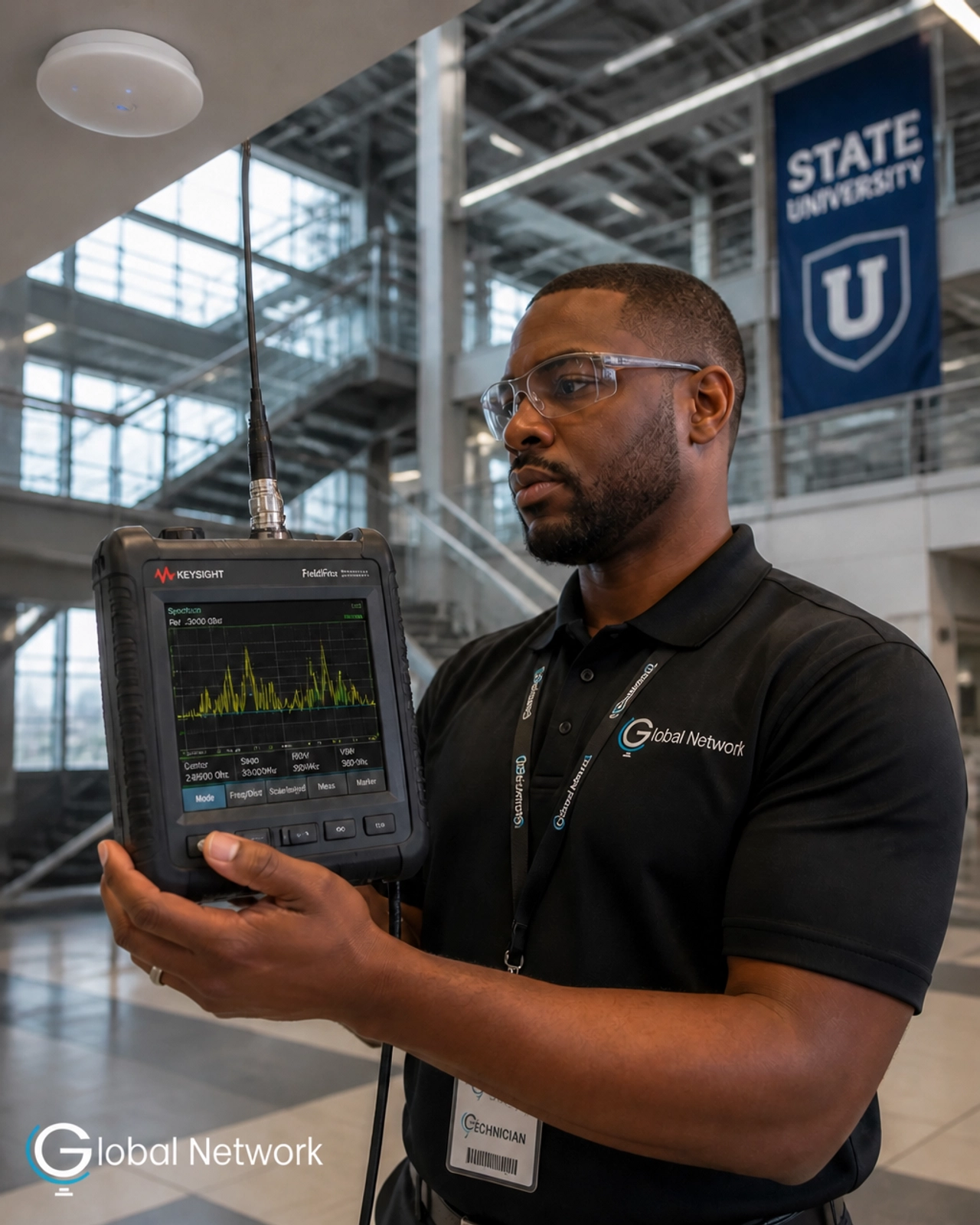
- Full turnkey execution covering initial RF site surveys, FCC-compliant engineering design, professional installation, AHJ coordination, and annual performance re-certification.
For proven strategies on sailing through municipal evaluations, read our insider guide on Atlanta BDA specialist secrets on how to pass your next fire marshal radio inspection.
Corporate Responsibility, Safety, and First Responder Readiness
In high-consequence environments: whether commercial office towers, healthcare campuses, multi-family residential complexes, or educational facilities: the ethical duty to protect occupants and first responders is absolute. Modern sustainability goals must never compromise life safety.

We operate with strict adherence to professional ethics, regulatory transparency, and comprehensive workforce training. Our mission is to ensure that when emergency personnel cross your threshold when it matters most, their communication links remain unbroken, instantaneous, and crystal clear.
Secure Your Building’s Compliance Today
Do not let Low-E glass and energy-efficient architecture delay your Certificate of Occupancy or endanger building occupants. Partner with Global Network LLC, Atlanta’s premier authority in Public Safety DAS, BDA technology, and ERCES compliance.
- Office: 770.520.7633
- Toll-Free: 877.231.1084
- Website: globalnetworkco.com
Contact our engineering team today to schedule your comprehensive indoor RF signal survey and guarantee absolute code compliance.