IFC 510 Compliance for Hotels and Arenas: What Atlanta’s Hospitality Industry Must Know
Atlanta’s hotels, arenas, convention facilities, and other large hospitality venues have a responsibility that extends beyond guest experience. They must also support reliable communication for firefighters, law enforcement officers, emergency medical personnel, and other first responders when it matters most.
That responsibility often includes compliance with International Fire Code (IFC) Section 510, applicable local amendments, and relevant NFPA standards, including NFPA 72 and NFPA 1225 where adopted. If a building’s construction materials, size, layout, or below-grade areas prevent adequate public-safety radio coverage, an Emergency Responder Communication Enhancement System (ERCES): also called an ERRCS or public safety DAS: may be required.
For Atlanta hospitality operators, the goal is straightforward:
0% guesswork. 0% missed inspection requirements. Reliable communication throughout the facility.
Why public-safety radio coverage matters in Atlanta hospitality facilities
A hotel or arena can be full of people, complex infrastructure, and difficult radio-frequency environments. Concrete stair cores, structural steel, fire-rated walls, Low-E glass, mechanical spaces, parking decks, and below-grade levels can all weaken or block public-safety radio signals.
A first responder may enter the building with a fully functional portable radio and still encounter a dead zone in:
- An underground parking garage
- A stairwell or elevator lobby
- A fire command center
- A hotel guestroom corridor
- A loading dock or service tunnel
- A mechanical or electrical room
- An arena concourse or seating level
- A large ballroom, exhibition hall, or back-of-house area
In an emergency, incomplete coverage can delay coordination, limit situational awareness, and create unnecessary risk for both responders and occupants.
IFC 510 is intended to ensure that emergency responder radio communications remain usable throughout required areas of a building. The specific enforcement requirements depend on the code edition adopted by the jurisdiction and the direction of the Authority Having Jurisdiction (AHJ).
When IFC 510 may affect hotels and arenas
IFC 510 requirements generally become a major consideration for buildings with characteristics such as:
- Large floor areas
- Multiple stories
- Below-grade levels
- High occupant loads
- Extensive concrete or steel construction
- Complex interior layouts
- Fire command and life-safety infrastructure
- Large assembly, hospitality, or mixed-use occupancies
Hotels and arenas frequently meet one or more of these conditions. Even when a property is not automatically required to install an ERCES, the building may still need a documented radio coverage survey to determine whether acceptable signal levels are present.
New construction and major renovation
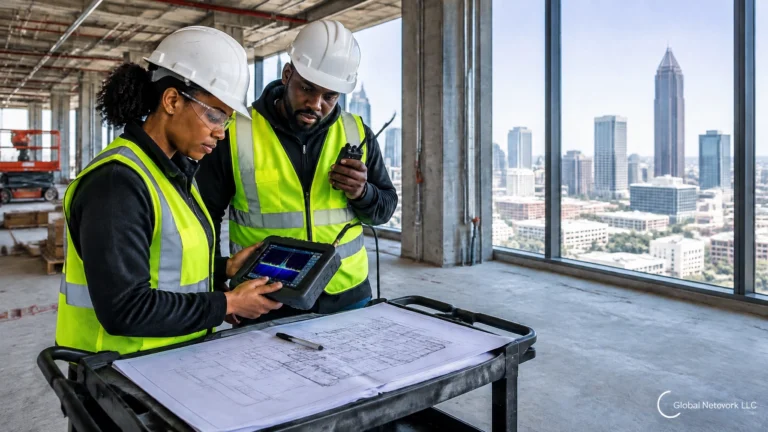
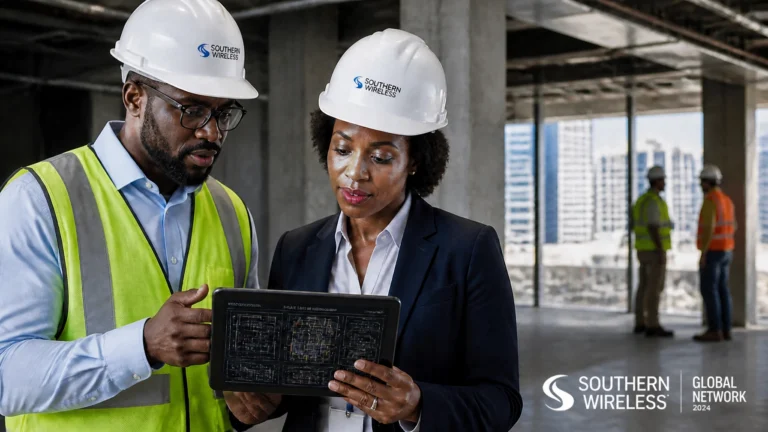
Public-safety radio coverage should be considered during early design: not after walls are closed and finishes are complete. A post-construction survey may identify coverage deficiencies that require additional pathways, cable, antennas, power equipment, and access points.
For new Atlanta-area hospitality projects, early coordination can help integrate ERCES requirements with:
- Architectural and engineering plans
- Electrical and low-voltage design
- Fire alarm and life-safety systems
- Generator and emergency power systems
- Fire command center layouts
- Rooftop and donor-antenna planning
- Construction sequencing
- Certificate of Occupancy milestones
For an existing hotel or arena, a radio survey may be triggered by renovation, a change in occupancy, an inspection deficiency, a new local requirement, or a demonstrated communication problem.
What an IFC 510 coverage evaluation examines
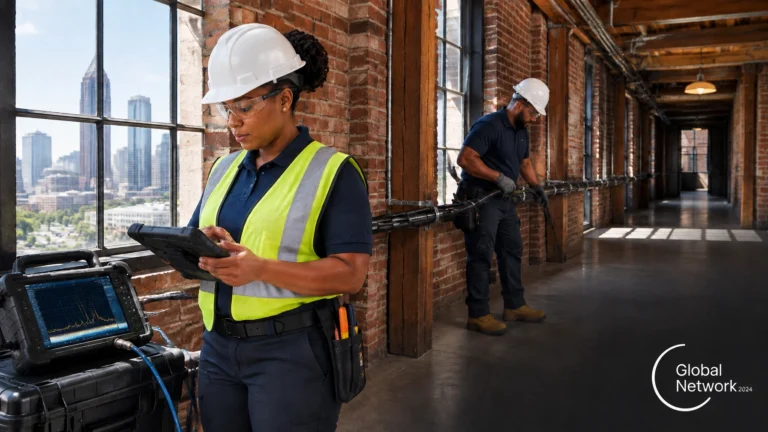
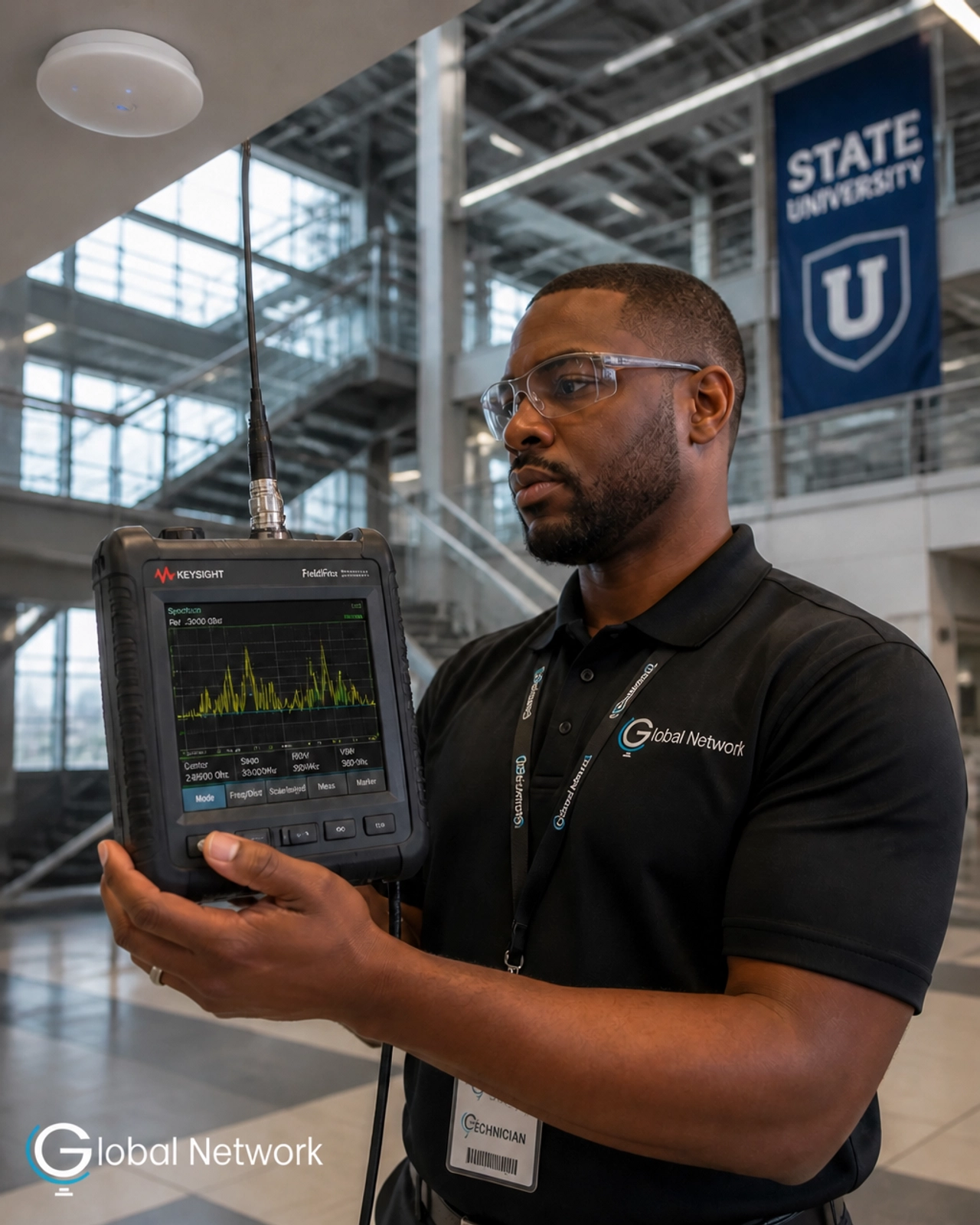
A qualified public-safety DAS contractor evaluates more than whether a radio appears to work in a few convenient locations. A proper assessment should document coverage across representative areas of the facility and account for both inbound and outbound communications.
Common evaluation considerations include:
- Received signal strength, often measured in dBm
- Voice intelligibility, including Delivered Audio Quality (DAQ)
- Signal quality, interference, and noise
- Coverage on each floor and in required zones
- Stairwells, elevator lobbies, and exit passageways
- Fire command, fire pump, and other critical rooms
- Parking structures and below-grade spaces
- In-building and building-to-outside performance
- Coverage maps and test-grid documentation
- The building’s public-safety radio frequencies and system architecture
Many AHJs use performance targets such as 95% coverage in general areas and 99% coverage in critical areas, but the exact thresholds, test methods, and equipment specifications must be confirmed with the local AHJ.
Atlanta project teams should review the Atlanta Fire Rescue Department’s Office of the Fire Marshal IFC 510 requirements before finalizing a compliance strategy.

When an ERCES or public-safety DAS is required
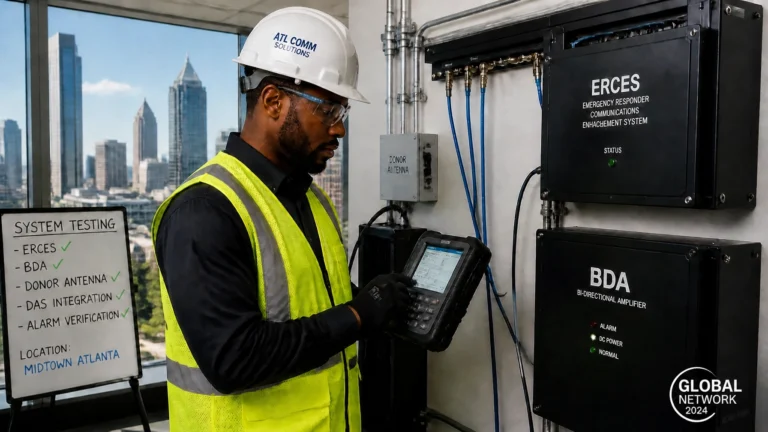
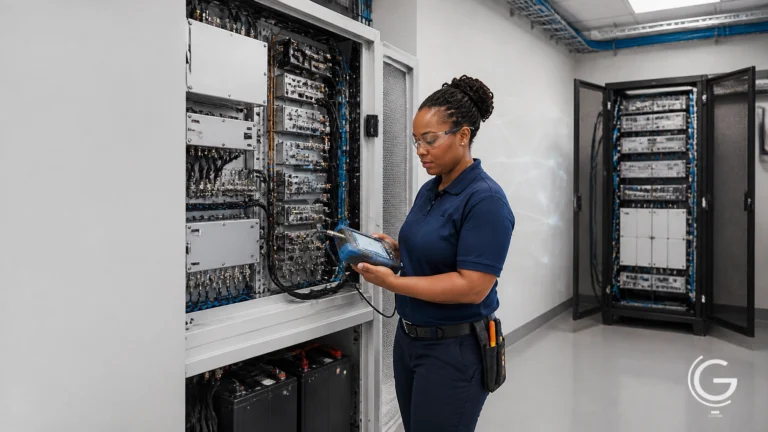
If testing identifies inadequate public-safety radio coverage, the building may require an ERCES. This system typically uses a Bi-Directional Amplifier (BDA), donor antenna, distribution cabling, remote units, and indoor antennas to receive, amplify, and redistribute public-safety radio signals throughout the structure.
A properly designed system can help address coverage issues in:
- Guestroom towers
- Arena seating bowls and concourses
- Exhibition and ballroom spaces
- Parking garages
- Service corridors
- Stairwells and elevator shafts
- Below-grade levels
- Fire command and emergency operations areas
The system must be designed for the applicable public-safety radio network. In Atlanta, project requirements may include a Class A, channelized BDA compatible with the City’s public-safety radio environment. Channel filtering and proper engineering are important because an incorrectly configured amplifier can create interference rather than improve communications.
An ERCES design should also address emergency power and system supervision. Depending on the adopted code and AHJ requirements, the system may need standby power capable of supporting operation during an extended outage, along with alarm monitoring for conditions such as:
- AC power failure
- Battery failure
- Donor signal loss
- BDA malfunction
- Antenna or cable faults
- Tamper conditions
- Low-battery or charger trouble
ERCES equipment may interface with the building’s fire alarm or other approved monitoring infrastructure. These interfaces must be coordinated carefully and documented during commissioning.
Atlanta-specific AHJ coordination
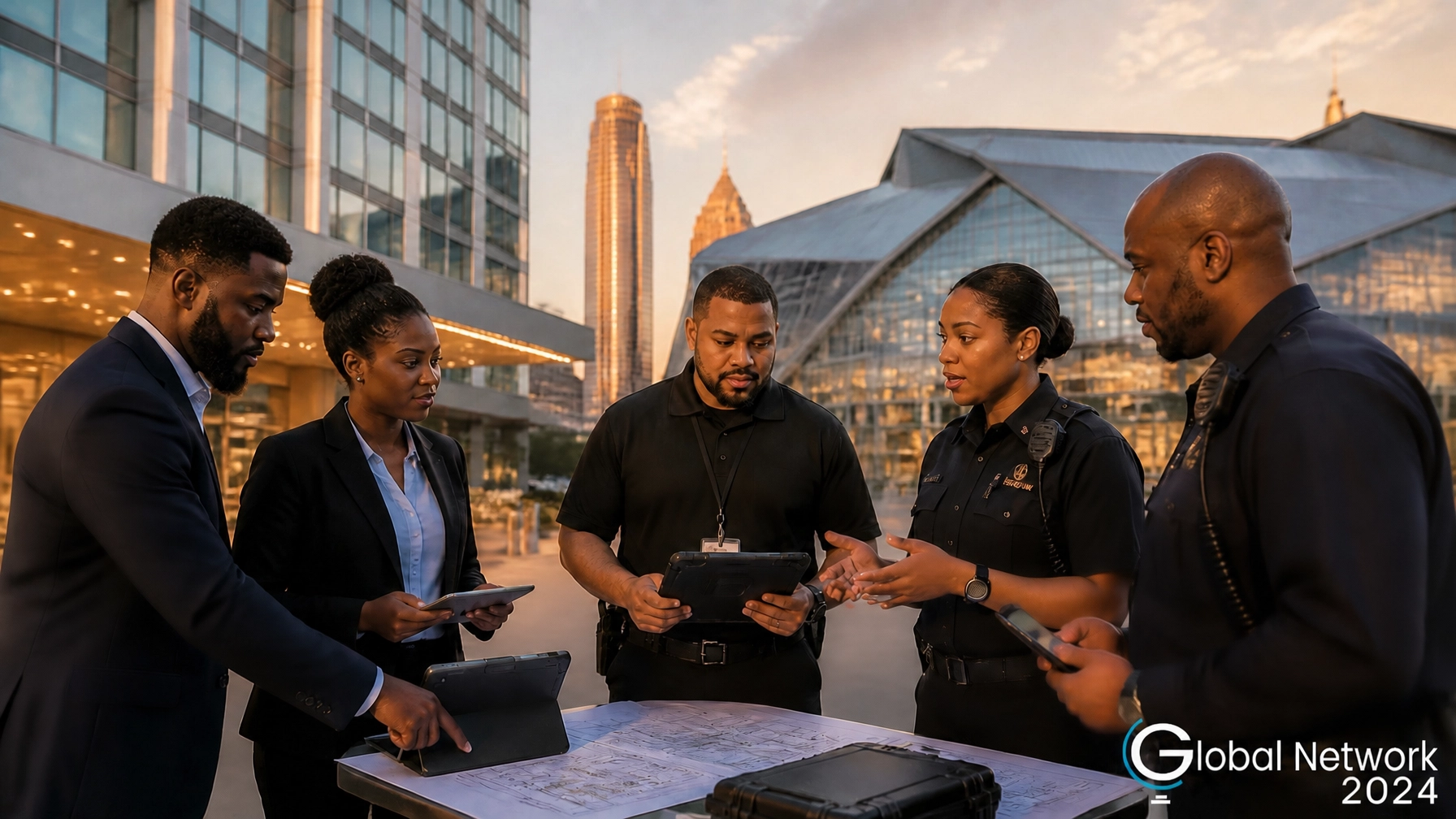
The Authority Having Jurisdiction has the final say on how adopted codes and local requirements apply to a particular project. For Atlanta hotels and arenas, AHJ coordination should begin before equipment is purchased or installation begins.
A project team should confirm:
- Whether IFC 510 applies to the building or renovation scope
- Which IFC and NFPA editions are enforced
- Whether local amendments change coverage or equipment requirements
- Which public-safety frequencies and radio technologies must be supported
- Whether a pre-construction or post-construction survey is required
- What drawings and calculations must be submitted
- Which acceptance-test format the AHJ expects
- Whether the ERCES must be operational before the Certificate of Occupancy
- What annual testing and maintenance documentation is required
Early AHJ involvement helps prevent a common project failure: installing a technically functional system that does not satisfy local approval criteria.
The owner remains responsible
The building owner or operator typically retains responsibility for maintaining the system after installation. That includes keeping equipment accessible, preserving required power and environmental conditions, responding to system alarms, and arranging periodic testing.
A hotel or arena may pass its initial acceptance test and later develop coverage or equipment problems because of:
- Interior remodels
- New walls or partitions
- Damaged coaxial cable
- Water intrusion
- Battery degradation
- Changes to rooftop equipment
- Altered fire command spaces
- Construction in parking or service areas
Ongoing inspection and maintenance are essential to preserve compliance and responder confidence.

Preparing for inspection and acceptance testing
A successful inspection starts well before the AHJ arrives. Atlanta hospitality facilities should maintain a complete compliance package that may include:
- Approved design drawings
- RF propagation studies and coverage maps
- Equipment specifications
- BDA and antenna details
- Donor-source documentation
- Battery and emergency-power calculations
- Cable and pathway information
- Fire alarm interface details
- FCC-related documentation
- Commissioning test results
- Deficiency corrections
- As-built drawings
- Operations and maintenance information
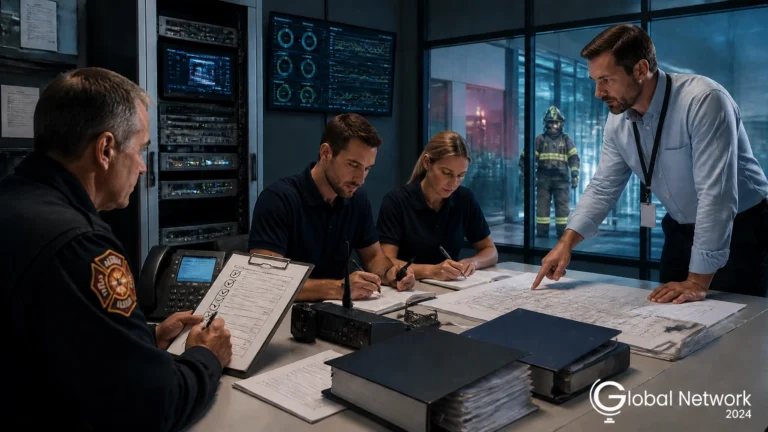
Before acceptance testing, confirm that all areas are accessible. Coordinate with hotel operations, security, event management, engineering, and construction teams so that locked rooms, occupied suites, event spaces, rooftops, and parking levels can be tested without interruption.
The system should be commissioned under conditions that reflect actual operation. Test personnel should verify both coverage performance and system alarms, not simply confirm that the BDA powers on.
A passing result is more than a number. It is documented, repeatable performance in the areas where responders depend on communication.
A practical compliance strategy for Atlanta hotels and arenas
The most effective approach is to treat ERCES as a life-safety infrastructure project from the beginning.
Recommended project sequence
- Engage a qualified ERCES specialist early.
- Coordinate with the Atlanta AHJ before design finalization.
- Complete a predictive study and/or baseline radio survey.
- Identify general and critical coverage areas.
- Design around the applicable public-safety radio network.
- Integrate power, fire alarm, monitoring, and access requirements.
- Install equipment according to approved plans.
- Perform commissioning and acceptance testing.
- Correct deficiencies before the final inspection.
- Schedule annual performance testing and preventive maintenance.
Global Network LLC provides public safety DAS/ERCES design, installation, commissioning, compliance testing, and annual performance testing for Atlanta-area facilities. Our solutions are engineered for demanding environments and can be designed to support FirstNet-compatible infrastructure where applicable.
Explore our DAS and ERCES services, review our IFC 510 and NFPA compliance checklist, or learn more about preparing for a fire marshal radio inspection.
Protect communication before the crowd arrives
Hotels and arenas are designed to welcome large numbers of people. Their public-safety communication systems must be designed to protect them.
Do not wait for a failed inspection, a delayed Certificate of Occupancy, or an emergency radio dead zone to expose a coverage problem. Coordinate with the AHJ, test the facility, and implement a code-compliant ERCES strategy that supports first responders throughout the building.
For an Atlanta public-safety radio coverage assessment, contact Global Network LLC at 770.520.7633 or toll free at 877.231.1084. Visit globalnetworkco.com to request a consultation.
Reliable communication is not optional when it matters most.