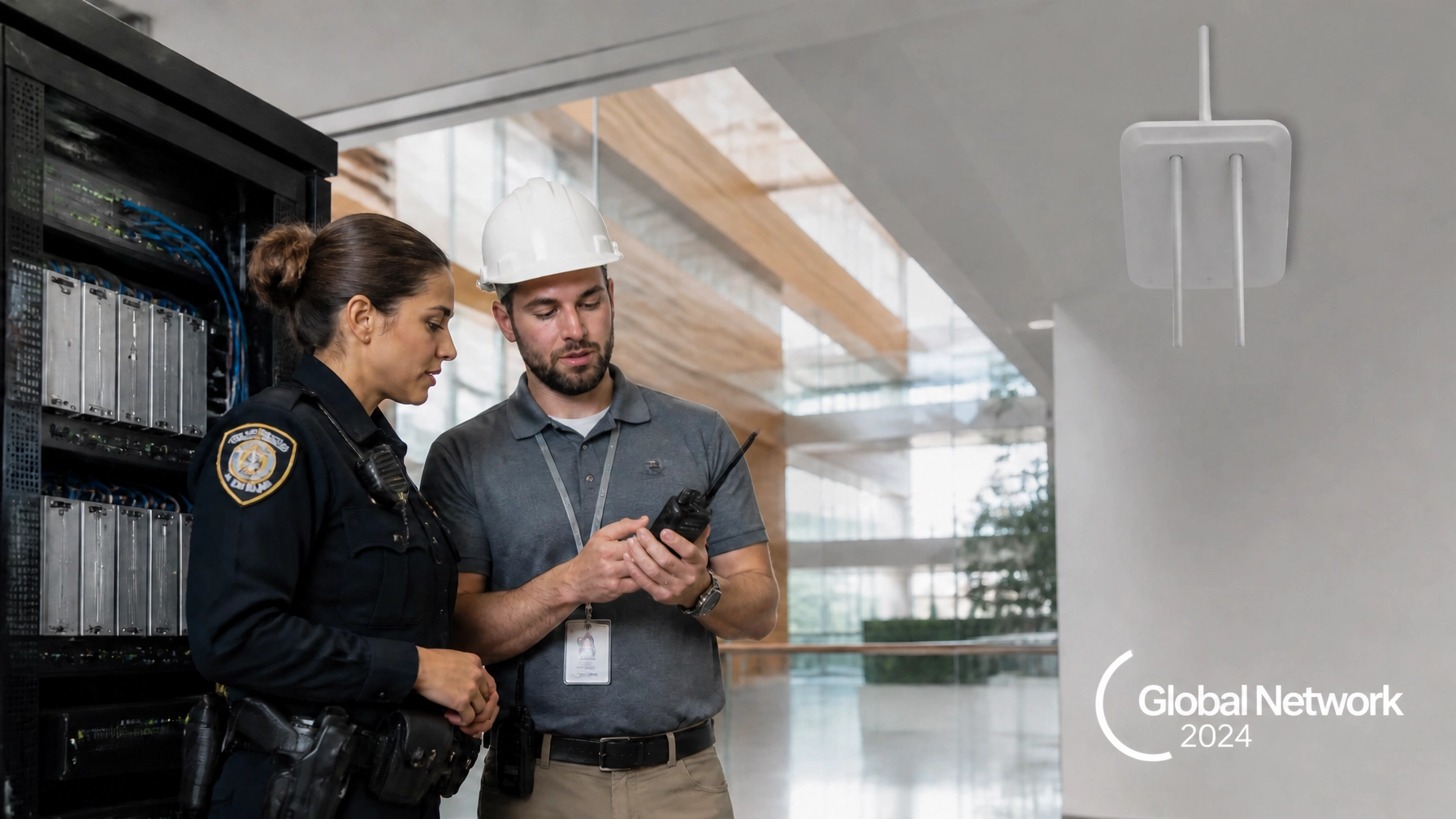
5G for First Responders: How FirstNet’s Indoor Coverage Expansion Changes Your Compliance Strategy
For first responders, indoor connectivity is no longer limited to voice radio. Modern emergency operations increasingly depend on broadband access for push-to-talk, mapping, video, incident data, location services, and real-time coordination. FirstNet’s continued indoor coverage expansion: supported by Band 14, 5G, small cells, and cellular repeaters: can significantly improve that capability.
However, stronger FirstNet or commercial 5G coverage does not automatically replace a code-required Emergency Responder Communication Enhancement System (ERCES).
For building owners, developers, facility managers, and public agencies, the compliance strategy is not “FirstNet versus ERCES.” It is understanding how these technologies relate, where they can be integrated, and what the Authority Having Jurisdiction (AHJ) requires for approval.
The objective is clear: reliable communication when it matters most, with 0% missed deadlines and 0% avoidable compliance surprises.
FirstNet Indoor Coverage: A Broadband Advantage for Responders
FirstNet is a nationwide public safety broadband network designed to support first responders and the extended emergency response community. It provides priority and preemption, helping authorized public safety users maintain access during congestion and major incidents.
FirstNet supports connectivity across:
- Band 14, spectrum allocated specifically for public safety broadband
- AT&T commercial LTE bands
- Compatible 5G services where available
- Indoor coverage solutions such as small cells, repeaters, and cellular DAS
- Specialized devices and applications for public safety operations
The practical benefit is substantial. Reliable indoor broadband can help responders access:
- Computer-aided dispatch information
- Building plans and floor maps
- Live video and images
- Patient and incident data
- Mission-critical push-to-talk applications
- Responder location and situational-awareness tools
- Secure communications between agencies
FirstNet’s official in-building coverage resources identify solutions such as the AT&T Cell Booster Pro, Wilson 140i Cellular Repeater, and other fixed-location coverage technologies.
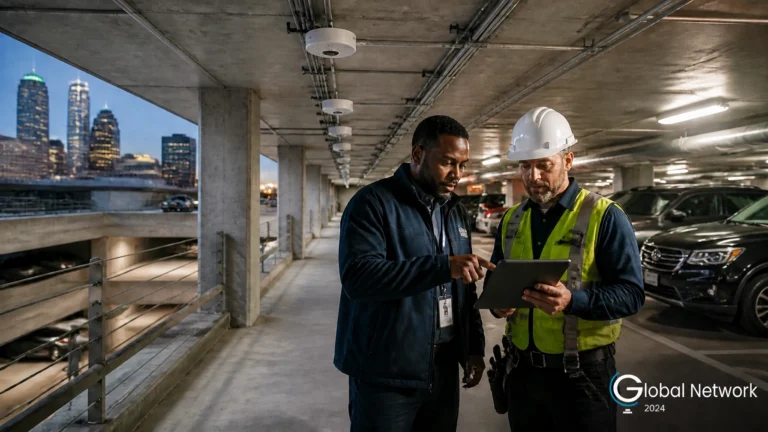
These tools can address cellular dead zones in basements, stairwells, parking structures, elevators, fire stations, emergency operations centers, and large commercial facilities.
What Band 14 Changes
Band 14 operates in the 700 MHz range, a low-band frequency with useful propagation characteristics for public safety applications. In many environments, lower-frequency signals can travel farther and penetrate building materials more effectively than higher-frequency signals.
Band 14 can be especially valuable in:
- Reinforced concrete structures
- Steel-framed buildings
- Below-grade spaces
- Large campuses
- Rural or remote facilities
- High-occupancy venues
- Buildings with energy-efficient low-emissivity glass
FirstNet also supports specialized capabilities such as high-power user equipment in certain applications. The FirstNet Band 14 overview explains how this spectrum is intended to provide a dedicated public safety “lane” for broadband connectivity.
But Band 14 remains a cellular broadband service. That distinction is central to your compliance plan.

FirstNet and ERCES Solve Related: but Different: Problems
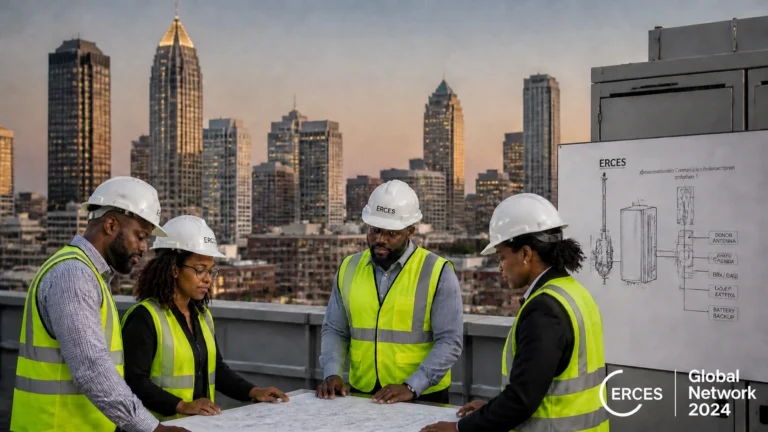
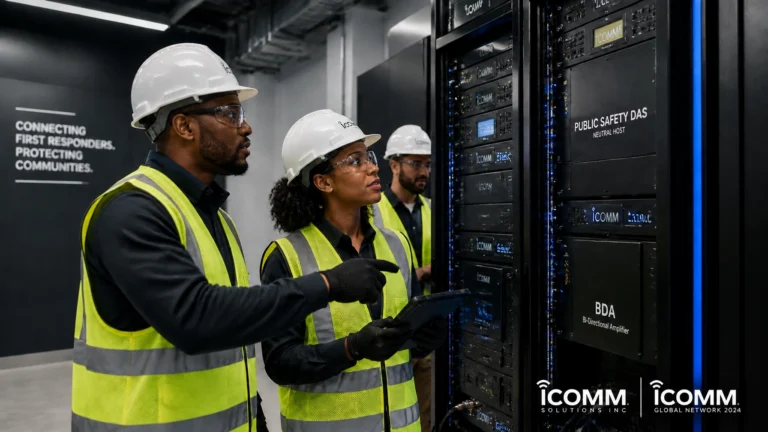
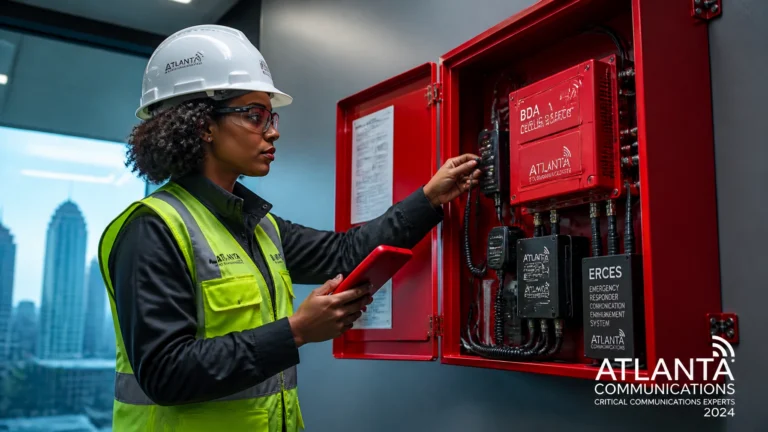
A code-driven ERCES, also called a Public Safety DAS, ERRCS, or BDA system, is generally designed to support the land mobile radio (LMR) frequencies used by the local fire, police, and EMS agencies.
These systems typically use:
- A donor antenna
- Bi-Directional Amplifier (BDA) equipment
- Distributed coaxial or fiber infrastructure
- Indoor radiating antennas
- Fire-rated pathways and enclosures
- Dedicated backup power
- Fault monitoring and supervisory alarm connections
- Commissioning and acceptance testing
The purpose is to ensure that emergency personnel can communicate over the jurisdiction’s approved public safety radio channels throughout the required portions of the building.
By contrast, FirstNet and commercial 5G systems provide cellular broadband connectivity. They may support public safety voice and data applications, but they do not necessarily operate on the same frequencies as the local LMR system.
The Critical Compliance Principle
Excellent FirstNet coverage does not automatically demonstrate ERCES compliance.
A building may have strong Band 14 coverage and still fail an AHJ’s required public safety radio test. Likewise, a code-compliant ERCES may not provide the cellular broadband performance needed for video, mapping, data, or FirstNet applications.
The systems can complement each other, but they should not be treated as interchangeable unless the AHJ explicitly approves an alternative approach.
For additional background, review Global Network LLC’s guide to IFC 510 and NFPA emergency communication requirements.
How Commercial 5G and FirstNet Fit Into an ERCES Strategy
A well-planned building communications strategy may include multiple wireless layers:
1. Code-required public safety radio coverage
The ERCES or Public Safety DAS supports the frequencies specified by the local jurisdiction. It is engineered to meet applicable requirements under IFC Section 510, NFPA 72, NFPA 1225, and local amendments where adopted.
2. FirstNet and cellular broadband coverage
A cellular DAS, small-cell system, repeater, or approved booster may improve FirstNet and commercial wireless coverage for responders, staff, occupants, and facility operations.
3. Interoperability and operational coordination
Where appropriate, broadband applications may interoperate with LMR systems or supplement traditional radio operations. The exact capabilities depend on the agency, network architecture, devices, applications, and approved system design.
4. Resiliency and redundancy
Separate systems can provide communications redundancy. If one network or technology experiences an outage, responders may still have access to another communications path: provided the systems are engineered, powered, monitored, and maintained correctly.
This integrated approach is particularly valuable for hospitals, government facilities, universities, stadiums, airports, hotels, high-rise buildings, and emergency operations centers.

Design Coordination Must Begin Before Installation
The most effective compliance strategy starts during planning: not during the final inspection.
Before selecting equipment, coordinate with:
- The local AHJ
- The fire marshal or building department
- The local public safety radio system administrator
- The electrical and fire alarm contractors
- The cellular carrier or FirstNet representative
- The architect, general contractor, and facility owner
- The ERCES and DAS design team
Key questions include:
- Which public safety radio frequencies must be supported?
- Does the jurisdiction require an ERCES, and under what code edition?
- Are Band 14 or commercial cellular systems considered supplemental or acceptable as part of an approved design?
- What are the required coverage percentages for general and critical areas?
- What are the minimum RSSI, DAQ, uplink, and downlink criteria?
- What survivability, pathway, enclosure, and backup-power requirements apply?
- How must system faults report to the fire alarm control panel?
- Will the AHJ witness acceptance testing?
- What documentation is required for the Certificate of Occupancy?
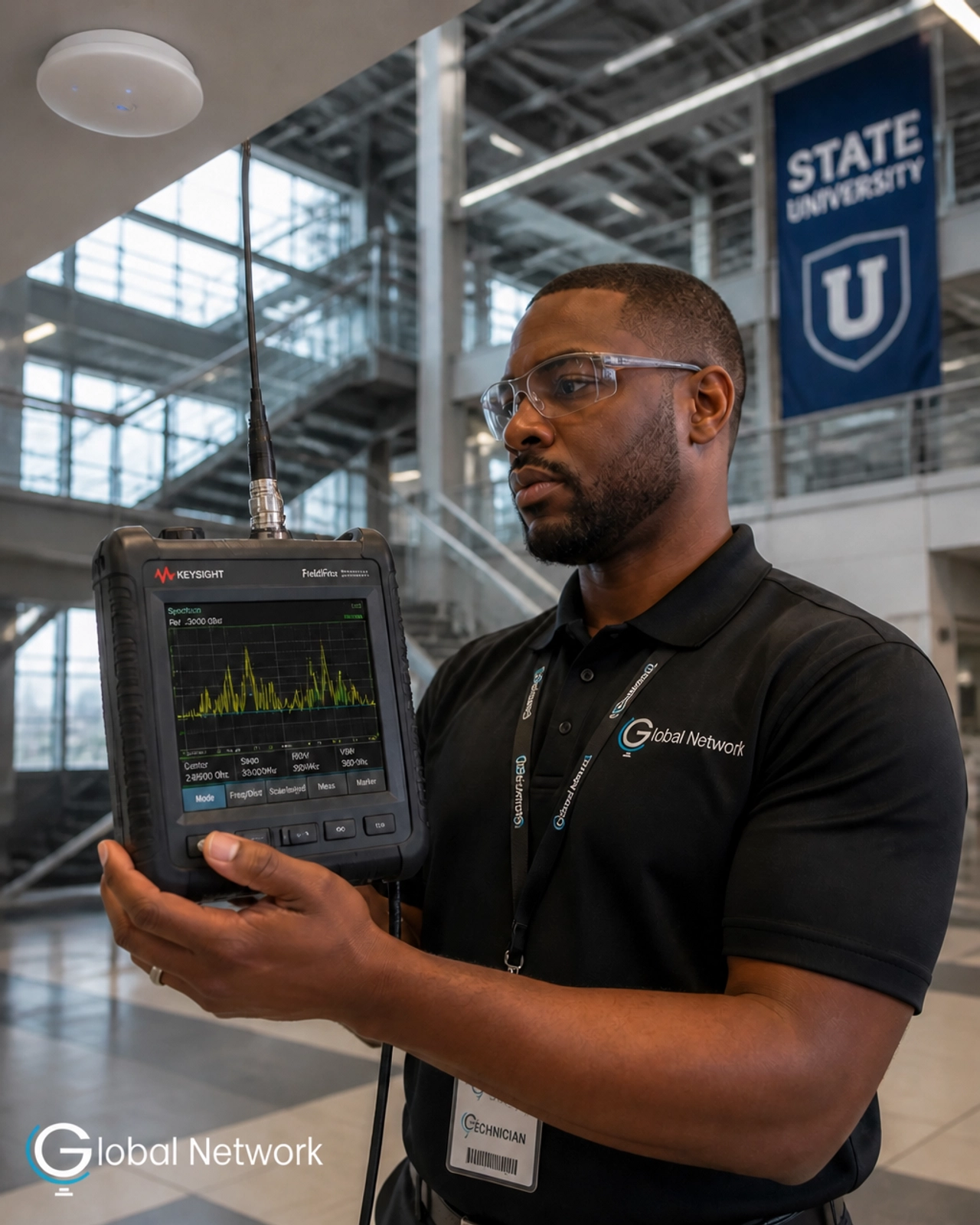
A professional RF survey should identify existing conditions before the design is finalized. Building materials, floor layouts, mechanical systems, renovations, and tenant improvements can all affect signal propagation.
Global Network LLC provides Public Safety DAS and ERCES design, installation, and compliance services to help property stakeholders coordinate these requirements before they become costly construction obstacles.
Testing and AHJ Approval Remain Essential
Technology marketing claims and smartphone signal bars are not substitutes for professional compliance testing.
A complete project may require:
- Pre-installation RF survey
- Predictive RF modeling
- In-building grid testing
- Antenna and cable verification
- BDA gain and isolation testing
- Uplink and downlink measurements
- Delivered Audio Quality evaluation
- Battery backup testing
- Fire alarm interface verification
- Alarm and fault monitoring tests
- Commissioning and acceptance documentation
- AHJ-witnessed testing
- Annual performance testing
Coverage requirements vary by jurisdiction, but many AHJs distinguish between general areas and critical areas such as fire command centers, stairwells, elevator lobbies, fire pump rooms, and emergency generator rooms.
A cellular 5G or FirstNet test should be documented separately from the LMR ERCES test unless the AHJ has approved a combined testing protocol.
For a practical project framework, use Global Network LLC’s Public Safety DAS and BDA compliance checklist.

A Stronger Compliance Strategy for Building Owners
FirstNet’s indoor coverage expansion creates new opportunities for public safety communications. It can help responders share more information, coordinate across agencies, and use advanced broadband applications inside complex facilities.
The correct strategy is to:
- Test existing LMR and FirstNet coverage independently.
- Confirm the jurisdiction’s requirements with the AHJ.
- Design ERCES around the approved public safety radio frequencies.
- Evaluate FirstNet, Band 14, 5G, cellular DAS, or small-cell enhancements separately.
- Coordinate pathways, power, monitoring, and equipment locations.
- Complete documented commissioning and acceptance testing.
- Maintain the systems through annual inspections and performance tests.
0% Guesswork. 0% Avoidable Defects. 100% Focus on responder safety.
FirstNet can be a powerful addition to a building’s emergency communications environment, but compliance depends on disciplined engineering and AHJ approval: not assumptions about the network.
Move From Coverage Questions to a Verified Design
If your property is entering construction, renovation, occupancy, or safety-upgrade planning, now is the time to evaluate both ERCES compliance and FirstNet indoor coverage.
Global Network LLC is Atlanta’s local specialist for Public Safety DAS, BDA systems, ERCES design, installation, commissioning, and compliance testing. Your facility deserves a communications strategy that supports first responders, protects occupants, and keeps regulatory obligations at the forefront of every decision.
Schedule a professional coverage assessment and compliance consultation today.
- Office: 770.520.7633
- Toll Free: 877.231.1084
- Website: globalnetworkco.com
- Services: Explore Global Network LLC services
Reliable communication is not optional when lives are at risk. Design for it. Test it. Maintain it. Make sure it works when it matters most.