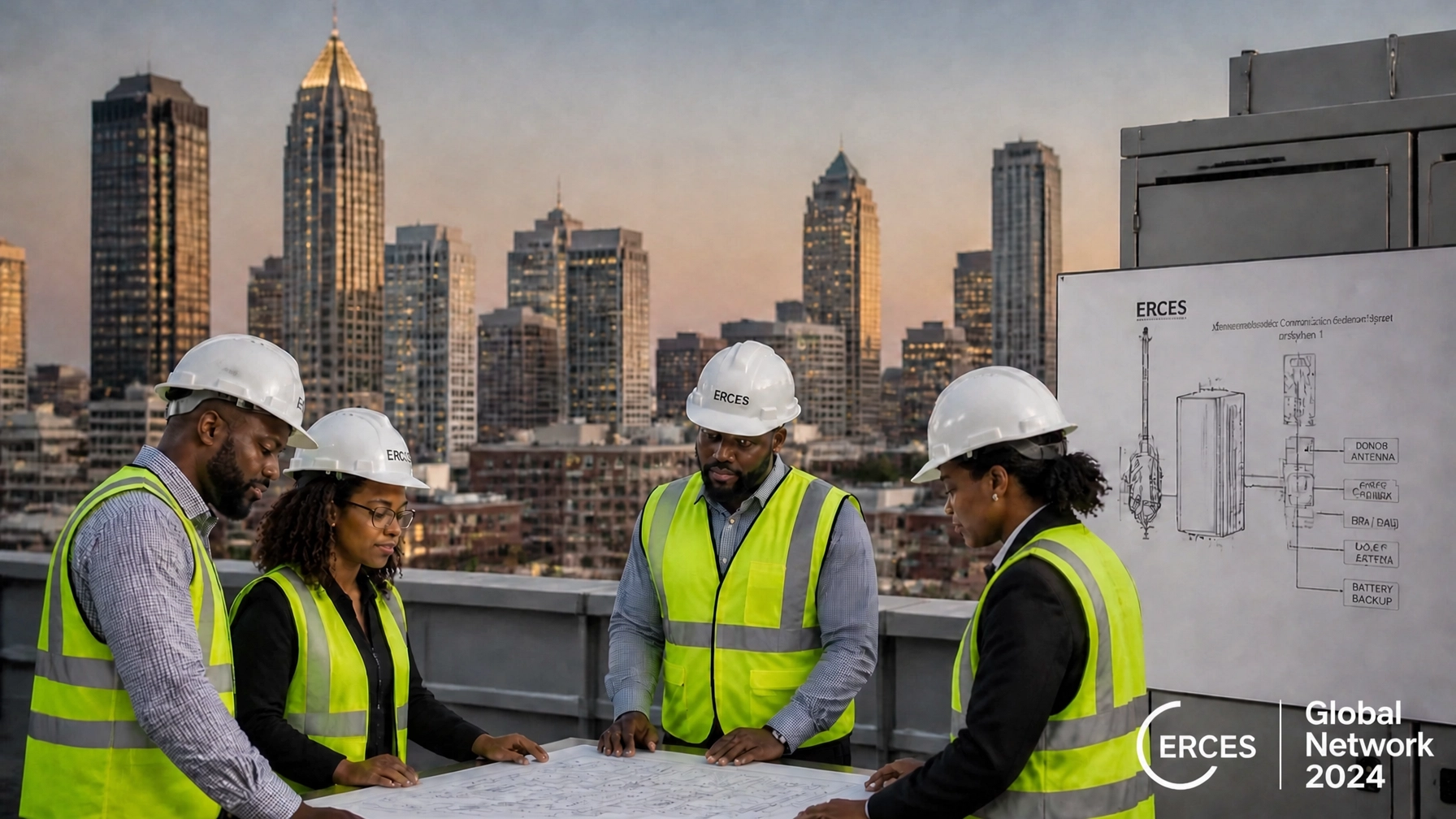
Going Vertical: ERCES Design Challenges for Atlanta’s High-Rise Buildings
As Atlanta's skyline continues to soar with gleaming commercial towers, luxury high-rise residential properties, and multi-use developments, property owners and facility managers face an increasingly rigorous regulatory landscape. When emergency responders step into a high-rise tower during a crisis, their communication systems cannot afford a single second of hesitation, distortion, or signal loss. Ensuring compliance with IFC Section 510, NFPA 72, and NFPA 1225 is not merely an administrative hurdle on the path to securing a Certificate of Occupancy: it is an absolute operational imperative for protecting human life.
At Global Network LLC, we specialize in engineering advanced Public Safety Distributed Antenna Systems (DAS) and Emergency Responder Communication Enhancement Systems (ERCES) tailored specifically to the unique vertical architectures of metropolitan environments. Below, we examine the profound engineering challenges of vertical RF distribution, stairwell coverage attenuation, floor-to-floor signal propagation, and strategic zoning required to achieve 0% Defects and 0% Missed Deadlines across Atlanta’s premier high-rise properties.
The Anatomy of Vertical RF Propagation in High-Rise Architecture
Designing an in-building wireless network for a twenty- or fifty-story building is fundamentally different from outfitting a low-rise warehouse or commercial strip center. In standard structures, horizontal attenuation is the primary concern. In towering vertical structures, radio frequency (RF) signals encounter formidable natural and man-made barriers as they attempt to propagate across dozens of vertical tiers.

Modern high-rise construction relies heavily on dense reinforced concrete slabs, structural steel framing, thick elevator cores, and energy-efficient Low-Emissivity (Low-E) glass. While these materials deliver exceptional energy efficiency and structural integrity, they act as severe RF attenuators. Outdoor donor signals from public safety towers often blanket the ground floor effectively, but experience catastrophic signal decay by the time they reach mid- and upper-level floors.
Key engineering hurdles include:
- Vertical Path Loss: Signal strength degrades exponentially over hundreds of vertical feet through multi-layer concrete and steel assemblies.
- Elevator Shaft RF Traps: Enclosed steel elevator cars moving within vertical shafts create severe multi-path distortion and shadow dead zones throughout the building core.
- Mid-Level Shadowing: Surrounding structures in downtown Atlanta and Midtown frequently obstruct line-of-sight donor antennas, demanding sophisticated multi-antenna placement strategies.
Critical Infrastructure Zones: Stairwells, Lobbies, and Core Areas
Under IFC 510 and local Authority Having Jurisdiction (AHJ) amendments enforced by Atlanta Fire Rescue, building owners must meet strict minimum signal performance thresholds across designated critical areas. Specifically, life-safety codes mandate a minimum inbound signal strength of −95 dBm on public safety frequencies, coupled with 99% coverage in critical areas (such as fire command centers, primary stairwells, elevator lobbies, and fire pump rooms) and 95% coverage in general tenant spaces.
Achieving these metrics in vertical concrete stairwells: which function as the primary egress corridors for evacuating occupants and staging emergency personnel: requires precise engineering. Because concrete stairwells form natural Faraday cages, standard outdoor cellular and radio signals drop to zero within steps of entering the door.
To eliminate these vulnerabilities, your facility requires a dedicated Bi-Directional Amplifier (BDA) system paired with strategically positioned directional and omni-directional antennas. By distributing coverage directly into stairwells and elevator shafts via a robust vertical coaxial or fiber backbone, facility stakeholders achieve absolute peace of mind and bulletproof compliance.
Vertical Zoning and RF Distribution Strategies
To combat the massive cumulative signal loss associated with towering vertical spans, advanced ERCES design avoids relying on a single, centralized booster feed. Instead, expert engineers implement vertical zoning architectures.

For high-rises exceeding twenty stories, dividing the tower into distinct vertical zones (e.g., low-rise, mid-rise, and high-rise tiers) ensures optimal signal amplification and balance. Each zone utilizes dedicated remote distribution units or sub-amplifiers fed by risers housed within fire-rated, protected shafts.
Core Components of a Compliant High-Rise ERCES Design:
- Class A Channelized BDAs: Essential for filtering and boosting specific public safety channels without amplifying unwanted adjacent noise or causing harmful oscillations.
- Pathway Survivability: Utilization of 2-hour fire-rated cabling and NEMA 4-rated enclosures to protect vital electronic components against environmental and fire exposure, fulfilling rigorous corporate responsibility and life-safety ethics.
- Redundant Battery Backup & Monitoring: Comprehensive 24- to 72-hour auxiliary power systems integrated directly into building alarm monitoring per NFPA 72 standards.
Navigating AHJ Regulations and Achieving FirstNet Compatibility
Compliance in Atlanta is overseen by local fire marshals and municipal authorities who enforce strict adherence to the International Fire Code. Delays in securing proper ERCES commissioning directly stall Certificates of Occupancy, resulting in costly occupancy deferrals and potential legal liabilities.
Furthermore, modern first responder networks: including FirstNet standards: demand seamless interoperability between traditional land mobile radio (LMR) bands and broadband public safety technologies. Our systems are meticulously engineered to be fully FirstNet compatible, guaranteeing that police, fire, and emergency medical services maintain uninterrupted digital and analog communication from the basement parking garage to the rooftop helipad.
When it matters most, your property must perform with flawless reliability. We pride ourselves on delivering comprehensive solutions: from initial pre-construction predictive RF modeling and site surveys to rigorous acceptance testing and annual recertification.
Partner with Atlanta’s Premier DAS and ERCES Specialists
Navigating the complexities of high-rise ERCES design requires specialized local expertise, deep regulatory knowledge, and uncompromising technical execution. Whether you are constructing a new commercial skyscraper in Midtown or upgrading an existing hospitality property downtown, Global Network LLC delivers turnkey design, installation, and compliance testing tailored to your exact operational requirements.
To learn more about our comprehensive engineering capabilities, visit our services page or explore our company background. Discover how we can secure your building's Certificate of Occupancy and protect your occupants with industry-leading public safety infrastructure.

Contact us today to schedule your high-rise RF evaluation:
- Office: 770.520.7633
- Toll-Free: 877.231.1084
- Website: Global Network LLC