
Coordinating Annual BDA Testing: A Property Manager’s Playbook for Atlanta
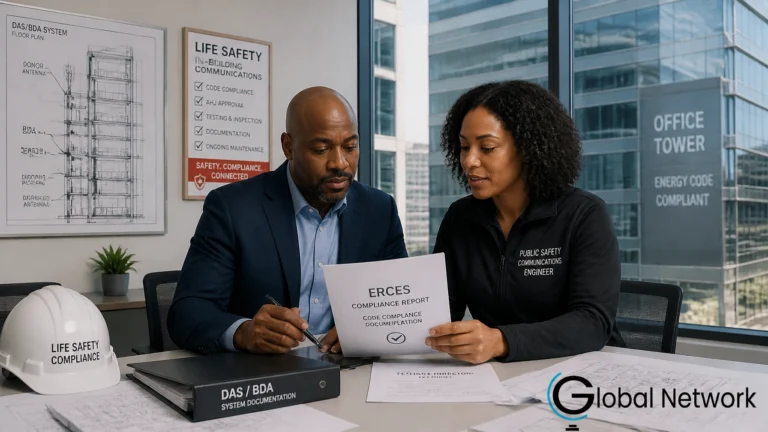
For commercial property owners and facility managers in Metro Atlanta, life-safety compliance is an ongoing, high-stakes operational mandate. Among the array of mandatory life-safety inspections: from backflow preventers to fire alarm panels: none carries more immediate legal liability or direct impact on first responder lives than your Emergency Responder Communication Enhancement System (ERCES) and Bi-Directional Amplifier (BDA) network.
When the local Authority Having Jurisdiction (AHJ) or fire marshal arrives for your annual property review, or when you apply for your Certificate of Occupancy, compliance cannot be left to chance. 0% Defects. 0% Missed Deadlines. This playbook outlines how Atlanta property managers can successfully coordinate annual BDA testing with tenants, operations teams, and municipal officials to guarantee absolute compliance and unwavering life-safety reliability.
1. Understanding the Regulatory Mandate: Why Annual BDA Testing is Non-Negotiable
Modern commercial architecture: characterized by low-emissivity glass, dense concrete cores, below-grade parking structures, and reinforced steel framing: forms impenetrable Faraday cages that block critical public safety radio frequencies. To counteract this vulnerability, local ordinances aligned with the International Fire Code (IFC 510) and National Fire Protection Association (NFPA 72 / NFPA 1225) strictly mandate the installation and continuous operation of in-building wireless solutions.
However, installation is only the first step. Regulatory codes require that every ERCES/BDA installation undergo comprehensive annual performance testing and recertification.
- Legal Liability: Operating a commercial facility without verified, certified public safety wireless coverage exposes ownership entities to severe regulatory penalties, steep fines, and immediate occupancy suspensions.
- First Responder Readiness: When emergency personnel enter your building during a crisis, their portable radios must maintain seamless communication with dispatch and tactical units. Signal degradation caused by aging components, tower changes, or building alterations can prove fatal.
- Insurance and Auditing: Commercial insurance carriers increasingly require documented annual life-safety testing certificates as a condition of coverage and risk mitigation.
For comprehensive insights into how these systems secure compliance, review our guide on The Zero Dead Zone: Achieving IFC 510 and NFPA 72 Compliance with ERRCs.
2. Anatomy of an Annual BDA Compliance Test
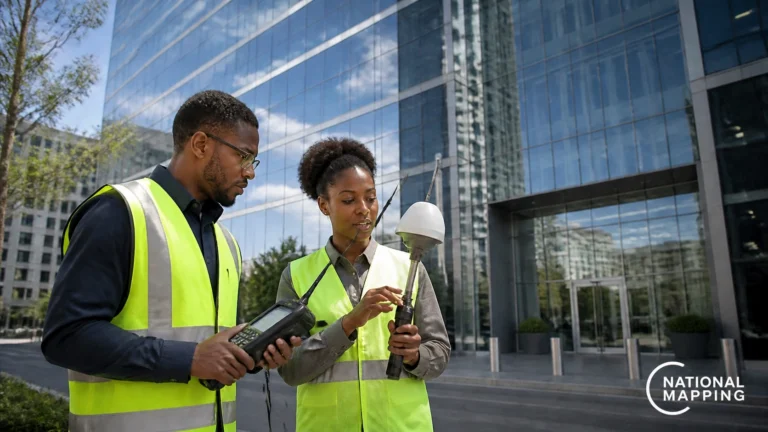
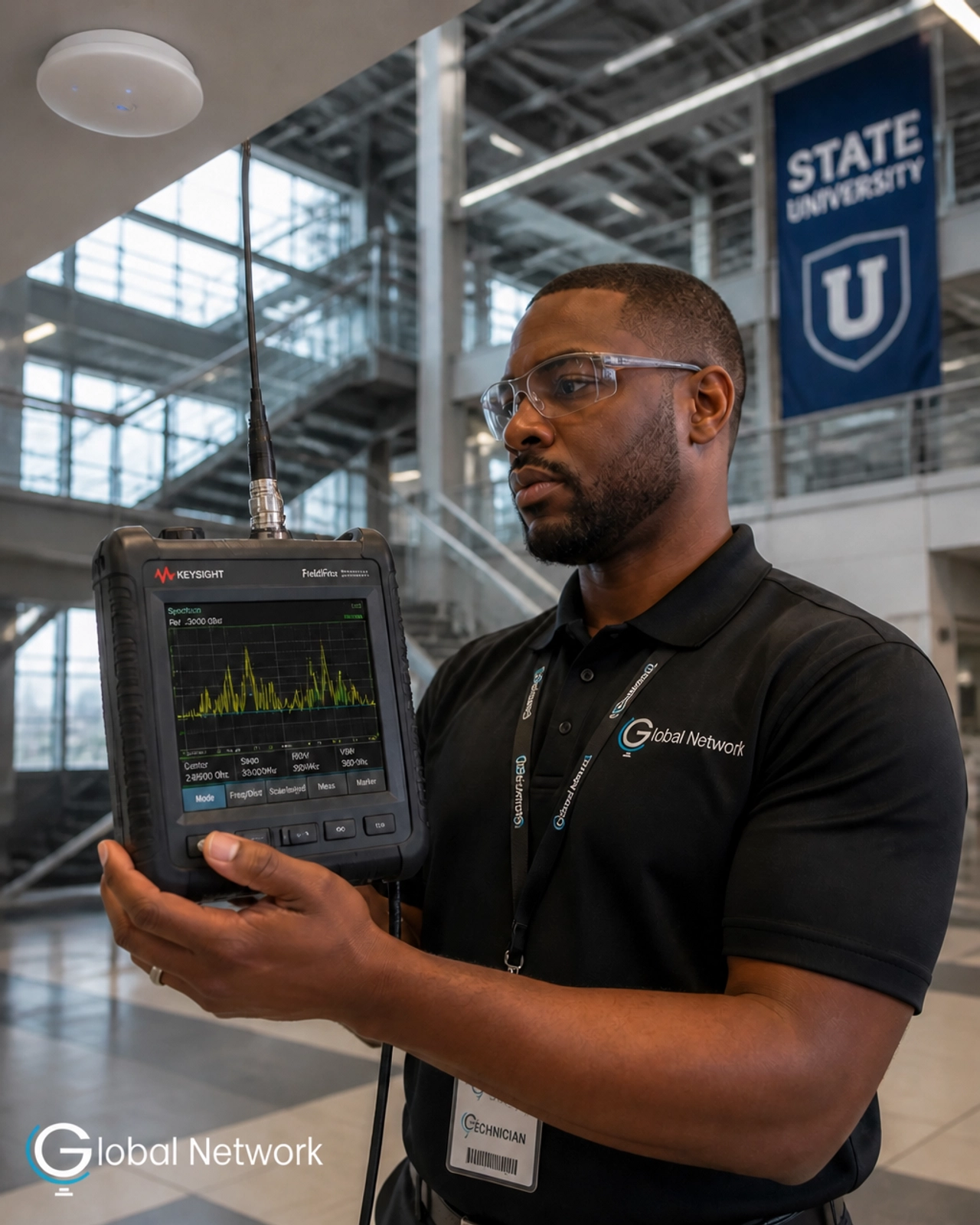
An annual BDA test is a specialized engineering evaluation, not a routine maintenance check. It requires certified RF technicians utilizing calibrated spectrum analyzers and signal generators to execute a rigorous two-part assessment:

Part A: Functional and System Evaluation
- Donor Signal Verification: Measuring the signal strength and stability from the primary public safety radio tower to ensure the donor antenna receives optimal input without distortion or overload.
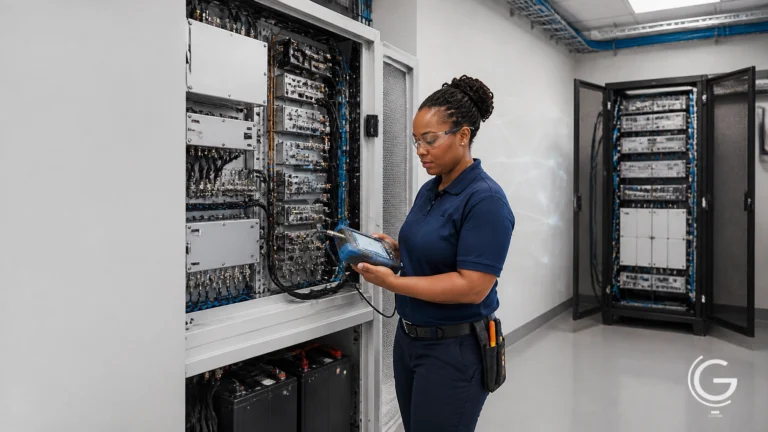
- RF Gain and Power Parameters: Confirming that the Bi-Directional Amplifier (BDA) operates within strict calibration tolerances: typically within ±2 dB of its original commissioning baseline.
- Battery Backup and Annunciation: Verifying that auxiliary power supplies maintain the mandated emergency runtime (often 12 hours of standby followed by full load operation) and that all system trouble alarms correctly annunciate at the fire alarm control panel.
- FCC License Compliance: Ensuring that signal booster operations comply with all Federal Communications Commission regulations and local public safety licensing agreements.
Part B: Grid-Based Coverage Testing
- Floor-by-Floor Mapping: Dividing every floor of the property into discrete test grids (typically 20 equal sectors per floor).
- Signal Threshold Benchmarks: Verifying that a minimum signal strength of -95 dBm or better is maintained across at least 95% of the general building area, with 100% coverage in critical zones such as fire command centers, stairwells, and elevator lobbies.
- Baseline Comparison: Comparing current field measurements against original acceptance test reports to identify any subtle degradation caused by adjacent new construction or environmental interference.
3. Step-by-Step Coordination Playbook for Property Managers
Coordinating annual testing across a multi-tenant commercial property requires meticulous planning to prevent operational friction. Follow this structured roadmap to ensure seamless execution:
Step 1: Pre-Planning and Scheduling (30–45 Days Prior)
- Review Expiration Dates: Check your building's last certification date and schedule testing at least 30 days before expiration to allow adequate time for any necessary remediation.
- Gather Documentation: Assemble your as-built drawings, original system commissioning reports, manufacturer specification sheets, and current FCC booster licenses.
- Engage Local Experts: Partner with Atlanta's dedicated specialists who understand local municipal nuances. Visit our services page to explore our complete testing capabilities.
Step 2: Tenant Communication and Access Coordination
- Advance Notice: Inform commercial tenants, building engineers, and security personnel of the scheduled testing window. While BDA testing is entirely passive and non-disruptive to commercial Wi-Fi or cellular networks, technicians will require physical access to utility closets, telecommunications rooms, roof areas, and stairwells across all floors.
- Security Clearances: Issue temporary badges or coordinate escorts for testing personnel to guarantee uninterrupted access to secure zones.

Step 3: Execution and Deficiency Remediation
- Rigorous Inspection: Allow certified technicians to perform the complete functional and grid-based evaluation without shortcuts.
- Immediate Corrective Action: If any grid sectors fail or system alarms trigger, authorize prompt adjustments: such as gain recalibration, antenna re-orientation, or battery replacements: followed immediately by a targeted re-test.
Step 4: Documentation and AHJ Submittal
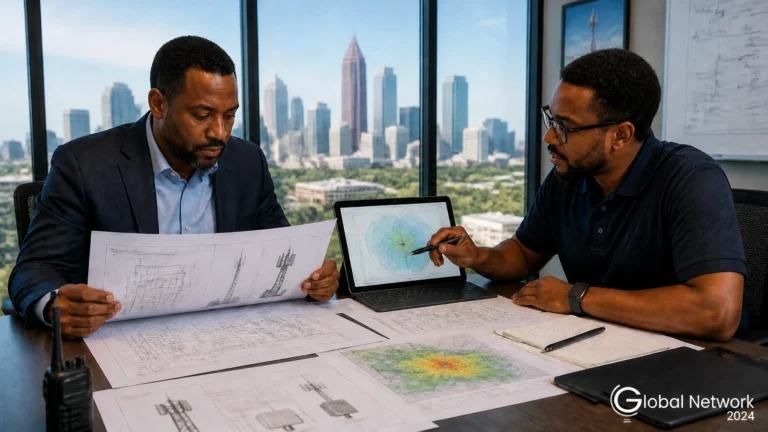
- Comprehensive Reporting: Obtain the certified testing report, signed coverage heat maps, and calibration logs.
- Formal Filing: Submit the complete documentation package directly to your local Atlanta fire department or AHJ inspector as part of your annual life-safety renewal.
4. Mitigating Risks and Avoiding Common Pitfalls
Property managers often encounter preventable hurdles during annual compliance cycles. Avoiding these common missteps protects your operational timeline and budget:
- Using General Fire Alarm Contractors: BDA and ERCES systems require specialized RF engineering expertise and calibrated test equipment. General electricians or standard fire alarm technicians lack the tools required to certify public safety radio frequencies.
- Ignoring Structural Modifications: Major tenant build-outs, drywall partitions, or exterior construction adjacent to your property can alter radio propagation. Always trigger supplementary evaluations following significant building alterations.
- Delayed Submittals: Waiting until the fire marshal inspection day to schedule testing invites costly occupancy delays and potential citations.
Explore our essential checklist for securing your certification without friction in The Ultimate Public Safety DAS/BDA Compliance Checklist.
5. Empowering Atlanta Facilities When It Matters Most
Maintaining a fully certified BDA network is more than a bureaucratic checkbox: it is a profound commitment to community safety, corporate responsibility, and the protection of first responders at the forefront of emergency response. When seconds count, reliable indoor communication ensures that police, fire, and medical personnel operate with absolute clarity and coordination.

At Global Network LLC, we deliver turnkey design, installation, and rigorous compliance testing tailored specifically to Atlanta's commercial landscape. Secure your building, protect your occupants, and achieve guaranteed compliance with our expert engineering team.
Contact Our Atlanta Specialists Today
Do not leave your building's life-safety compliance to uncertainty. Contact our expert team today to schedule your annual BDA/ERCES testing or consultation:
- Office: 770.520.7633
- Toll-Free: 877.231.1084
- Website: Global Network LLC