
Looking For a Public Safety DAS? Here Are 10 Things You Should Know About Installation Costs
In the current regulatory landscape of 2026, ensuring that emergency responders can communicate effectively within your facility is no longer optional: it is a critical requirement for a Certificate of Occupancy (CO). As an Atlanta BDA specialist, Global Network LLC has seen building owners navigate the complexities of IFC 510 compliance and NFPA 1225 standards.
When property managers and developers ask about the cost of a Public Safety DAS installation, they are often met with "it depends." This is because an Emergency Responder Communication Enhancement System (ERCES) is a highly engineered safety utility, not a generic commodity. For most modern buildings, you can expect a baseline budget range of $0.75 to $2.00 per square foot, while complex retrofits or high-survivability environments can exceed $5.00 per square foot.
To provide full transparency and help you plan your next project with peace of mind, we have itemized the 10 most critical factors that influence the total cost of your BDA system.
1. Building Size and Vertical Complexity
Total square footage is the most obvious driver of cost, but vertical complexity is equally important. A 100,000-square-foot single-story warehouse has vastly different RF (Radio Frequency) requirements than a 100,000-square-foot 10-story high-rise.
Each floor, stairwell, and elevator shaft requires dedicated antenna placement to meet the mandatory 99% coverage requirement in critical areas. More floors mean more vertical risers, splitters, and amplifiers, which scales both material and labor costs.
2. Construction Materials and RF Shielding
Modern sustainable building practices often involve materials that are hostile to radio signals.
- Low-E Glass: While excellent for energy efficiency, the metallic coatings reflect RF signals, creating "dead zones."
- Reinforced Concrete and Steel: High-density materials common in Atlanta's commercial real estate significantly attenuate signals.
If your building's exterior acts as a Faraday cage, the BDA system design must be more robust, requiring higher-gain amplifiers and a denser internal antenna network to overcome the lack of "donor signal" penetration. You can learn more about why new buildings have radio dead zones in our detailed guide.
3. Local AHJ and Code Interpretations
The Authority Having Jurisdiction (AHJ): typically the local Fire Marshal: has the final word on what constitutes a compliant system. While IFC 510 and NFPA 1225 (which recently merged aspects of NFPA 72 and 1221) provide the framework, specific local requirements in Georgia vary.
Some AHJs may require specific frequency bands (VHF, UHF, or 700/800 MHz), while others may demand specific monitoring protocols. Understanding these nuances early is the key to achieving 0% defects during your final inspection. Our Atlanta BDA specialist secrets can help you navigate these hurdles.

4. Equipment Standards (UL 2524 & NEMA 4)
Safety and reliability are paramount. To remain compliant, all active components must be UL 2524 listed. This standard ensures the equipment can withstand the rigors of emergency environments. Furthermore, enclosures must meet NEMA 4 or 4X ratings to protect against dust, water, and corrosion.
Using non-listed equipment might save money upfront but will lead to immediate failure during the fire marshal's walkthrough, resulting in costly retrofits and occupancy delays.
5. Pathway Survivability and Fire Rating
Perhaps the most significant hidden cost in Public Safety DAS installation is the requirement for pathway survivability. In many jurisdictions, the backbone of the system: the cables connecting the BDA to the antennas: must be protected by a 2-hour fire-rated circuit.
This often involves:
- Installing cables in 2-hour fire-rated shafts.
- Using specialized, expensive fire-rated coaxial cable.
- Wrapping conduits in thermal blankets or using concrete encasement.
These requirements ensure the system remains operational "when it matters most": during an active fire event.

6. Number of Frequency Bands Supported
A standard BDA system usually covers the 700/800 MHz bands used by most modern FirstNet and public safety trunked systems. However, if your local municipality still utilizes legacy UHF or VHF systems, your ERCES must support those frequencies as well. Adding bands requires more complex filtering and potentially multiple amplifiers, which can increase the hardware budget by 30% to 50%.
7. Professional RF Design and Grid Testing
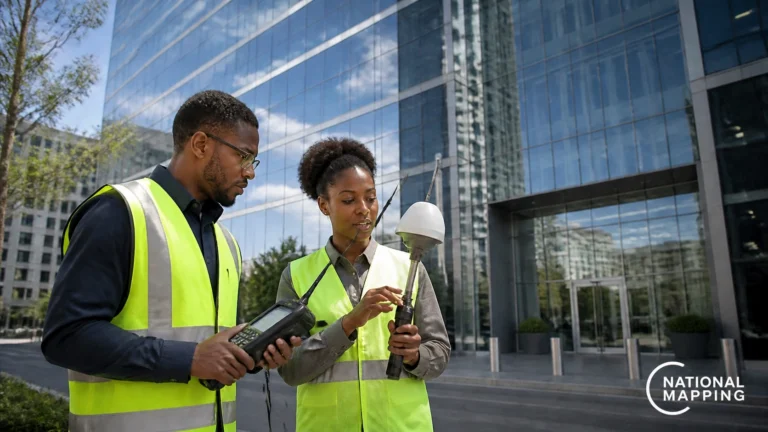
At Global Network LLC, we believe in 0% missed deadlines. This starts with a professional RF site survey and a precision-engineered design.
- Initial Survey: Measuring the existing signal levels on-site.
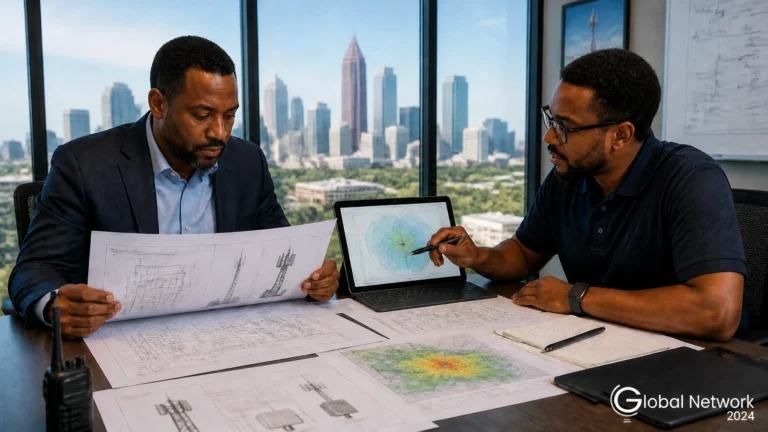
- iBwave Design: Using industry-standard software to create a 3D model of how radio waves will propagate through your specific architecture.
Without a data-backed design, you risk over-installing (wasted money) or under-installing (failed inspection). For a deeper dive, review our property manager’s compliance cheat sheet.

8. Labor Environment: New Construction vs. Retrofit
Installing a system during the "open-wall" phase of new construction is significantly more cost-effective than a retrofit. In an existing, finished building, technicians must navigate drop ceilings, fire-rated walls, and occupied spaces. Retrofit labor can often be double the cost of new construction labor due to the increased complexity of cable routing and firestopping.
9. Monitoring and Alarm Integration
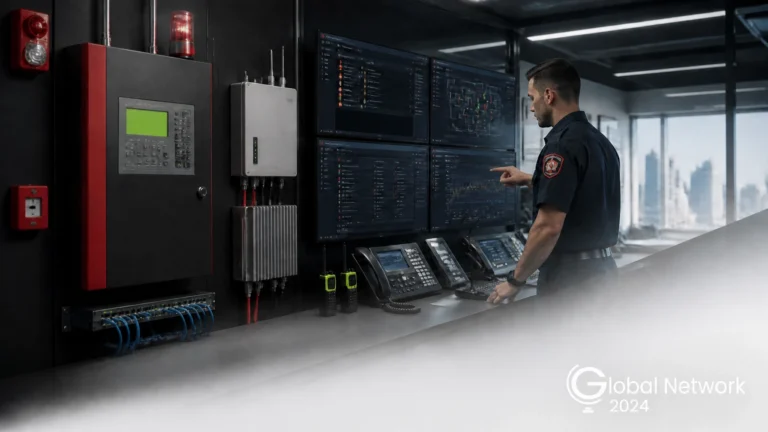
Per NFPA 72 emergency communication standards, the BDA system must be monitored 24/7 by the building’s fire alarm control unit (FACU). The system must report specific troubles, including:
- Antenna failure.
- BDA power failure.
- Battery charger failure.
- Low battery capacity.
The labor required to integrate these points into your existing fire alarm system is a critical component of the total project cost.
10. Commissioning, Certification, and Annual Testing
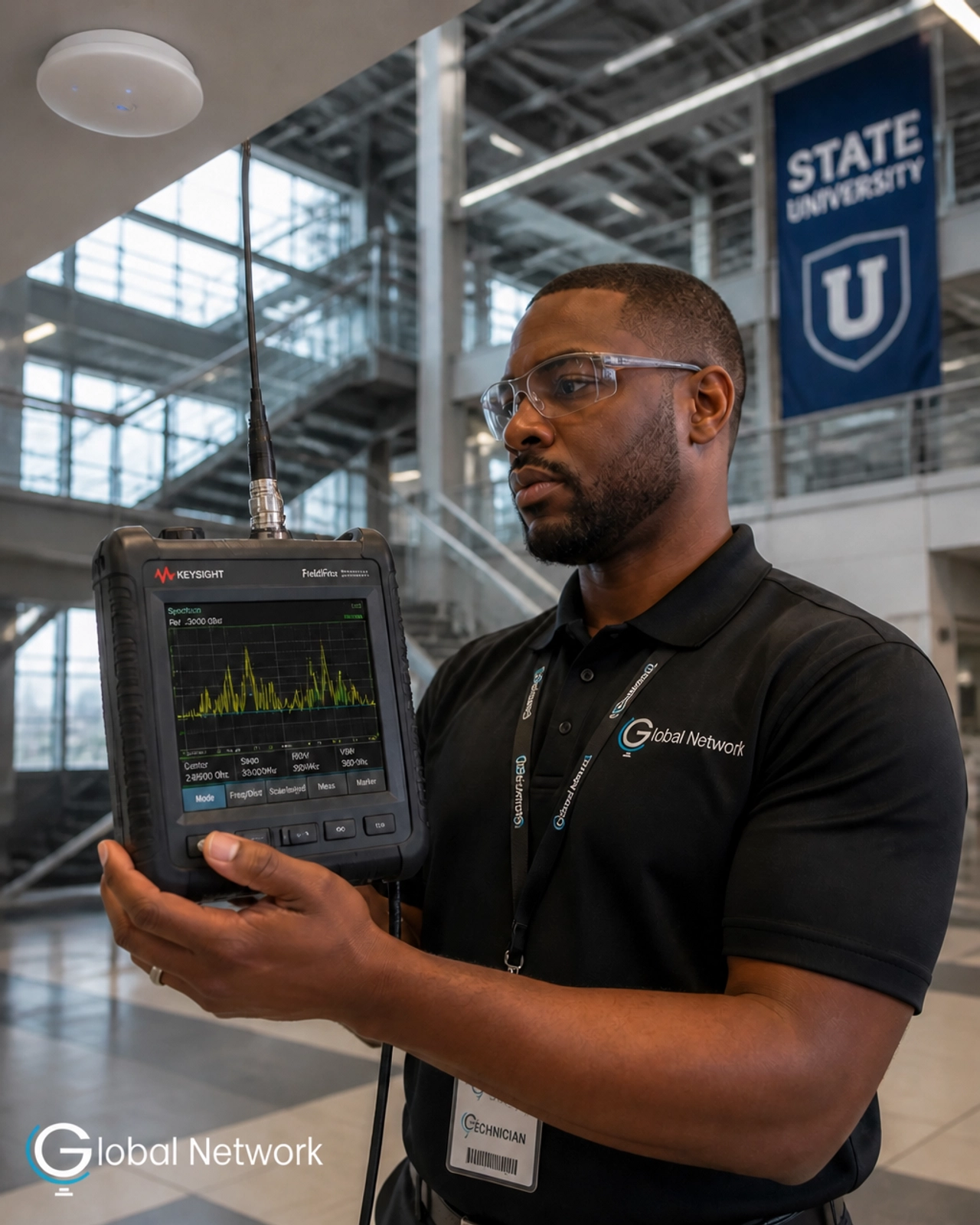
The job isn't finished when the last antenna is mounted. ERCES testing and certification involve a rigorous "grid test" where the building is divided into a grid (typically 20 squares per floor), and signal levels are measured and documented in each square.
Furthermore, compliance is not a one-time event. Annual performance tests are mandatory to ensure the system hasn't drifted out of calibration or been damaged. Global Network LLC offers comprehensive testing and maintenance contracts to guarantee your building stays compliant year after year.

Conclusion: Investing in Safety and Compliance
Understanding DAS maintenance and monitoring costs and the variables of installation allows you to approach your project with confidence. At Global Network LLC, we specialize in delivering turnkey solutions that prioritize compliance and reliability.
We ensure your building meets mandatory local ordinances (IFC 510, NFPA 72, and NFPA 1225) for first responder communication, avoiding penalties and occupancy delays. Whether you are in the design phase or facing a failed inspection, we are at the forefront of advancements to help you secure your Certificate of Occupancy.
Don't leave your safety to chance. Contact Global Network LLC today for a professional consultation and a precise estimate for your facility.
Global Network LLC
Office: 770.520.7633
Toll Free: 877.231.1084
globalnetworkco.com