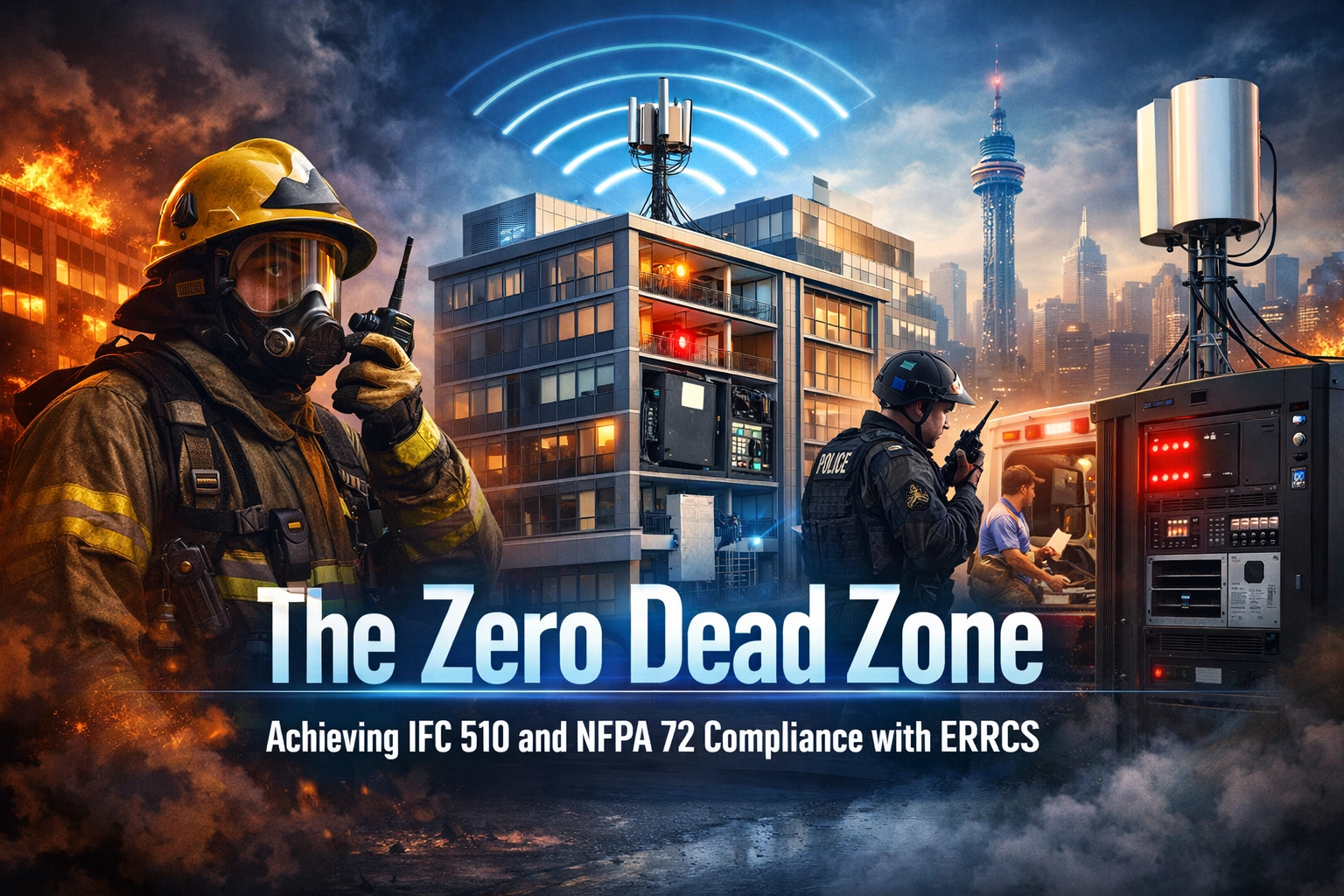
The Zero Dead Zone: Achieving IFC 510 and NFPA 72 Compliance with ERRCS
For building owners and facility managers in Atlanta, the phrase "Zero Dead Zone" isn't just a marketing slogan: it’s a life-saving requirement. When an emergency strikes, your building’s concrete, steel, and low-E glass become barriers that can block the very radio signals first responders rely on to coordinate rescues and stay safe.
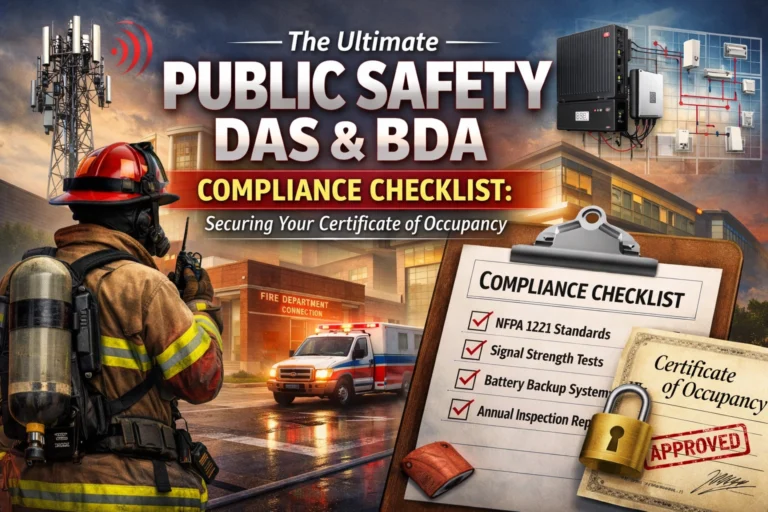
If a firefighter enters your stairwell or elevator lobby and loses signal, the consequences can be catastrophic. This is why IFC 510 and NFPA 72 standards exist. They mandate that your property provides reliable, high-quality radio coverage for emergency personnel. At Global Network LLC, we specialize in transforming these complex regulatory hurdles into seamless, "Zero Dead Zone" environments using state-of-the-art ERRCS (Emergency Radio Response Communication Systems).
What is a "Zero Dead Zone"?
In the world of public safety technology, a "Zero Dead Zone" refers to a building environment where there is no loss of critical communication. Whether a first responder is in the deepest basement level or the highest mechanical room, their two-way radios must work perfectly.
Achieving this requires more than just a strong signal near the windows. It requires a dedicated infrastructure designed to amplify and distribute public safety radio frequencies throughout every square inch of the structure. This is accomplished through a combination of Bi-Directional Amplifiers (BDA) and a Public Safety Distributed Antenna System (DAS).
Understanding the Regulatory Landscape: IFC 510 and NFPA 72
Compliance isn't optional. If you own a high-rise, a large commercial complex, or a building with significant underground space, the Authority Having Jurisdiction (AHJ): usually your local Fire Marshal: will require proof of signal strength.
IFC Section 510
The International Fire Code (IFC) Section 510 is the primary driver for in-building radio coverage. It dictates that all new and existing buildings must maintain a specific level of radio signal strength for emergency responders. If your building fails an initial signal strength test, you are legally required to install an ERRCS.
Key requirements under IFC 510 include:
- Signal Strength: Minimum signal levels must be maintained throughout the building.
- Battery Backup: The system must be able to operate for at least 24 hours on secondary power.
- Monitoring: The system must be integrated into the building’s fire alarm control unit to provide real-time alerts if a failure occurs.
NFPA 72
While IFC 510 tells you what is required, the National Fire Alarm and Signaling Code (NFPA 72) provides the technical roadmap for how to install and maintain these systems safely. It covers everything from the survivability of the cables to the specific way the BDA units must be housed in NEMA-4 rated enclosures to protect against water and dust.
Staying compliant with these codes ensures 0% Defects in your safety strategy. You can learn more about common pitfalls in our guide on 7 mistakes you’re making with NFPA 72 compliance.
The Core Components of ERRCS
An Emergency Radio Response Communication System (ERRCS) is a sophisticated network designed specifically for the frequencies used by police, fire, and EMS services. It is distinct from your building’s Wi-Fi or cellular network.
- The Donor Antenna: Located on the roof, this antenna "listens" for the signal from the city’s radio towers.
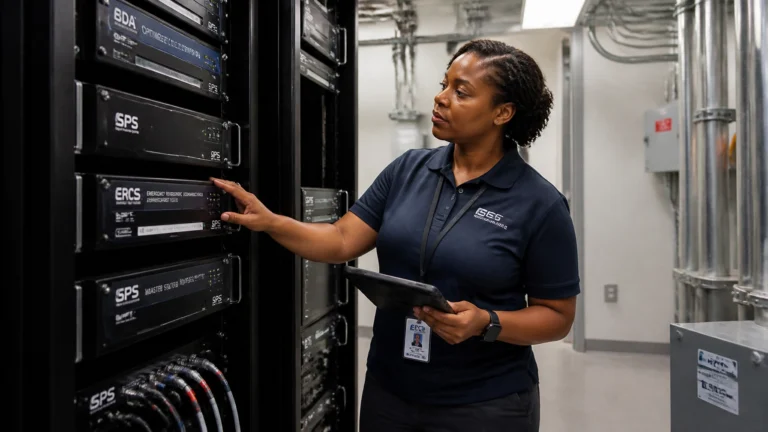
- The Bi-Directional Amplifier (BDA): This is the heart of the system. It takes the donor signal, cleans it up, amplifies it, and pushes it through the building.
- The Distributed Antenna System (DAS): A network of smaller antennas placed strategically throughout the building to ensure there are no "dead zones."
- Battery Backup System: Essential for NFPA 72 compliance, ensuring the system stays live even if the building loses power.
For a deeper dive into these technical solutions, visit our services page.

The "95/99" Rule: Coverage Requirements
To achieve a "Zero Dead Zone," your building must meet strict coverage percentages. During a compliance test, technicians will overlay a grid on your floor plans and measure the signal in each square.
- 95% Coverage: Required for general building areas. This ensures that even in storage rooms or back hallways, a signal is present.
- 99% Coverage: Required for Critical Zones. These are areas where first responders are most likely to congregate or pass through during an emergency.
Critical Zones include:
- Fire command centers
- Elevator lobbies
- Exit stairs and enclosures
- Standpipe cabinets
- Fire pump rooms
If your building falls short of these marks, you are at risk of failing your inspection and being denied a Certificate of Occupancy (CO). At Global Network LLC, we ensure your cellular and public safety DAS systems are engineered to exceed these thresholds from day one.
Why Atlanta Building Owners Choose Global Network LLC
Atlanta’s skyline is growing fast, and the local AHJs are becoming more stringent about public safety communications. Whether you are managing a tech-hub in Midtown or a residential high-rise in Buckhead, you need a partner who understands the local landscape.
Global Network LLC brings decades of expertise to the table. We don't just sell equipment; we provide a comprehensive safety shield for your property. Our commitment to 0% Missed Deadlines means your project stays on track, and your building stays compliant.
Our Comprehensive Approach:
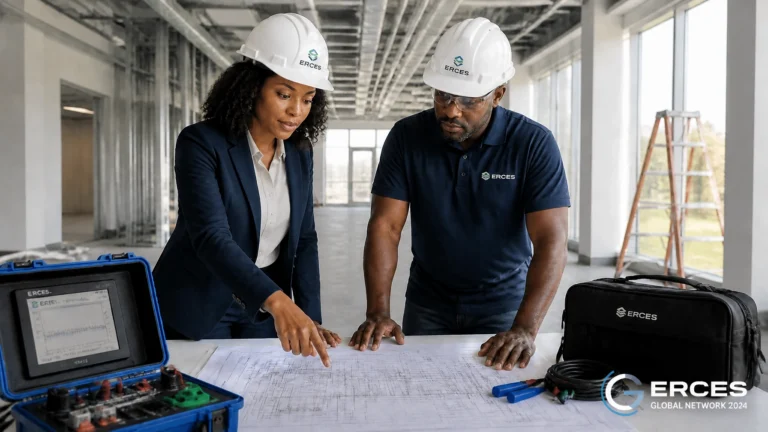
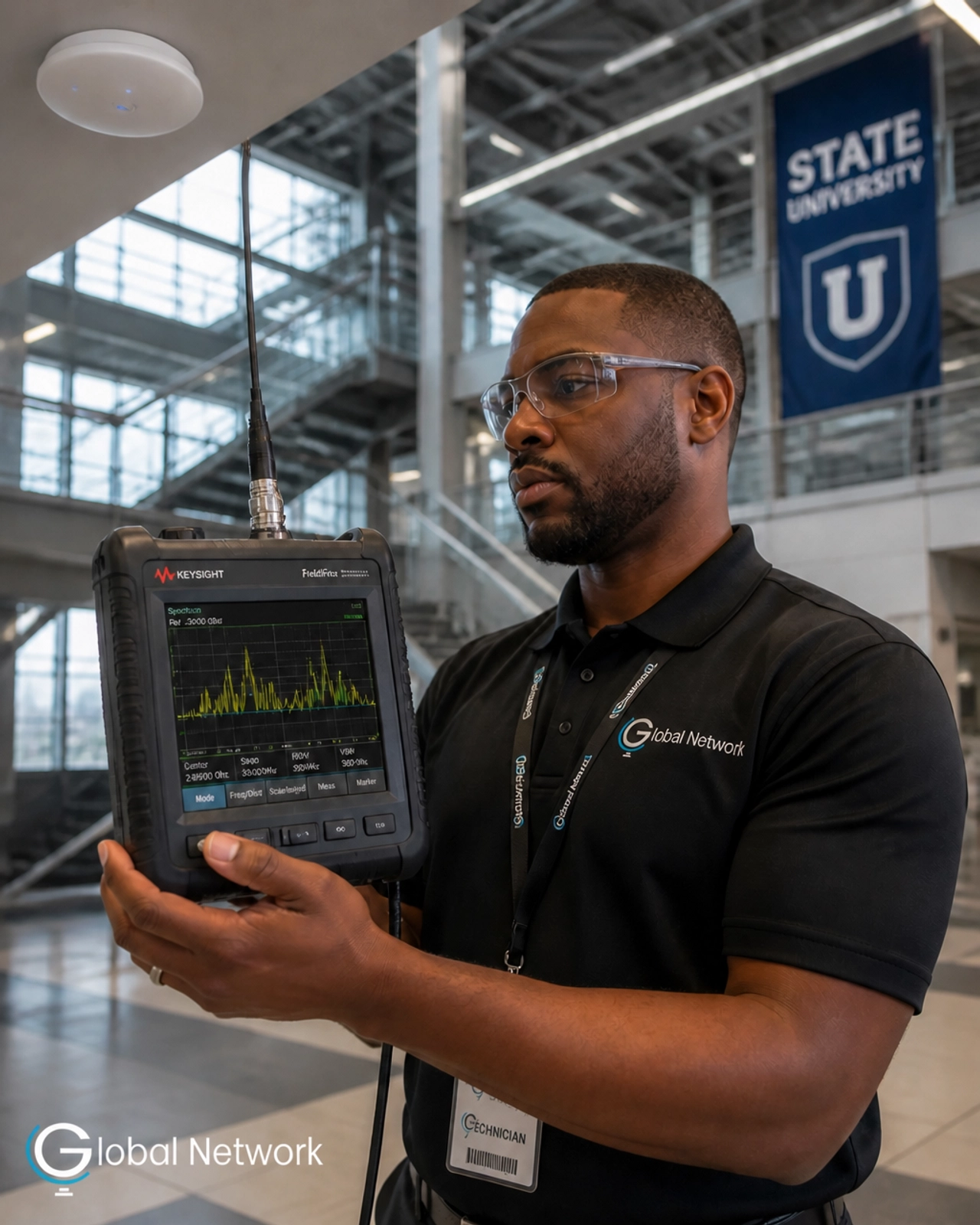
- Initial Signal Testing: We perform grid testing to see if you actually need a system. If your building's natural coverage is sufficient, we’ll provide the documentation to prove it to the Fire Marshal.
- System Design & Engineering: If a system is needed, we design a custom Public Safety DAS tailored to your building’s unique architecture.
- Installation & Integration: Our technicians are experts in Telecommunications Infrastructure, ensuring that every cable and antenna is installed to NFPA 1221 and NFPA 72 standards.
- Annual Maintenance & Testing: Compliance isn't a "one and done" task. Buildings settle, new structures rise nearby, and hardware can fail. We provide the mandatory annual testing to keep your system certified.
Don't wait for a fire inspection to find out your building is unsafe. You can schedule a compliance test today to stay ahead of the curve.
Peace of Mind and First Responder Safety
At the end of the day, ERRCS is about more than just avoiding fines. It’s about the person wearing the uniform. When first responders enter your building "when it matters most," they shouldn't have to worry about their equipment failing.
By investing in a robust ERRCS, you are providing a safer environment for your tenants and the heroes who protect our community. It’s a mission-driven approach to property management that prioritizes human life above all else.
Take the Next Step Toward Compliance
Navigating the world of IFC 510 and NFPA 72 can be daunting, but you don't have to do it alone. Global Network LLC is here to guide you through every step of the process, from the first signal test to the final AHJ approval.
We pride ourselves on our professional delivery and our deep roots in the Atlanta business community. Let us help you achieve a "Zero Dead Zone" and ensure your property is a benchmark for safety and connectivity.
Ready to secure your building?
Contact Global Network LLC today.
Phone:70.520.8124
Website: https://globalnetworkco.com/contact
About Us: Learn more about our mission
Stay safe, stay connected, and let’s eliminate those dead zones together.