
The Private Sector Hustle: How Atlanta Building Owners Are Turning ERCES Compliance Into a Competitive Advantage
Atlanta’s private-sector building market is moving quickly. New commercial towers, mixed-use developments, hotels, healthcare facilities, educational campuses, and renovated office properties are competing for tenants, investors, and occupants across an increasingly demanding real estate landscape.
In that environment, Emergency Responder Communication Enhancement System (ERCES) compliance is no longer just a regulatory obligation. It is a strategic business decision.
Building owners, developers, and facility operators who address Public Safety Distributed Antenna System (DAS) requirements early can protect their construction schedules, reduce costly rework, strengthen tenant confidence, and improve the long-term value of their properties.
The hustle mindset is simple:
Proactive compliance beats reactive fixes. The buildings that move first win.
ERCES Is a Business Issue, Not Just a Fire Code Issue
For many private-sector stakeholders, ERCES enters the conversation late: often after a radio coverage test reveals dead zones or an Authority Having Jurisdiction (AHJ) identifies deficiencies during the final inspection process.
That timing creates unnecessary risk.
An ERCES or Public Safety DAS may be required when a building’s construction materials, layout, height, below-grade areas, or interior conditions prevent reliable two-way radio communication for firefighters, police officers, and EMS personnel. Concrete, structural steel, low-emissivity glass, underground parking, mechanical rooms, and enclosed stairwells can all weaken public safety radio signals.
When coverage is inadequate, Atlanta-area AHJs may require a code-compliant solution based on the applicable adopted editions and local interpretations of:
- IFC Section 510
- NFPA 72
- NFPA 1225
- UL 2524
- Applicable electrical, fire alarm, survivability, and local fire marshal requirements
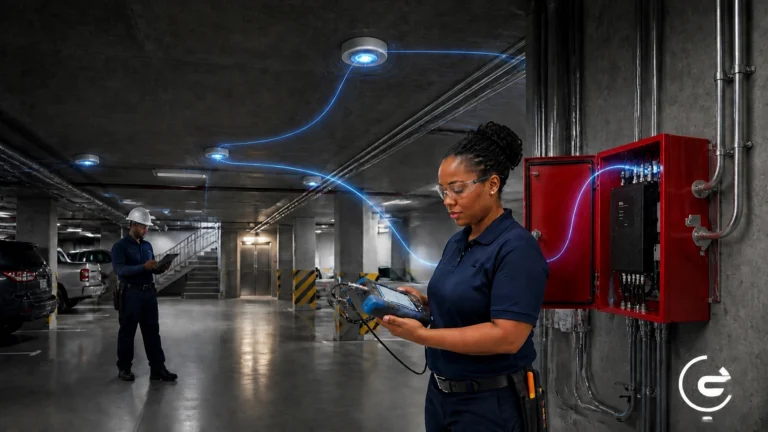
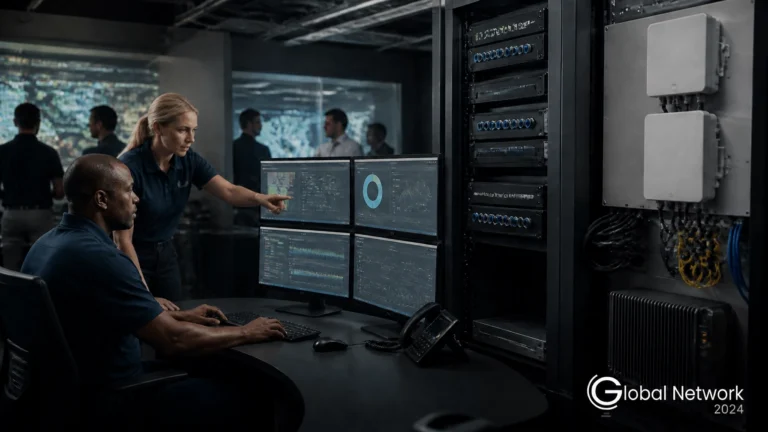
The resulting system may include a Bi-Directional Amplifier (BDA), donor antenna, coaxial or fiber distribution network, remote units, radio-frequency (RF) components, backup power, supervision, and fire alarm interface.
Treating that infrastructure as an afterthought can affect far more than a construction checklist.
It can affect the entire business plan.
The Certificate of Occupancy Timeline Is a Competitive Asset
A delayed Certificate of Occupancy (CO) can disrupt tenant move-in dates, financing milestones, retail openings, hotel operations, and revenue projections. For developers and owners carrying construction debt or preparing a property for lease-up, every avoidable delay has a measurable cost.
In Atlanta’s competitive market, a property that is technically complete but cannot be occupied is not ready for business.
That is why an early ERCES strategy should be integrated into the project schedule alongside:
- Architectural and engineering design
- Structural coordination
- Electrical and fire alarm planning
- Permit submittals
- RF surveys and predictive modeling
- Construction sequencing
- Commissioning and acceptance testing
- AHJ review and closeout documentation
A proactive owner does not wait until the final inspection to discover that a stairwell, parking deck, elevator lobby, or fire command center fails coverage requirements.
Instead, the owner budgets for an early assessment, confirms expectations with the local AHJ, and gives the design and installation team enough time to solve coverage challenges before walls are closed and tenants are scheduled to move in.
0% Missed Deadlines is not merely a slogan. It is a project-management objective.
The Atlanta Advantage: Local AHJ Knowledge Matters
Atlanta is not one uniform compliance environment. Requirements and enforcement practices may vary between the City of Atlanta, Fulton County, DeKalb County, Cobb County, Gwinnett County, and other jurisdictions throughout the metropolitan area.
The local Authority Having Jurisdiction: often the fire marshal or fire prevention office: has significant influence over:
- Required radio frequencies
- Testing methodology
- Design submittal expectations
- Equipment and enclosure requirements
- Battery standby duration
- Alarm and monitoring interfaces
- Acceptance testing procedures
- Required documentation before occupancy
A national template cannot always account for local expectations. A design that appears acceptable in one jurisdiction may require clarification, modification, or additional documentation in another.
For Atlanta building owners, local expertise helps reduce uncertainty. A qualified ERCES partner should understand not only the technology, but also how local AHJs evaluate public safety radio coverage and how requirements affect the project schedule.
That knowledge becomes a competitive advantage when it is applied early.

Three Ways Proactive Compliance Protects Property Value
1. It Reduces Expensive Rework
Reactive ERCES installation is often more expensive than planned integration. When a system is added after construction is substantially complete, owners may face:
- Unplanned cable pathways
- Difficult access to risers and mechanical spaces
- Additional firestopping
- Ceiling and drywall repairs
- Electrical modifications
- Equipment-room conflicts
- Tenant disruption
- Expedited labor and material costs
Early design coordination allows the DAS architecture, BDA location, donor antenna, cable routes, power requirements, and monitoring connections to be incorporated into the building plan.
The result is a cleaner installation and better control over capital expenditures.
2. It Supports Faster Leasing and Tenant Occupancy
Tenants want operational certainty. Corporate users, healthcare providers, hospitality groups, educational institutions, and government agencies need confidence that a facility can open on schedule and remain safe after occupancy.
A property marketed as safety-ready, code-conscious, and professionally maintained can stand apart in a crowded leasing environment.
ERCES compliance can support tenant conversations by demonstrating that ownership has addressed:
- Reliable first responder communication
- Critical-area coverage
- Fire code coordination
- Annual testing obligations
- Backup power and system supervision
- Documentation and maintenance planning
The system may be behind the walls, but its business value is visible in tenant confidence.
3. It Strengthens Long-Term Asset Resilience
Compliance is not a one-time event. Building renovations, tenant improvements, new partitions, structural changes, and equipment relocation can affect RF performance.
A property with organized as-built drawings, documented acceptance testing, annual maintenance records, and a relationship with a qualified DAS/ERCES provider is better positioned to manage future changes.
That operational readiness can support:
- More predictable capital planning
- Faster response to inspection questions
- Reduced risk during renovations
- Stronger due diligence documentation
- Better institutional ownership standards
- Improved confidence among insurers, lenders, tenants, and public stakeholders
What a Proactive ERCES Strategy Looks Like
A serious private-sector compliance program should begin before the final inspection. A practical approach includes the following phases.
Phase 1: Confirm the Regulatory Path
Coordinate with the applicable AHJ and design team to identify the adopted code editions, local amendments, required frequencies, and submittal process.
Do not assume that an older property or a minor renovation is automatically exempt. Existing buildings may face new requirements when structural work, occupancy changes, or coverage deficiencies trigger review.
Phase 2: Perform an RF Survey
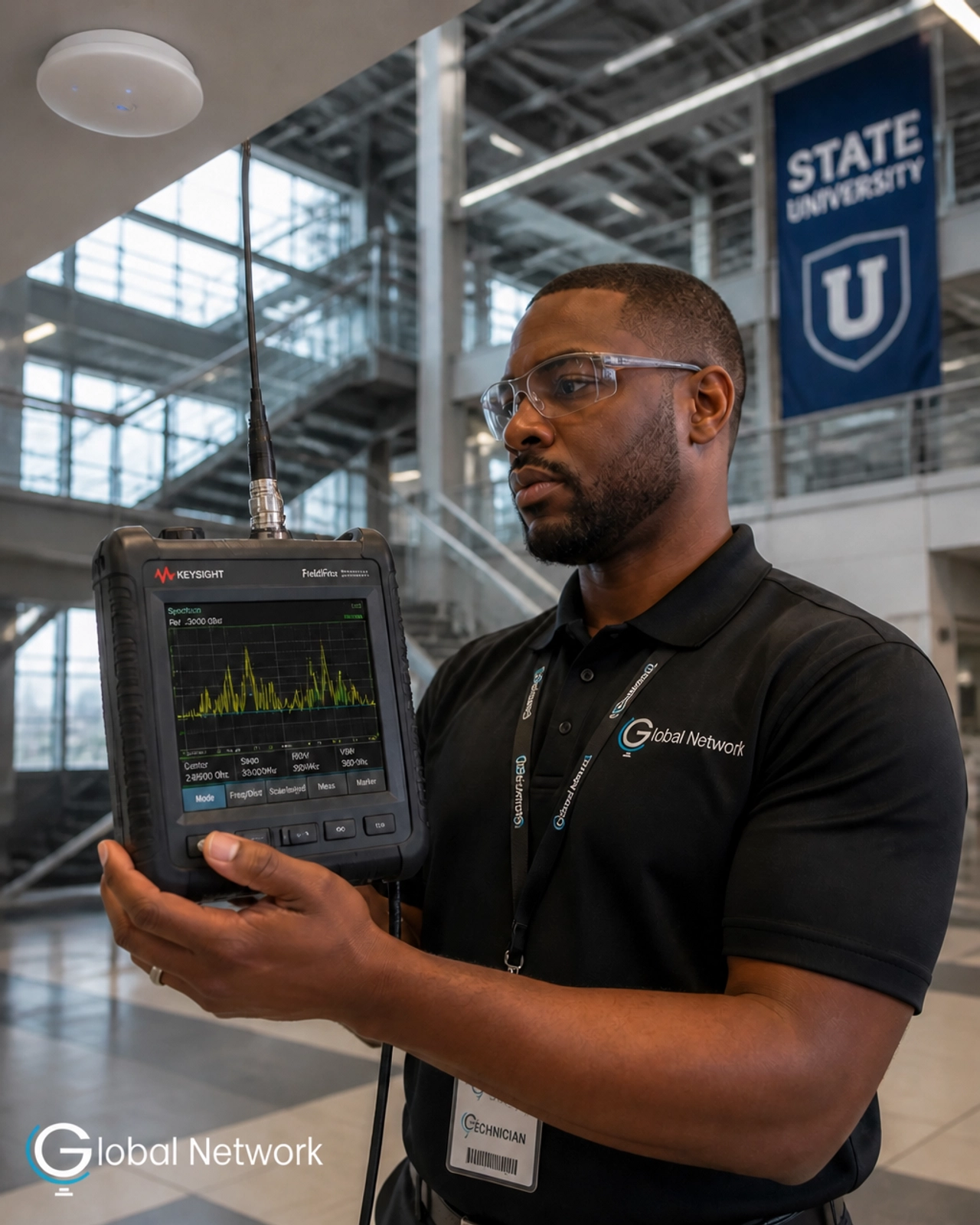
A professional radio coverage survey identifies whether the building naturally meets required public safety communication thresholds.
Testing should evaluate general and critical areas, including:
- Stairwells and exit passageways
- Elevator lobbies
- Fire command centers
- Fire pump rooms
- Standpipe and sprinkler valve locations
- Emergency generator rooms
- Parking decks and below-grade spaces
- Mechanical and service areas
Cell phone bars are not a compliance test. Proper evaluation requires calibrated test equipment, defined grid locations, and documented measurements such as signal strength and Delivered Audio Quality (DAQ).
Phase 3: Design the Public Safety DAS/ERCES
If coverage is inadequate, the system should be engineered around the building’s RF environment and the AHJ’s requirements.
Design considerations may include:
- UL 2524-listed BDA and ERCES components
- Donor antenna placement and isolation
- Fiber or coaxial distribution architecture
- Antenna spacing and coverage modeling
- Two-hour survivability where required
- Backup power and battery capacity
- NEMA-rated equipment enclosures
- Fire alarm monitoring and supervisory signals
- FCC and public safety licensee coordination
- FirstNet-compatible infrastructure where applicable

Phase 4: Commission, Test, and Document
Before occupancy, the system should be commissioned and subjected to acceptance testing. The closeout package may include:
- As-built drawings
- Equipment inventory
- Test results
- Coverage grid documentation
- Battery and backup-power verification
- Alarm and monitoring verification
- Installation certifications
- AHJ-required forms and approvals
This process gives ownership a defensible record that the system was designed, installed, tested, and placed into operation according to applicable requirements.
Phase 5: Maintain the Advantage
Annual testing and preventive maintenance help preserve system performance after the CO is issued.
A responsible maintenance program should verify:
- BDA and remote-unit operation
- Donor antenna performance
- Cable and antenna condition
- Battery health and standby capacity
- Alarm and fault reporting
- Fire alarm panel integration
- Coverage after renovations or major tenant improvements
0% Defects. 0% Missed Deadlines. 100% Peace of Mind.
The Private-Sector Hustle Is About Readiness
The most effective building owners are not asking, “How little can we do to pass?”
They are asking:
- How early can we identify the risk?
- How can we protect the CO schedule?
- How can we give tenants confidence?
- How can we reduce lifecycle costs?
- How can we keep the building ready when it matters most?
That is the difference between treating ERCES as a burden and treating it as an asset.
A code-compliant Public Safety DAS or BDA system protects first responders, supports occupant safety, and demonstrates disciplined ownership. In a competitive Atlanta market, those qualities can influence leasing decisions, development timelines, operational continuity, and asset reputation.
Global Network LLC provides Public Safety DAS/ERCES design, installation, commissioning, compliance testing, and annual performance support for Atlanta-area commercial properties, government facilities, healthcare campuses, hospitality properties, educational institutions, and mixed-use developments.
Explore our Public Safety DAS and cellular services, review our Atlanta property-owner compliance guidance, or learn more about the Certificate of Occupancy compliance process.
Move Before the Market Forces You To
Do not wait for a failed inspection, an approaching tenant move-in date, or a construction delay to expose a communication gap.
Schedule a professional RF survey and compliance consultation early. Global Network LLC can help evaluate your building, coordinate the technical requirements, develop a code-focused ERCES strategy, and support testing through final approval.
Office: 770.520.7633
Toll Free: 877.231.1084
Website: globalnetworkco.com
Proactive compliance protects your schedule, your tenants, your property value, and the people who respond when it matters most.