Annual BDA Testing Isn’t Optional Anymore: How Georgia’s New Fire Safety Rules Affect Your Certificate of Occupancy
For Georgia building owners and facility managers, public-safety radio coverage is not a “set it and forget it” system. A Bi-Directional Amplifier (BDA) and Emergency Responder Communication Enhancement System (ERCES) must continue performing after installation, construction closeout, and Certificate of Occupancy (CO) approval.
That is why annual BDA/ERCES testing, inspection, and re-certification should be treated as an ongoing life-safety obligation whenever the system is required by the applicable code or Authority Having Jurisdiction (AHJ).
However, one important qualification matters: Georgia’s requirements can depend on the currently adopted state code, local amendments, building conditions, and AHJ policies. Property owners should not assume that a headline about “new Georgia fire safety rules” automatically applies in the same way to every city, county, or building.
The safest approach is direct: confirm the requirements for your jurisdiction, document system performance, and schedule testing before a failure becomes an occupancy or enforcement issue.
Georgia ERCES Compliance Requires More Than Installation
Modern construction materials: including reinforced concrete, structural steel, Low-E glass, metal shelving, and below-grade construction: can weaken public-safety radio signals. A building may appear to have excellent cellular service while still containing areas where firefighters, police officers, or emergency medical personnel cannot communicate reliably.
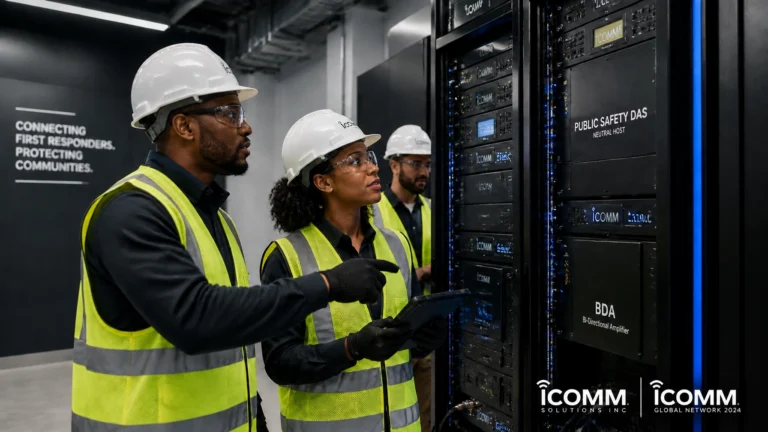
An ERCES typically uses a BDA, donor antenna, coaxial distribution network, and indoor DAS antennas to receive and redistribute public-safety radio signals throughout the structure.
The system may be required when testing demonstrates inadequate in-building radio coverage under applicable provisions such as:
- IFC Section 510
- NFPA 72, where adopted or referenced by the AHJ
- NFPA 1225, particularly provisions addressing emergency services communications
- State fire-safety requirements and local fire marshal policies
- Project-specific conditions imposed during plan review or inspection
The Georgia Office of the Commissioner of Insurance and Safety Fire provides the state’s official rules and regulations for safety fire inspections, permits, and plans. Because adoption and enforcement can change, the building team should verify the current requirements directly with the responsible AHJ.
Compliance is jurisdiction-specific. Assumptions create risk.
Is Annual BDA Testing Required in Georgia?
In many Georgia jurisdictions, annual ERCES testing and re-certification are required when an ERCES is mandated for the building. The exact testing interval, test method, documentation package, and contractor qualifications may be defined by the adopted edition of NFPA 1225, local policy, or the AHJ’s approved testing procedures.
For example, the Hall County ERCES Contractor Packet states that required ERCES equipment must be installed, tested, and operational before a Fire Safety Codes release or Certificate of Occupancy. It also requires annual testing, inspection, and re-certification proposals from an approved testing agency.
That does not mean every building in every Georgia jurisdiction follows an identical checklist. It does mean that owners should take annual testing seriously whenever their building’s approved plans, fire marshal, or adopted code requires it.
Annual testing may be necessary to verify:
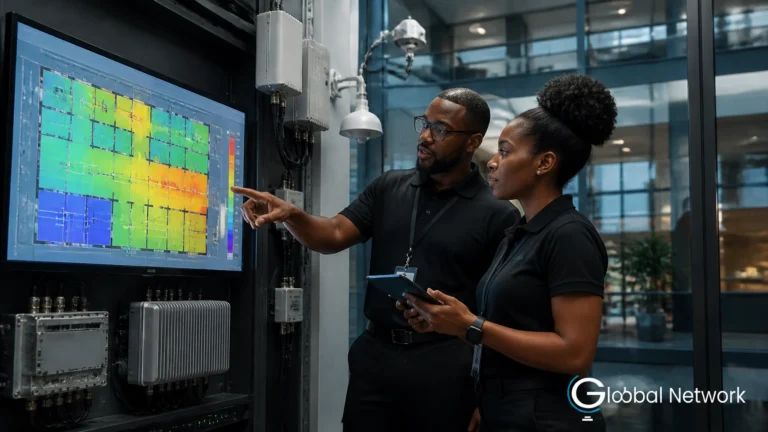
- RF coverage throughout defined test grids
- Coverage in critical areas
- Talk-in and talk-out performance
- BDA uplink and downlink operation
- Donor signal levels and system isolation
- Battery backup and secondary power
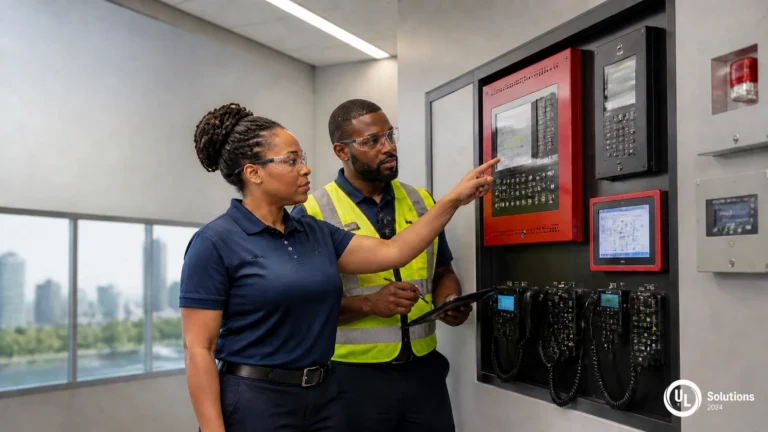
- Fire alarm or supervisory monitoring interfaces
- Antenna, coaxial cable, and distribution-path integrity
- Alarm conditions for AC power loss, system failure, or component malfunction
- Absence of harmful interference with public-safety radio systems
0% Missed Test Cycles. 0% Un documented Findings.
Commissioning, Acceptance Testing, and Annual Testing Are Different
One common compliance failure is treating all testing as the same event. A complete ERCES lifecycle normally includes several distinct phases.
1. Initial Needs Assessment
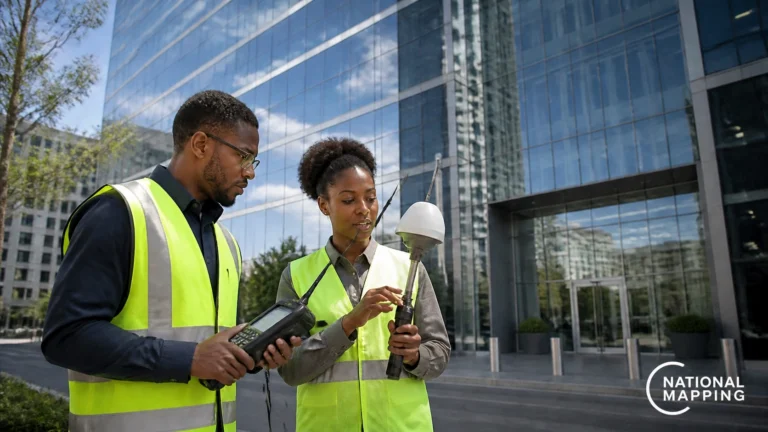
A needs assessment determines whether the building has adequate public-safety radio coverage before an ERCES is designed or installed.
This may involve:
- Pre-construction signal-strength testing
- Floor-by-floor RF grid measurements
- Identification of critical areas
- Review of building geometry and construction materials
- Donor-site analysis
- Coordination with the local radio system owner or communications authority
Some AHJs require initial signal testing before site-plan approval. Others may specify when testing must occur based on the building envelope, interior construction, or project phase.
2. Commissioning
Commissioning verifies that the installed system has been configured, integrated, and prepared for operational use.
Commissioning activities can include:
- Confirming equipment models and locations against approved plans
- Verifying BDA programming and frequency configuration
- Inspecting DAS antennas, coaxial cable, splitters, filters, and grounding
- Confirming primary and secondary power sources
- Testing alarm supervision and monitoring
- Reviewing battery calculations
- Providing owner training and an operations and maintenance manual
Commissioning should produce a clear record showing who installed the system, who tested it, what equipment was used, and whether the configuration matches the approved design.
3. Acceptance Testing
Acceptance testing is performed before final approval and occupancy release. It demonstrates to the AHJ that the system meets the approved performance criteria.
Depending on local requirements, acceptance testing may include:
- RF signal measurements in designated grid cells
- Separate testing of critical areas
- Verification of uplink and downlink communications
- Primary-power and secondary-power testing
- Alarm and monitoring verification
- System isolation and noise-floor measurements
- Review of installation workmanship and survivability features
A failed acceptance test can delay a Fire Safety Codes release, temporary CO, or permanent CO. Corrective work may require redesign, additional antennas, cable-path repairs, equipment adjustments, or repeat testing.

Why Annual Testing Matters After the CO Is Issued
A Certificate of Occupancy confirms that a building met applicable approval conditions at a particular point in time. It does not guarantee that an ERCES will perform indefinitely.
Buildings change. Tenants remodel spaces, storage layouts shift, doors are replaced, new walls are constructed, and equipment may be relocated. These changes can affect RF propagation and create new dead zones.
System components also age. Batteries lose capacity, coaxial connections can loosen, antennas can be damaged, and monitoring interfaces can develop faults. A system that passed acceptance testing several years ago may not deliver the same performance today.
Annual testing provides a structured opportunity to identify:
- Reduced signal levels
- Degraded battery capacity
- Damaged or disconnected antennas
- BDA fault conditions
- Improper alarm reporting
- New obstructions or structural changes
- Interference or elevated noise levels
- Documentation gaps that could complicate an AHJ inspection
In Hall County’s published guidance, a system that fails annual testing must be addressed and reported according to the local fire marshal’s procedures. Other jurisdictions may impose different notification and correction requirements. The owner’s responsibility is to know the local process before a failure occurs.
Documentation Can Protect Your Occupancy Status
Testing without documentation is difficult to defend during an inspection, audit, property transfer, insurance review, or enforcement action.
A complete ERCES compliance file should be maintained according to the AHJ’s requirements and may include:
- Approved engineering plans and revisions
- RF coverage maps and grid-test results
- Commissioning certificate
- Acceptance-test report
- Annual inspection and re-certification reports
- BDA and DAS equipment specifications
- Battery calculations and power-source records
- Monitoring and alarm-interface documentation
- FCC-related authorization or consent records, where applicable
- Maintenance and repair history
- Owner acknowledgment of annual testing obligations
- Current service-provider and emergency contacts
- Operations and maintenance manual
Some AHJs require a document box at or near the BDA head-end equipment. Others may require electronic submissions through a permit or inspection portal.
A complete record reduces uncertainty. It also helps the AHJ verify that corrective actions were completed.
A Practical Georgia Compliance Checklist
Building owners, developers, and facility managers should use the following process:
- Identify the AHJ. Determine whether the city fire marshal, county fire department, building official, or State Fire Marshal has authority over the project.
- Confirm the adopted requirements. Verify the currently adopted editions of IFC, NFPA 72, NFPA 1225, and applicable Georgia or local amendments.
- Review the approved plans. Confirm whether the building is required to have an ERCES and what performance criteria were approved.
- Schedule qualified testing. Use an AHJ-approved or otherwise properly qualified testing provider, as required locally.
- Complete annual testing on time. Do not wait for an inspection notice or tenant complaint.
- Correct deficiencies promptly. Document the failure, repair, retest, and final disposition.
- Maintain the compliance file. Keep reports accessible on site and available to the AHJ when requested.
Global Network LLC helps Atlanta-area property owners navigate this process through public-safety DAS/ERCES design, BDA installation, commissioning, acceptance testing, annual performance testing, and compliance documentation.

Protect Your Building Before a Testing Deadline Becomes a Violation
Annual BDA testing is not merely administrative maintenance. When required by the applicable code or AHJ, it is part of maintaining a life-safety communication system that first responders may depend on when it matters most.
Do not rely on outdated assumptions about Georgia fire-code requirements. Confirm the current local standard, understand the testing schedule, and maintain documentation that demonstrates continuing performance.
For a compliance review, ERCES needs assessment, BDA system installation, or annual testing support, contact Global Network LLC:
- Office: 770.520.7633
- Toll Free: 877.231.1084
- Website: globalnetworkco.com
- Services: Public Safety DAS and ERCES Services
- Who We Serve: Facilities and Public-Safety Communication Solutions
- Related Guidance: Understanding IFC 510 and NFPA 72 Compliance
Schedule early. Test accurately. Document everything. Keep your building ready when it matters most.