
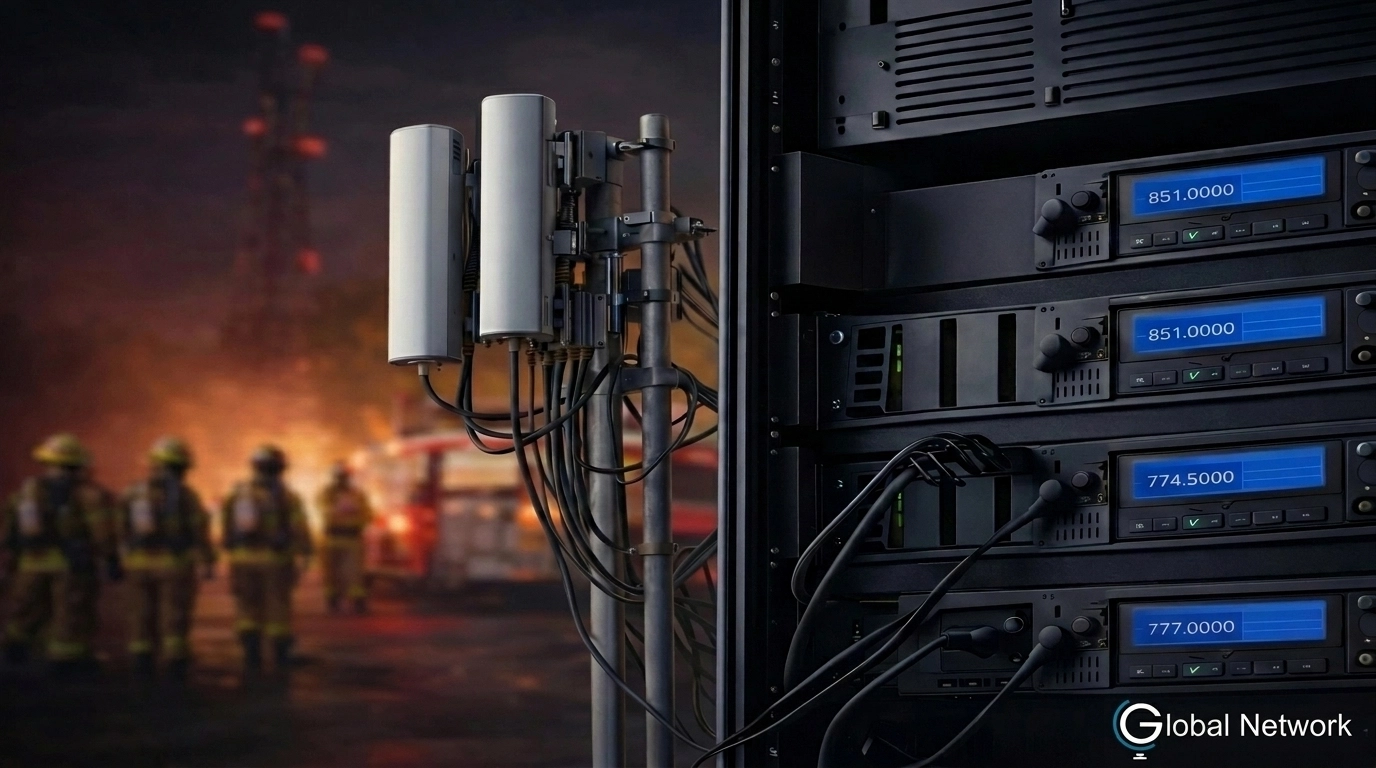
Compliance with Fire and Safety Regulations: Understanding IFC 510 & NFPA 72
In the modern landscape of commercial real estate and infrastructure development, life safety is not merely a box to check; it is a fundamental requirement of modern engineering. For property owners, developers, and facility managers, ensuring that first responders can communicate during an emergency is a primary responsibility. When the unthinkable happens, clear and reliable radio signal is the difference between a controlled situation and a catastrophe.
At Global Network LLC, we recognize that navigating the complexities of IFC 510 compliance and NFPA 72 emergency communication standards can be daunting. The regulatory environment is rigorous, demanding a high level of technical expertise and a commitment to precision. This guide serves as a comprehensive resource for understanding the essential codes governing Emergency Responder Radio Coverage Systems (ERRCS) and why strict adherence is vital for your property’s safety and legal standing.
The Critical Importance of In-Building Wireless Communication
Modern building materials: such as Low-E glass, reinforced concrete, and heavy steel: are excellent for energy efficiency and structural integrity, but they are devastating to radio frequencies. These materials create "dead zones" where public safety radios fail to function. If a firefighter or police officer enters your building and cannot communicate with their team or dispatch, the risk to life increases exponentially.
To address this, the International Fire Code (IFC) and the National Fire Protection Association (NFPA) have established stringent mandates. These regulations ensure that Bi-Directional Amplifiers (BDA) and Distributed Antenna Systems (DAS) are installed to boost public safety signals to every corner of a structure. Ensuring your building meets these standards is not just about passing an inspection; it is about providing reliable coverage in critical areas when it matters most.
Deciphering IFC 510: The Mandatory Standard for ERRC
The International Fire Code (IFC) Section 510 is the primary regulatory driver for emergency responder radio coverage. It establishes that all new buildings must provide a minimum level of radio signal strength for emergency personnel. While local jurisdictions may have specific amendments, the core of IFC 510 remains the benchmark for national safety.
Compliance Triggers: Is Your Building Required to Comply?
Compliance is typically mandated under several conditions:
- New Construction: Almost all new commercial structures in major metropolitan areas must undergo signal testing.
- High-Rise Buildings: Any building with floors located more than 75 feet above the lowest level of fire department vehicle access.
- Large Floor Areas: Buildings exceeding 50,000 square feet often require dedicated ERRCS.
- Subterranean Spaces: Basements, underground parking garages, and tunnels are notorious for signal loss and are high-priority zones for fire marshals.
- Substantial Renovations: Existing buildings undergoing significant structural changes may be required to retroactively meet current codes.
Failure to comply with IFC 510 can lead to the denial of a Certificate of Occupancy (CO), resulting in costly project delays and financial penalties. Global Network LLC specializes in helping developers navigate these hurdles with 0% Missed Deadlines, ensuring your project moves from construction to occupancy without regulatory friction.
NFPA 72: The Blueprint for Emergency Communication Systems
While IFC 510 defines where coverage is needed, NFPA 72 (National Fire Alarm and Signaling Code) provides the technical roadmap for how these systems must be designed, installed, and monitored. Specifically, Chapter 24 of NFPA 72 (and the newer NFPA 1225) outlines the rigorous standards for survival and performance.
Key Requirements of NFPA 72 Compliance
- Signal Strength: A minimum signal strength of -95 dBm must be maintained throughout the building.
- Survivability: The system must be protected from fire and physical damage, often requiring 2-hour fire-rated enclosures for cables and equipment.
- Secondary Power: In the event of a total building power failure, the ERRCS must have a backup battery or generator capable of providing 24 hours of autonomous operation.
- Monitoring: The system must be integrated into the building’s fire alarm control unit to provide real-time alerts for malfunctions, such as antenna failure, power loss, or component malfunction.
For a deeper dive into common pitfalls, we recommend reviewing our article on 7 Mistakes You’re Making with NFPA 72 Compliance.
Technical Specifications: The 99% Coverage Requirement
The standard for coverage is divided into two categories: general areas and critical areas. The distinction is vital for passing a fire marshal's inspection.
- General Areas (95% Coverage): These include standard office spaces, retail floors, and common areas.
- Critical Areas (99% Coverage): According to NFPA standards, certain zones are deemed life-critical. These areas must maintain near-perfect signal penetration. They include:
- Fire command centers
- Fire pump rooms
- Exit stairs and exit passageways
- Elevator lobbies
- Standpipe cabinets
- Sprinkler sectional valve locations
Global Network LLC utilizes advanced RF modeling and professional grid testing to ensure that these critical zones meet the 99% requirement, providing peace of mind for both building owners and first responders.
Professional Grid Testing: Identifying Weak Signal Zones
How do you know if your building is compliant? You cannot simply rely on "bars" on a cell phone. Compliance requires Professional Grid Testing.
During this process, our technicians divide each floor of the building into a grid (typically 20 cells per floor). Each cell is individually tested using calibrated spectrum analyzers to measure signal strength and signal-to-noise ratios. If a single cell in a critical area fails, the entire floor may be deemed non-compliant.
By identifying weak signal zones early in the construction phase, Global Network LLC can design a custom BDA/DAS solution that targets only the areas in need, optimizing your budget while maintaining total compliance. You can schedule a test today to verify your building's current status.
Ensuring Longevity: Monitoring and Annual Maintenance
Compliance is not a "one-and-done" event. IFC 510.6 mandates that all ERRCS undergo annual inspections and testing. Buildings are dynamic environments; renovations, new furniture, or even structural settling can alter how radio waves travel through a space.
Annual maintenance involves:
- Verifying signal levels in the 20-cell grid.
- Testing backup batteries under load to ensure they still meet the 24-hour requirement.
- Inspecting all antennas and cables for physical damage.
- Confirming that the monitoring system correctly reports faults to the fire alarm panel.
At Global Network LLC, we provide comprehensive maintenance contracts to ensure your building remains in good standing with local authorities year after year.
Why Global Network LLC is Your Compliance Partner
At Global Network LLC, we operate at the forefront of Telecommunications Infrastructure and Public Safety Technology. Our mission is to bridge the gap between complex government regulations and practical, cost-effective engineering solutions. We take a mission-centric approach to every project, understanding that our work directly impacts community safety.
Our Commitment to Excellence:
- 0% Defects: We pride ourselves on precision engineering that passes inspections the first time.
- Expert Integration: We specialize in Public Safety DAS and BDA systems that integrate seamlessly with your existing fire safety infrastructure.
- Full Lifecycle Support: From initial grid testing and design to installation and annual certification, we are with you every step of the way.
- National Reach: While we are experts in Atlanta BDA inspections, we provide Global Network LLC services across the country.
Ensuring your building is safe for first responders is more than a legal obligation: it is a commitment to the lives of those who protect us. Don't leave your compliance to chance. Partner with the experts who understand the nuances of IFC 510 compliance and NFPA 72 emergency communication.
Take Action for Your Property Today
The safety of your occupants and the legal standing of your property depend on reliable emergency communication. If you are unsure of your building’s current compliance status or are in the planning stages of a new project, contact the experts at Global Network LLC.
Our team is ready to provide the technical expertise and professional service required to ensure your facility meets every fire and safety regulation.
Contact Global Network LLC:
- Phone: 770.520.8124
- Website: globalnetworkco.com
- Inquiries: Contact Our Compliance Team
- Learn More: About Global Network LLC
Ensure your building is ready when it matters most. Choose Global Network LLC for zero-defect compliance and industry-leading expertise.