FirstNet Explained: Is Your Building Future-Proof?
If you’re a building owner or property manager in 2026, you’ve probably heard the term FirstNet thrown around in meetings with fire marshals or tech consultants. But let’s be real: between managing HVAC schedules, tenant requests, and the ever-shifting landscape of local building codes, "FirstNet" often sounds like just another line item on a long list of technical headaches.
However, the reality is much more significant. FirstNet isn’t just a "nice-to-have" upgrade; it is the backbone of modern emergency response. As we push further into the late 2020s, ensuring your building is FirstNet-ready isn't just about passing an inspection today: it's about future-proofing your asset against the communication demands of tomorrow.
At Global Network LLC, we see buildings every day that are "compliant" on paper but functionally deaf when a crisis hits. In this guide, we’re breaking down what FirstNet actually is, why it matters for your infrastructure, and how you can ensure your property remains a safe haven for first responders.
What is FirstNet, Exactly?
To understand FirstNet, we have to look back at why it was created. After the communication failures of 9/11, it became clear that first responders needed a dedicated lane on the "information highway." They couldn't afford to be stuck in the same digital traffic as thousands of people trying to upload videos to social media during an emergency.
FirstNet is the only nationwide, high-speed wireless broadband network built specifically for public safety. It operates on Band 14: a specific slice of the 700 MHz spectrum that is reserved strictly for police, fire, and EMS.
Think of it like this: If the commercial cellular network is a crowded city street, FirstNet is the dedicated HOV/Emergency lane that stays clear even when the rest of the city is in a gridlock.
Priority and Preemption: The Secret Sauce
The most critical features of FirstNet are Priority and Preemption.
- Priority means that first responder data always goes to the front of the line.
- Preemption means that if the network is truly overwhelmed, commercial users can actually be "bumped" off the Band 14 spectrum to make room for life-saving communications.
For a building owner, this means that even if your high-rise is packed with thousands of people using their phones, the fire department’s equipment will still have a clear, uninterrupted signal: provided your building's infrastructure can actually "catch" that signal.

Why Buildings Struggle with FirstNet Signals
You might think, "If it’s a nationwide network, why do I need to do anything?" The problem is the very materials that make your building modern and energy-efficient. Low-E glass, reinforced concrete, and steel framing are excellent at keeping heat in, but they are equally effective at blocking RF (Radio Frequency) signals.
A building can have "five bars" of signal on the sidewalk, but the moment a first responder steps into the stairwell, the basement, or the elevator lobby, that signal can drop to zero. This creates a "dead zone."
In the world of Telecommunications Infrastructure, we solve this using ERCES (Emergency Responder Communication Enhancement Systems). These systems typically consist of:
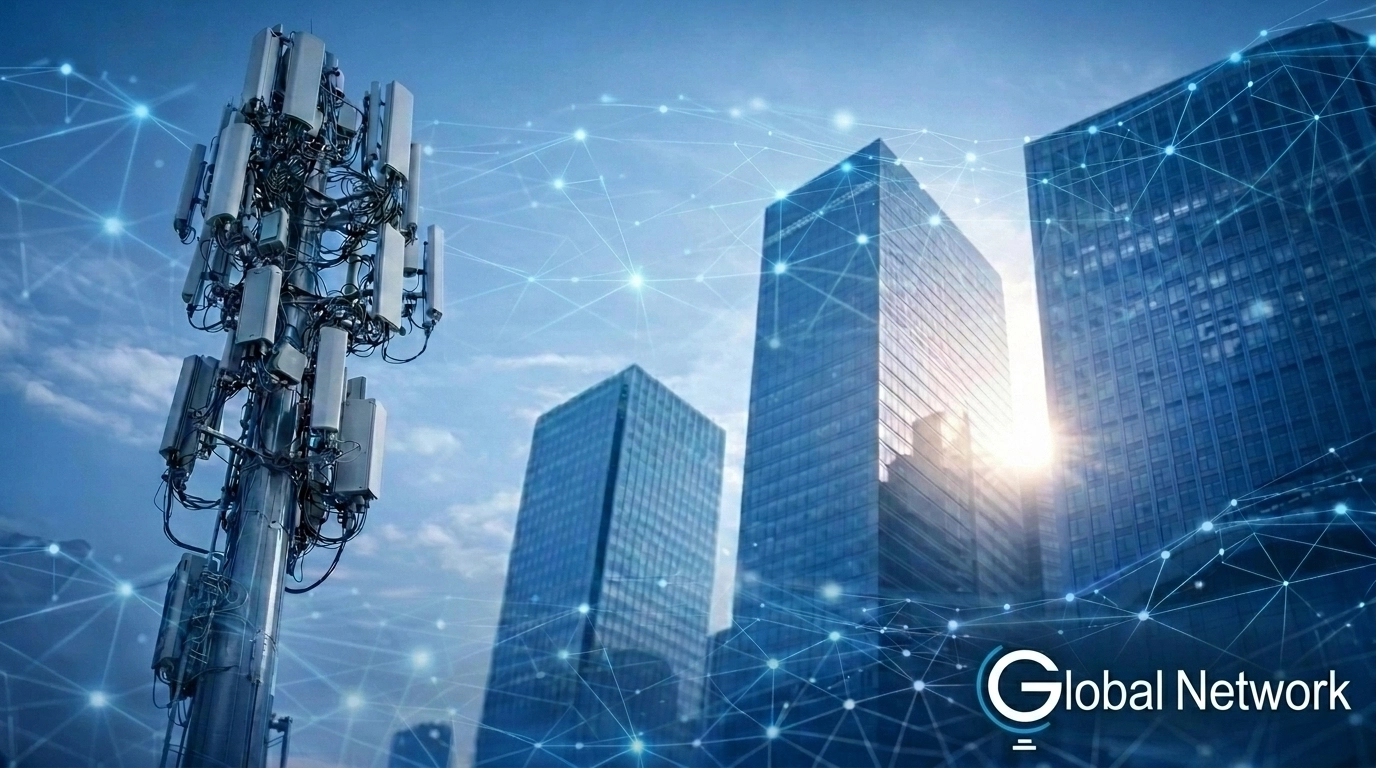
- A Donor Antenna: Placed on the roof to catch the FirstNet (Band 14) and LMR signals.
- A Bi-Directional Amplifier (BDA): Which boosts those signals.
- A Distributed Antenna System (DAS): A series of internal antennas that spread the signal throughout every floor and corner of the building.

Future-Proofing: It’s Not Just About 2026
When we talk about future-proofing at Global Network LLC, we aren't just talking about the next six months. Technology moves fast. While FirstNet currently utilizes 4G LTE and 5G, the roadmap is already looking toward 6G and beyond.
If you install a legacy, narrowband-only system today, you might be ripping it out in three years. A future-proof building uses Wideband BDA technology and fiber-based Public Safety DAS that can be software-upgraded to handle new frequencies without requiring a complete hardware overhaul.
The Rise of Public Safety IoT
First responders are no longer just using "walkie-talkies." They are using:
- Body Cams: Streaming live video to command centers.
- Biometric Sensors: Monitoring a firefighter's heart rate and oxygen levels in real-time.
- AR HUDs: Augmented Reality heads-up displays in helmets to see through smoke.
These tools require massive amounts of data. If your building's wireless infrastructure is only designed for basic voice communication, you are essentially leaving first responders "blind" in the digital age. Ensuring FirstNet compatibility means you are supporting the full suite of data-heavy tools that modern heroes use to stay alive and save others.
The Cost of Non-Compliance: More Than Just a Fine
We’ve worked with property owners across Atlanta and beyond who viewed NFPA 72 and IFC 510 compliance as a nuisance. But failing to provide adequate FirstNet and radio coverage has serious consequences:
- Certificate of Occupancy (CO) Delays: If the Fire Marshal tests your building and finds dead zones in the stairwells, you aren't opening. Every day your building sits empty is lost revenue.
- Liability Risks: In the event of an emergency, if it’s proven that first responders couldn't communicate because of a lack of required coverage, the building owner could face massive legal exposure.
- Decreased Asset Value: Modern tenants prioritize safety. A building that is verified as FirstNet-ready is a more attractive, premium asset.
If you are unsure where your building stands, you need to check out our guide on 7 Mistakes You’re Making with NFPA 72 Compliance to see if you're at risk.

How to Make Your Building FirstNet Ready
Ensuring your building is future-proof doesn’t have to be a nightmare. It requires a strategic approach to Public Safety Technology.
1. Perform a Grid Test
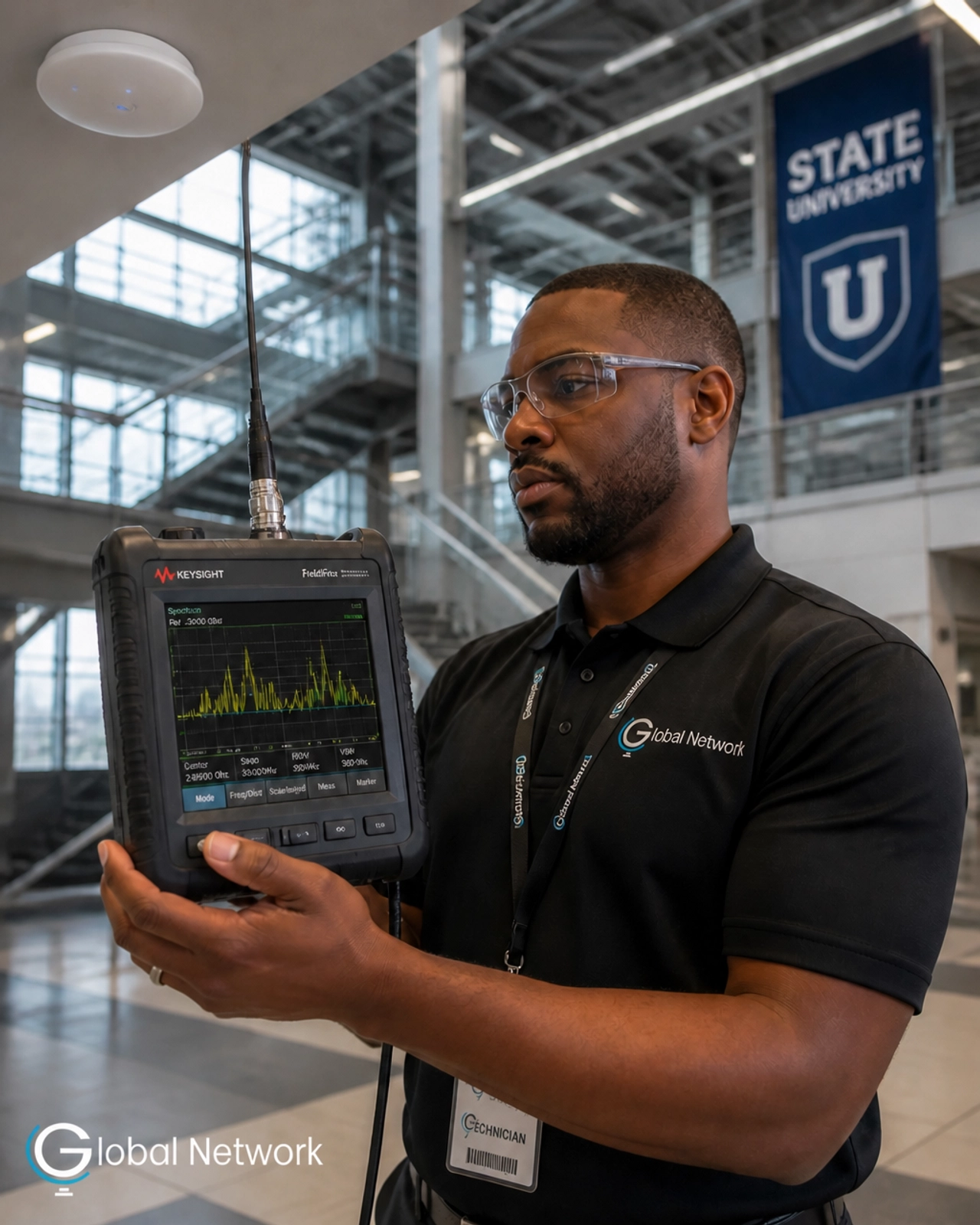
You can't fix what you haven't measured. A professional RF survey (often called a "Grid Test") involves technicians walking your building and measuring signal levels (specifically Band 14 and LMR) in a strict grid pattern. This identifies exactly where the "dead zones" are.
2. Design for Scalability
Don't just buy the cheapest BDA on the market. Work with a partner like Global Network LLC to design a system that includes Band 14 support from the start. Our designs focus on 0% Defects and 0% Missed Deadlines, ensuring that your system is not only compliant but built to last.
3. Annual Testing and Maintenance
Building environments change. You might move a wall, add new machinery, or a new high-rise might go up next door: all of which can change how signals move through your space. Regular maintenance is key. In fact, many jurisdictions now require annual proof of testing. You can schedule a test for your Public Safety DAS system here to stay ahead of the game.
Local Expertise Matters
While FirstNet is a national standard, how it’s enforced is very local. Different AHJs (Authorities Having Jurisdiction) in Georgia and across the country have specific requirements for how BDA systems should be monitored and alarmed.
At Global Network LLC, we pride ourselves on being at the forefront of these advancements. We don't just "install cable"; we provide peace of mind. Whether you are managing a university campus or a sprawling industrial complex, the mission is the same: Reliability when it matters most.

Final Thoughts
FirstNet is more than a buzzword; it’s a commitment to community safety. As a building owner, you have a critical role to play in this ecosystem. By ensuring your property’s wireless infrastructure is FirstNet-compatible, you aren't just checking a box for the fire marshal: you are actively participating in a nationwide network designed to save lives.
Is your building truly ready for an emergency? Don't wait for a failed inspection to find out.
Ready to future-proof your property?
Contact Global Network LLC today. Let’s ensure your building is compliant, secure, and ready for whatever the future of public safety brings.
Global Network LLC
Expertise in Telecommunications Infrastructure & Public Safety Technology
Phone: 770.520.8124
Website: https://globalnetworkco.com
Contact Us: https://globalnetworkco.com/contact
Follow our blog for more insights on BDA systems, ERCES compliance, and the future of in-building wireless solutions.