From Inspection Failures to First-Pass Approval: 5 Keys to a Bulletproof BDA System
For property managers and building owners across Atlanta, few things are as frustrating: or as costly: as a delayed Certificate of Occupancy. You’ve hit your construction milestones, your tenants are ready to move in, and then the Fire Marshal walks through with a radio and a frown. If your building’s interior walls, low-E glass, or concrete structure are blocking first responder signals, you’re looking at a failed inspection and a significant safety liability.
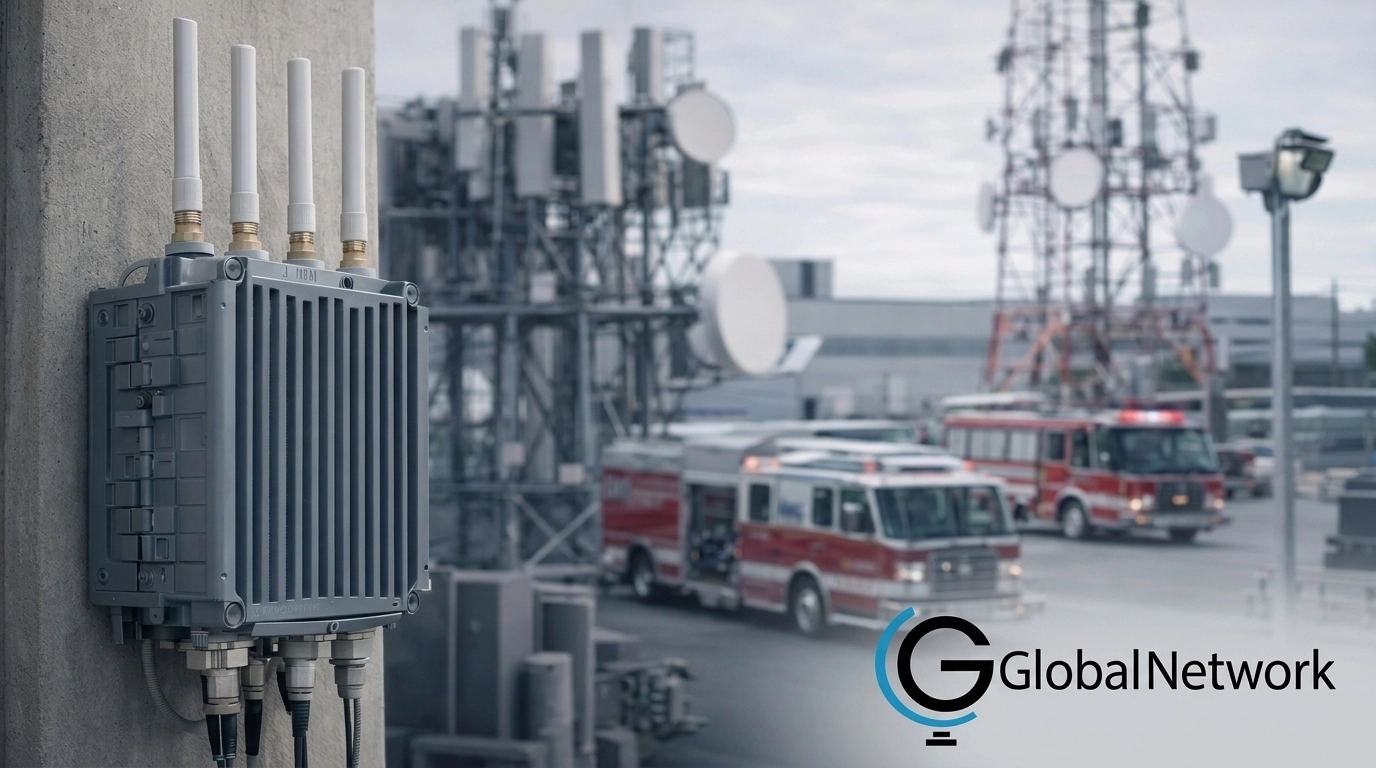
At Global Network LLC, we see this scenario play out far too often. The solution isn't just "installing some hardware"; it is the strategic implementation of an Emergency Radio Communication Enhancement System (ERCES), commonly known as a Bi-Directional Amplifier (BDA) system.
When it comes to Public Safety DAS installation, "close enough" is not an option. You need a system that works when it matters most. Here are the five critical pillars to ensuring your building moves from inspection failure to first-pass approval.
1. Absolute Compliance with Fire and Safety Regulations
The regulatory landscape for in-building safety is complex and constantly evolving. In the Atlanta metro area, the Authority Having Jurisdiction (AHJ) relies on a combination of international codes and local amendments. To achieve a first-pass approval, your BDA system design must strictly adhere to:
- IFC 510 compliance: The International Fire Code (Section 510) provides the primary requirements for emergency responder radio coverage in new and existing buildings.
- NFPA 1221 & NFPA 72: These standards from the National Fire Protection Association cover the installation, maintenance, and use of emergency services communications systems. NFPA 72 emergency communication standards specifically dictate how these systems must report faults to the building's fire alarm control panel.
Failure to understand the nuance between these codes is the leading cause of inspection rejection. For instance, did you know that many jurisdictions now require the BDA electronics to be housed in a NEMA 4 or 4X-rated enclosure to protect against water ingress from fire sprinklers? Global Network LLC stays at the forefront of these advancements, ensuring that every design we produce is fully compliant with the latest Georgia state and local fire codes.
2. Reliable Coverage in Critical Areas (The 99% Rule)
It is a common misconception that "some" signal is enough. Fire departments require near-perfect reliability because a dropped call in a smoke-filled hallway can be the difference between life and death.
Standard regulations require 90% coverage in general building areas. However, for "Critical Areas," the standard jumps to 99% signal strength coverage. These areas include:
- Stairwells and Exit Enclosures: These are the primary paths for both evacuation and responder ingress.
- Elevator Lobbies: Often the secondary command post for floor-level operations.
- Fire Pump Rooms and Mechanical Rooms: Critical infrastructure areas where responders must be able to coordinate equipment status.
- Standpipe Cabinets: Where firefighters hook up their hoses.
If your current Public Safety DAS installation hasn't been optimized for these specific zones, you are at high risk of a failed inspection. We focus on high-gain antenna placement to ensure that even the deepest concrete cores of an Atlanta high-rise have crystal-clear signal.
3. Identification of Weak Signal Zones Through Professional Grid Testing
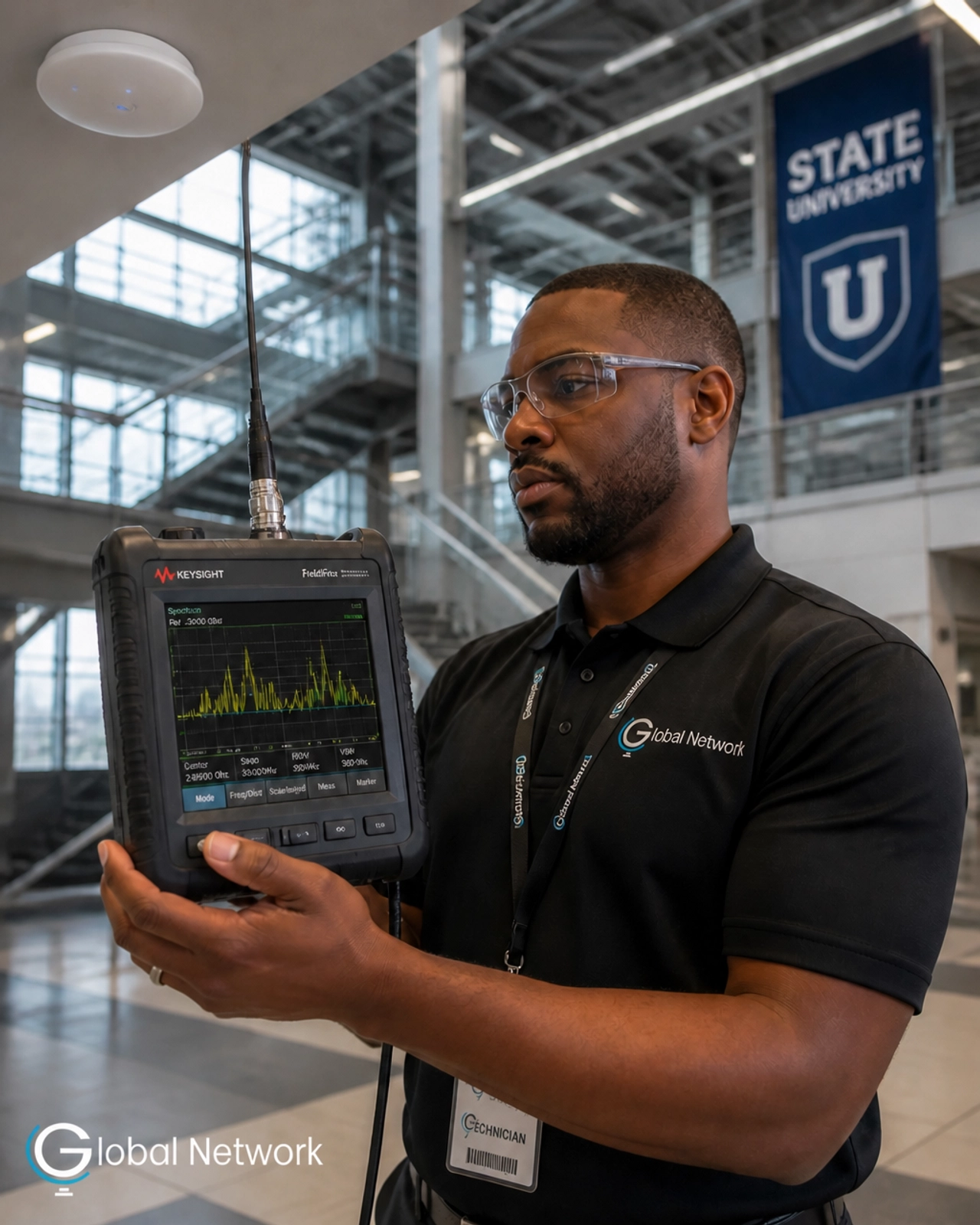
You cannot fix what you haven't measured. The only way to guarantee first-pass approval is to perform a comprehensive RF (Radio Frequency) site survey using the "Grid Testing" method.
We divide every floor of your building into a grid (typically 20 or 40 squares, depending on the AHJ’s requirements). Each square is tested using a calibrated signal analyzer to measure the Delivered Audio Quality (DAQ).
- Weak Signal Identification: Grid testing allows us to identify "dead zones": those pesky corners behind the elevator bank or inside the reinforced concrete stairwell: where signal levels drop below the required -95 dBm threshold.
- Precision Engineering: Rather than over-engineering the system (which wastes your budget) or under-engineering it (which fails the test), grid testing provides the data needed for a precise BDA system design.
By identifying these zones early in the process, we can adjust the placement of remote units and antennas to ensure that by the time the Fire Marshal arrives, the results are already guaranteed.
4. Annual Testing and Recertification
A BDA system is not a "set it and forget it" utility. Like your fire sprinklers and extinguishers, ERCES testing and certification is a mandatory annual requirement.
Buildings shift over time. New construction nearby can block exterior signals, and internal renovations can create new dead zones. Most Atlanta jurisdictions require a certified technician to perform a functional test of the system once a year to ensure it still meets the original permit's performance standards.
Our team at Global Network LLC specializes in these annual checkups. We provide documented proof of compliance that you can hand directly to your inspector. This proactive approach ensures your building remains safe and avoids the "surprise" of a non-compliance citation during a random fire safety audit. You can schedule your compliance test here to stay ahead of the curve.
5. Battery Backup and Monitoring: The 24-Hour Guarantee
What happens to your safety system when the power goes out? During a fire or a major weather event in Atlanta, grid power is often the first thing to go.
Per NFPA 1221 and IFC 510, your BDA system must remain fully operational for at least 24 hours on secondary power. This isn't just about having a battery; it’s about having a supervised power system that alerts you the moment something goes wrong.
- Real-Time Fault Alerts: The system must be integrated with the building’s Fire Alarm Control Panel (FACP). If the battery is low, if the charger fails, or if an antenna is disconnected, the system must trigger a "trouble" signal immediately.
- Supervised Monitoring: We install monitoring modules that provide real-time status updates. This level of oversight gives property managers peace of mind, knowing that the system is standing by, ready to perform in the worst-case scenario.
Why Global Network LLC?
Navigating the technical requirements of public safety technology shouldn't be a headache for property managers. You have a building to run; we have the expertise to keep it compliant.
We take pride in our Atlanta local expertise. We know the local inspectors, we understand the specific RF environment of the city, and we are committed to a policy of 0% Missed Deadlines. When we set a schedule for your Public Safety DAS installation, we hit it.
Our mission is to provide more than just equipment. We provide a safety net for your tenants and the first responders who protect them. From initial grid testing to final ERCES testing and certification, we handle the heavy lifting so you can focus on your business.
Secure Your Building Today
Don't wait for an inspection failure to find out your building has a coverage gap. Whether you are in the design phase of a new project or managing a legacy property that needs an upgrade, we are here to help.
Ready for a first-pass approval?
Contact Global Network LLC today to speak with a compliance expert.
Phone: 770.520.8124
Online: Contact Us
Learn More: Our Services
Stay compliant. Stay safe. Stay connected.