Beyond the Pitch: Securing Parking Decks and Stairwells for the 2026 World Cup
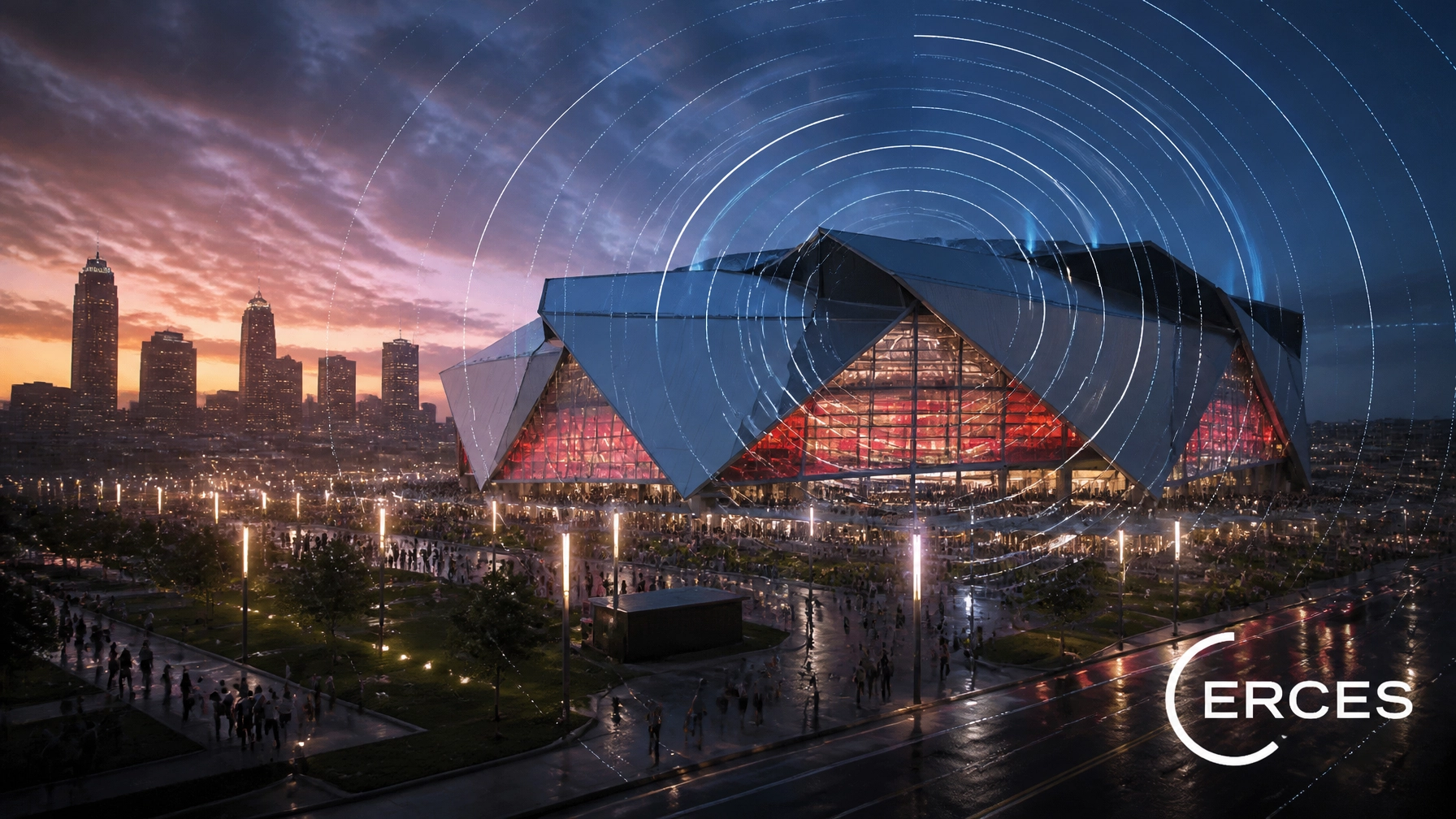
As Atlanta prepares to take center stage for the 2026 FIFA World Cup, the focus for building owners, facility managers, and public safety officials extends far beyond the final score on the pitch. While the eyes of the world will be on the matches at Mercedes-Benz Stadium, the operational reality of hosting millions of international visitors requires a rigorous commitment to infrastructure safety.
Among the most critical, yet frequently overlooked, components of event readiness is the guaranteed functionality of Emergency Responder Communication Enhancement Systems (ERCES). In high-occupancy environments, the ability for first responders to communicate seamlessly via two-way radios is a matter of life safety. However, the very materials used to build our most robust structures: concrete and steel: are the natural enemies of radio frequency (RF) signals.
At Global Network LLC, we specialize in eliminating these "dead zones," ensuring that when the world arrives in Atlanta, our local infrastructure is fully compliant and ready to protect.
The Technical Challenge: RF Penetration and the "Concrete Shield"
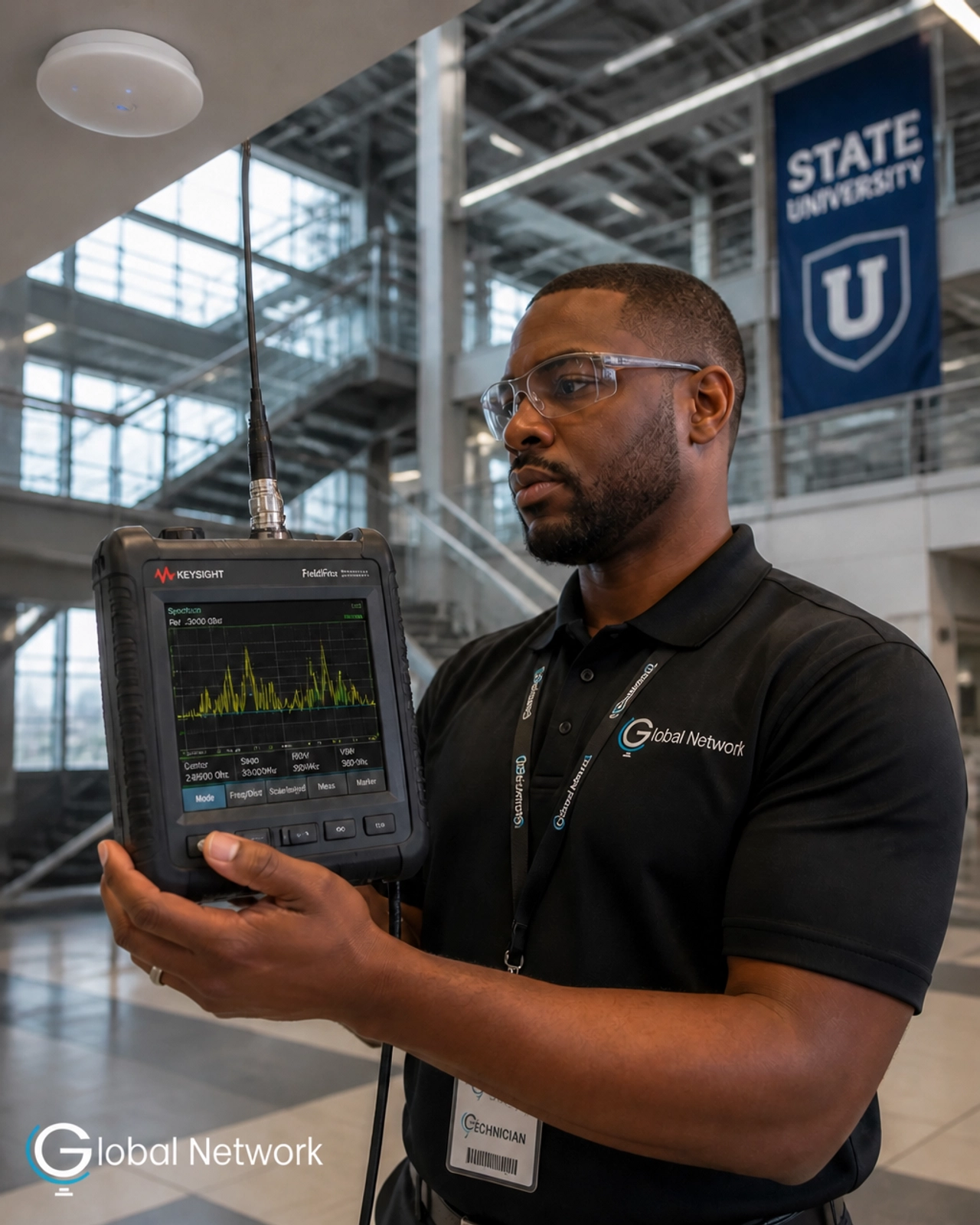
The architectural profile of Atlanta’s hospitality and transit infrastructure relies heavily on reinforced concrete and low-emissivity (low-E) glass. While these materials offer structural integrity and energy efficiency, they act as an accidental Faraday cage, blocking the critical 700/800 MHz signals used by the Atlanta Fire Rescue Department and other regional emergency agencies.
When a building reaches maximum occupancy during a World Cup match day, the RF environment becomes even more complex. Signal attenuation increases, and without a dedicated Public Safety Distributed Antenna System (DAS), the "blind spots" within a facility can become catastrophic failure points during an emergency.
Why Parking Decks and Stairwells are High-Risk Zones
During a global event, parking decks and stairwells are high-traffic corridors for both fans and safety personnel. Yet, these areas are often the most difficult to cover with external macro-cell towers.
- Parking Decks: Often located underground or multi-leveled with thick concrete slabs, garages are notorious for zero-signal environments. During the World Cup, these decks will serve as primary ingress and egress points for thousands. Reliable communication is essential for managing crowd flow, medical emergencies, and security incidents.
- Stairwells: Designated as Critical Areas under the International Fire Code (IFC 510) and NFPA 1225, stairwells require a higher threshold of coverage (typically 95% or higher). In a fire or evacuation scenario, the stairwell is the primary theater of operations for first responders. If a captain on the 20th floor cannot reach their team in the lobby, the mission is compromised.

The Backbone of Safety: BDA Systems and ERCES
To overcome the "Concrete Shield," property owners must deploy a Bi-Directional Amplifier (BDA) system. A BDA takes the signal from a "donor" antenna (usually located on the roof), amplifies it, and distributes it throughout the building’s interior via a network of antennas and coaxial cables.
At Global Network LLC, our design philosophy is centered on 0% Defects. We understand that for the 2026 World Cup, there is no margin for error. Our systems are engineered to be FirstNet Compatible, ensuring that both traditional LMR (Land Mobile Radio) and modern broadband safety networks function without interference.
Compliance with Atlanta Fire Codes
For building owners in the Metro Atlanta area, compliance is not optional. The Authority Having Jurisdiction (AHJ), such as Atlanta Fire Rescue, strictly enforces standards derived from:
- IFC Section 510: Governs the minimum signal strength and coverage requirements.
- NFPA 1225 (formerly NFPA 1221): Outlines the technical standards for installation, maintenance, and testing.
- UL 2524: The standard for in-building two-way emergency radio communication enhancement systems.
Failure to meet these standards can lead to denied Certificates of Occupancy (CO), substantial fines, and: most importantly: unnecessary risk to human life. You can learn more about navigating these requirements in our Ultimate Public Safety DAS/BDA Compliance Checklist.
Securing the "Blind Spots": A Strategic Approach
1. Parking Deck Radio Coverage
In a parking structure, signal distribution must account for horizontal spread across vast, open concrete floors. We utilize specialized outdoor-rated antennas and NEMA 4X enclosures to protect hardware from the elements while ensuring that every level of the deck meets the -95 dBm signal threshold required by code. This is particularly vital for transit hubs and malls that will act as "Fan Zones" during the tournament.
2. Stairwell Survivability
Communication in stairwells must be survivable. This means using 2-hour fire-rated cabling and ensuring that the DAS equipment is protected from heat and smoke. Our team performs rigorous ERCES testing and commissioning to guarantee that these vertical arteries remain clear for communication when it matters most.

Global Network LLC: Atlanta’s Local DAS Experts
Why trust Global Network LLC with your 2026 World Cup readiness? Our commitment to excellence is reflected in our track record:
- Local Expertise: We are deeply familiar with the specific radio frequencies and AHJ requirements unique to the Atlanta region.
- Mission-Driven Reliability: We operate with a 0% Missed Deadlines policy. We understand the high-stakes nature of World Cup timelines and the urgency of life-safety infrastructure.
- Comprehensive Service: From initial RF grid testing to final certification, we handle the entire lifecycle of your ERCES project.
Whether you are managing a high-rise hotel in Downtown Atlanta or a sprawling parking complex near the stadium, our goal is to provide peace of mind through technical precision.

Preparing for 2026: Your Action Plan
The window for 2026 World Cup preparation is closing. Building owners should immediately take the following steps:
- Conduct a Baseline Signal Test: Determine if your current parking decks and stairwells meet the mandatory signal strength requirements.
- Review your Compliance Status: Ensure your system meets the latest NFPA 72 and IFC 510 standards.
- Schedule Annual Maintenance: If you already have a BDA system, annual testing is required by law to ensure the system has not drifted out of spec or been damaged.

Conclusion
The 2026 World Cup is an opportunity for Atlanta to showcase its world-class infrastructure. However, the true success of the event will be measured by the safety and security of every fan and first responder on the ground. By securing the "blind spots" of our parking decks and stairwells today, we ensure a safer tomorrow.
At Global Network LLC, we are at the forefront of advancements in public safety technology. Don't let a "dead zone" become a liability. Contact us today to ensure your building is ready for the world.
Contact Us Today
Global Network LLC
Office: 770.520.7633
Toll Free: 877.231.1084
globalnetworkco.com